
:format(webp))
De-icing Training
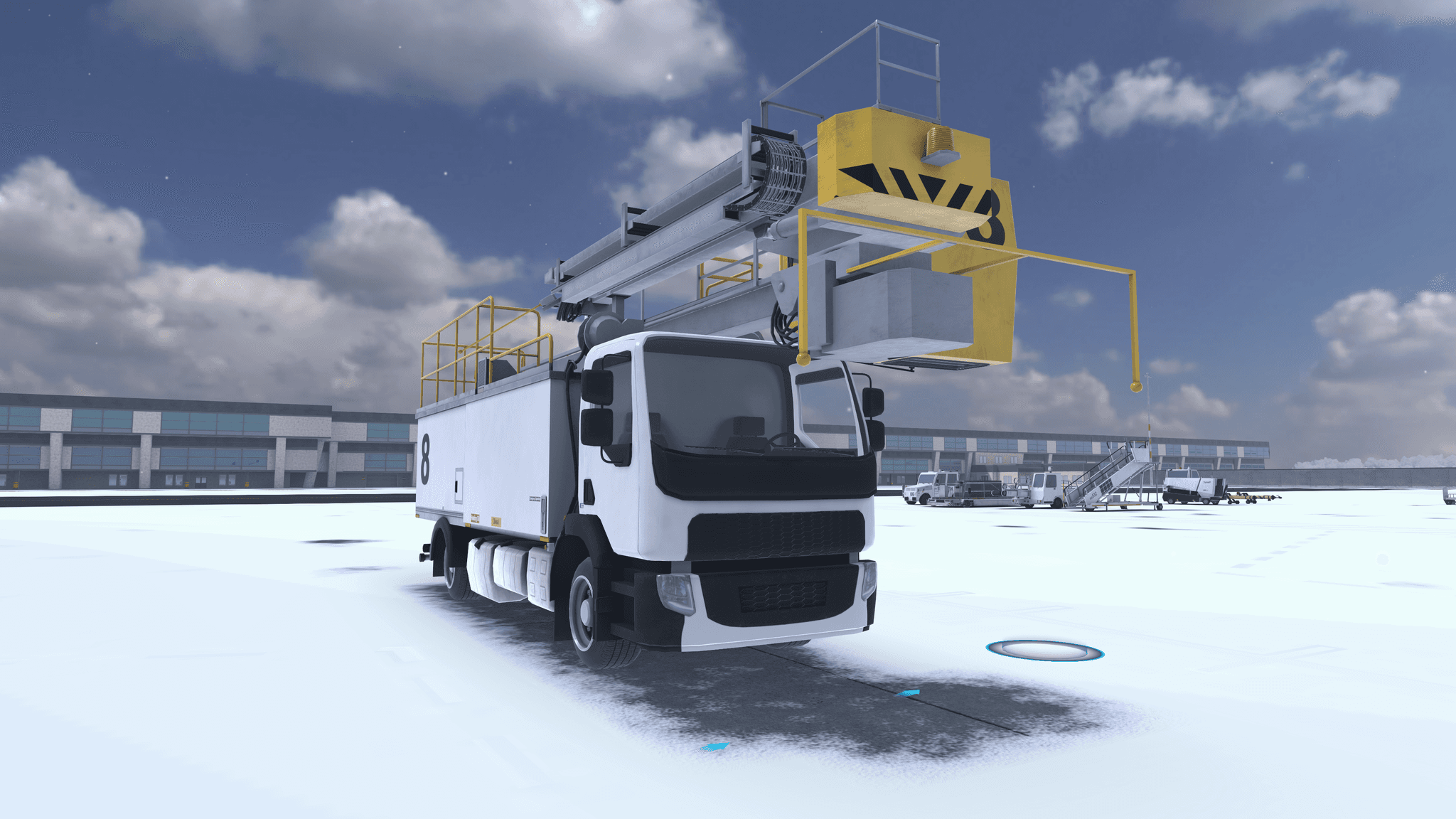
Practical De-icing Training in Virtual Reality: Learn to operate the de-icer and remove snow and ice from the wings and fuselage of an aircraft.

Course with 7 lessons across theoretical and practical training, and 3 more coming soon.

A scored spray practice rates time, fluid used, spray order and spray distance.

In-depth de-icing training with 65 learning minutes.

Available in 9 languages: English, German, Dutch, Spanish, French, Greek, Arabic, Cantonese Chinese, and Turkish.
Training Content
All use cases covered by Draxon De-icing VR Training
Learning Outcomes
Course Overview Video
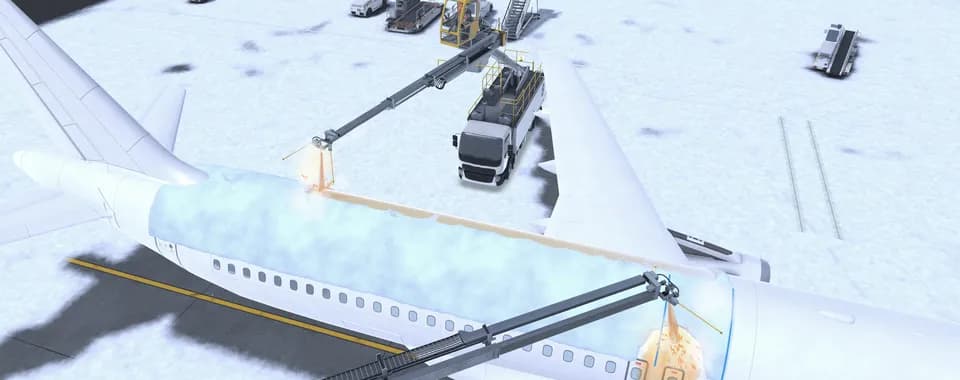
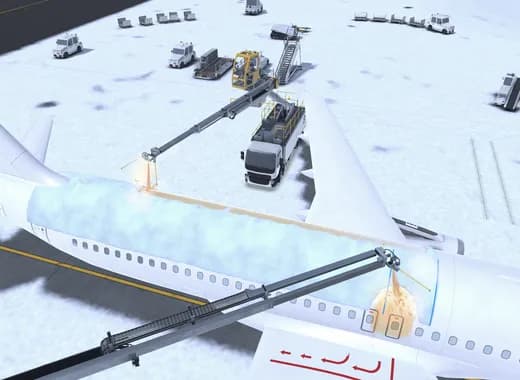
De-icing the Tail (Guided)
De-icing the Aircraft (Practice)
De-icing the Aircraft (Assessment)
In use at innovative airports and trusted by industry leaders















Real Results, Real Feedback
Hear from industry leaders transforming their training programs.
People are really, really excited. Top notch! And I'm thrilled because I don't have to rattle off the PowerPoint slides anymore. And everyone learns the same thing.
Draxon is easy to use and extremely efficient. Our trainees enjoy the VR trainings, and the knowledge really sticks.
Highlights of the De-icing Training Course
Get to know the key outcomes of the de-icing VR training.
Every Control in the Operator Cabin
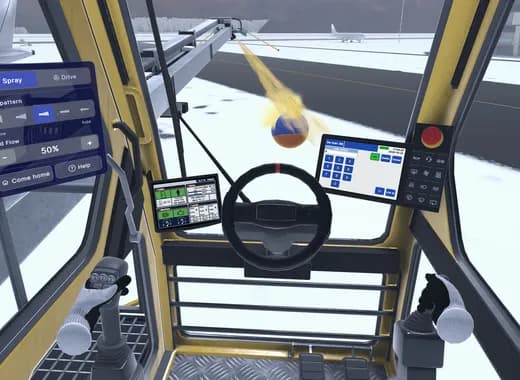
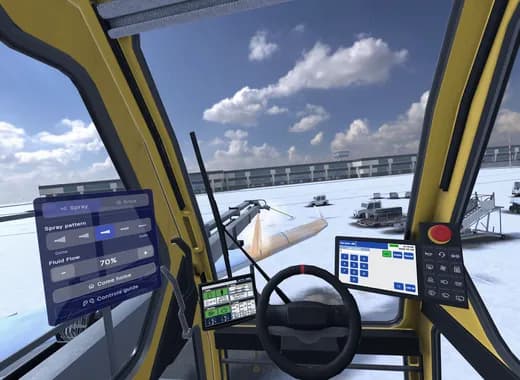
Each control is shown on the real joystick or panel first, then trainees use it themselves, from moving the boom and aiming the nozzle to driving from the cabin.
Scored Spray Practice
Trainees de-ice a practice wing as often as they like, and every attempt is rated on time, fluid used, spray order and spray distance, with a tip for each rating.
Complete Jobs at the Aircraft
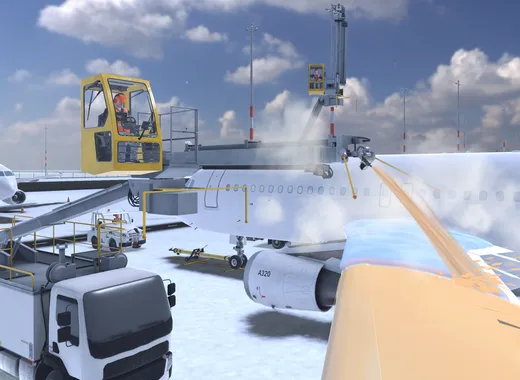
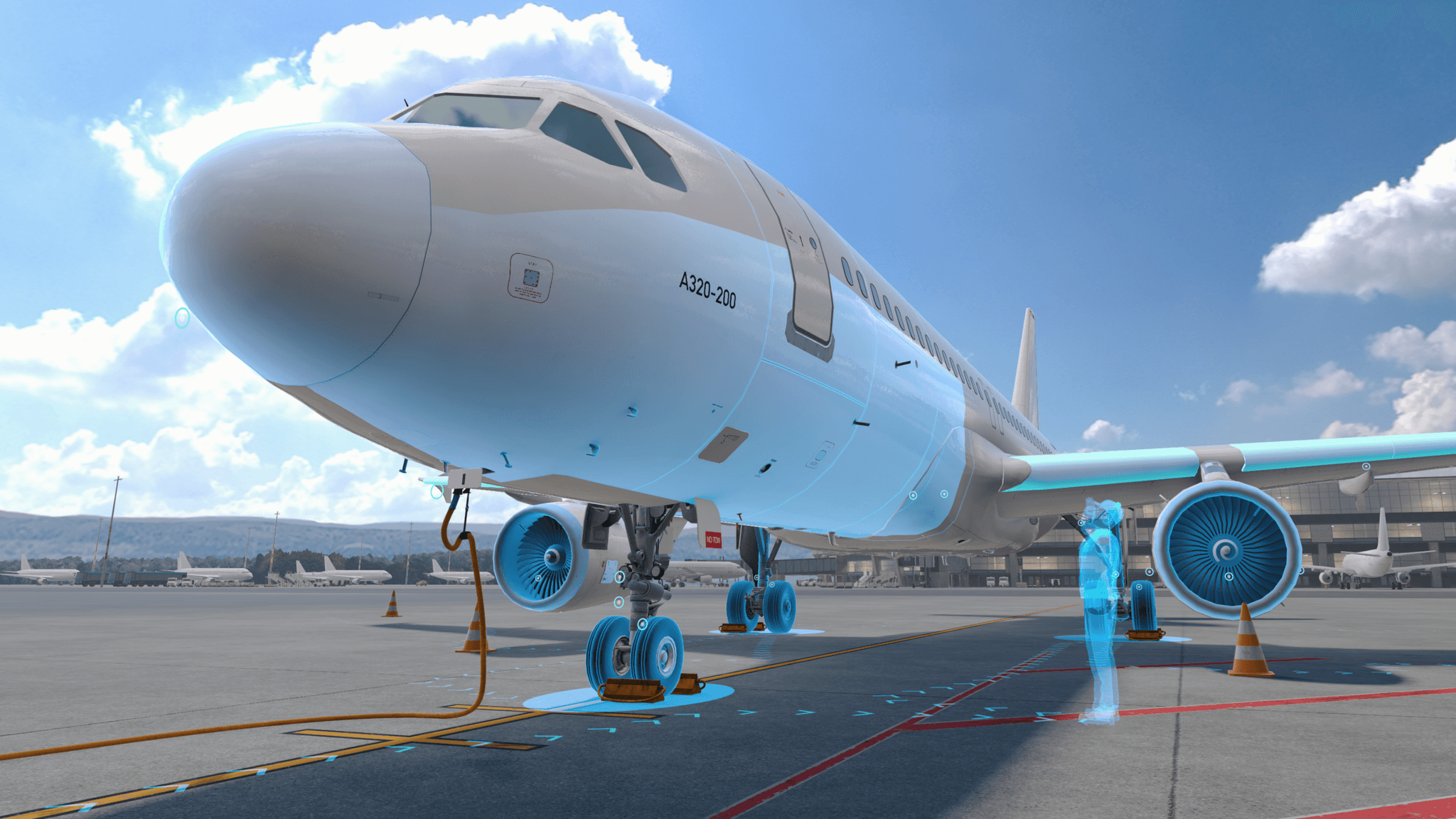
Trainees run full de-icing jobs on the wings and fuselage of an A320, from accepting the job on the Data Transmission System to recording it as done.
No-Spray Discipline
Engine inlets, windows, doors, emergency exits and sensors are marked, and spraying them directly or touching the aircraft leads to an immediate correction.
Meeting the Highest Industry Standards
IATA
Built to meet IATA's global operational and safety requirements, supporting standardized and efficient aviation practices.
EASA
Aligned with EASA safety and regulatory standards to ensure consistent, reliable, and compliant aviation training.

GDPR
Designed with full GDPR compliance, ensuring secure data handling, privacy protection, and trusted information management.

Ready to start de-icing training?
Get everything you need to roll out VR training for your teams.
Questions? We have answers:
What skills are gained in the De-icing VR Training course?
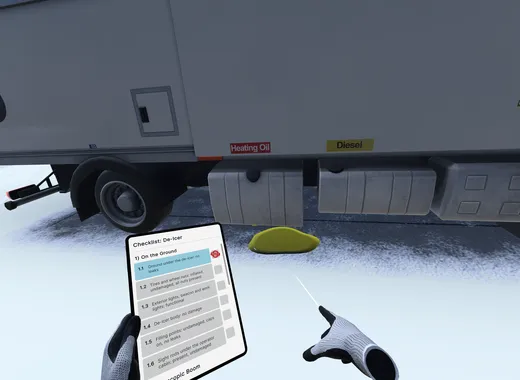
Trainees get to know the de-icer, its fluid tanks, its mixing and heating systems and its safety features, and learn what every control in the operator cabin does. They carry out the walkaround before a shift, including the refractometer test of the Type I mix, and practice the spray technique on a practice wing until they hold the nozzle at the right distance and clear the surface strip by strip. At the aircraft, they run complete de-icing jobs on the wings and the fuselage of an Airbus A320, from accepting the job on the Data Transmission System to recording it as done.
Which de-icer and aircraft does the training use?
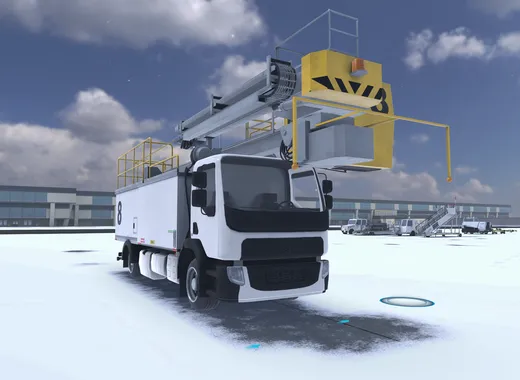
The de-icer is the Vestergaard Elephant BETA, a one-person de-icer with an enclosed operator cabin and a 12 meter telescopic spray boom. The lessons at the aircraft use an Airbus A320. The spray technique, the no-spray zones and the job sequence apply to other de-icers and aircraft types as well.
Are the De-icing Training lessons videos to watch?
No. Apart from the demonstrations with a second de-icer, which trainees watch before they spray, every lesson is hands-on. Trainees operate the joysticks, set the spray, drive the de-icer and clear the snow themselves, and the training reacts to what they do: spraying into the engine inlet, spraying a window directly or touching the aircraft with a proximity sensor all lead to an immediate correction.
Why use VR training for de-icing?
Live de-icing practice depends on the weather, so the season for it is short, and every attempt on a real aircraft costs fluid and stand time under departure pressure. In VR, operators can repeat the full procedure as often as they need, at any time of year, without fluid, without an aircraft at risk and without holding up a departure. The scored spray practice shows exactly where each operator still needs to improve.
What are the benefits of the De-icing VR Training for real-world operations?
New operators reach the de-icing pad already knowing the controls, the spray distance and the order in which surfaces are treated, and they have already made and corrected the mistakes that damage aircraft, such as spraying into an engine inlet or bringing the boom too close. Stations get faster qualification, fewer incidents and a consistent de-icing standard across shifts.
Can people with a tendency to motion sickness do the De-icing VR training?
Yes. Less than 3% of trainees report any symptoms. Trainees work seated in the operator cabin for most of the course, and every movement of the cabin and the boom is slow and controlled by the trainee.
Is the De-icing VR Training applicable for initial training?
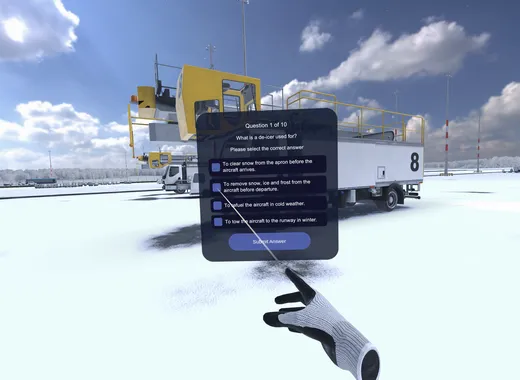
Yes. The course is built as a path for someone new to the job: the de-icer from the outside, then the controls in the operator cabin, the spray technique, the walkaround and an exam, before the first jobs at the aircraft. Lessons for the tail, a complete aircraft practice and an assessment follow in upcoming releases.
Which industry standards is the De-icing VR Training based on?
The course is based on SAE AS6285F, Aircraft Ground Deicing/Anti-Icing Processes, and SAE AS6286E, Aircraft Ground Deicing Training and Qualification Program. The current lessons follow them for the order in which surfaces are treated, the spray distance, the areas that must never be sprayed directly, such as engine inlets, windows, doors, emergency exits and sensors, and the daily refractometer check of the fluid mix.