
:format(webp))
Hand Signals Training
Practical Hand Signals Training in Virtual Reality: Learn to confidently recognize and perform the full standard set of ramp hand signals.

Course with 4 lessons across theoretical and practical training

Designed for ground handling operators: from new starters to professionals.

In-depth Hand Signals training with 26 learning minutes.

Available in 9 languages: English, German, Dutch, Spanish, French, Greek, Arabic, Cantonese Chinese, and Turkish.
Training Content
All use cases covered by Draxon Hand Signals VR Training
Learning Outcomes
Course Overview Video
In use at innovative airports and trusted by industry leaders














Real Results, Real Feedback
Hear from industry leaders transforming their training programs.
People are really, really excited. Top notch! And I'm thrilled because I don't have to rattle off the PowerPoint slides anymore. And everyone learns the same thing.

Draxon is easy to use and extremely efficient. Our trainees enjoy the VR trainings, and the knowledge really sticks.

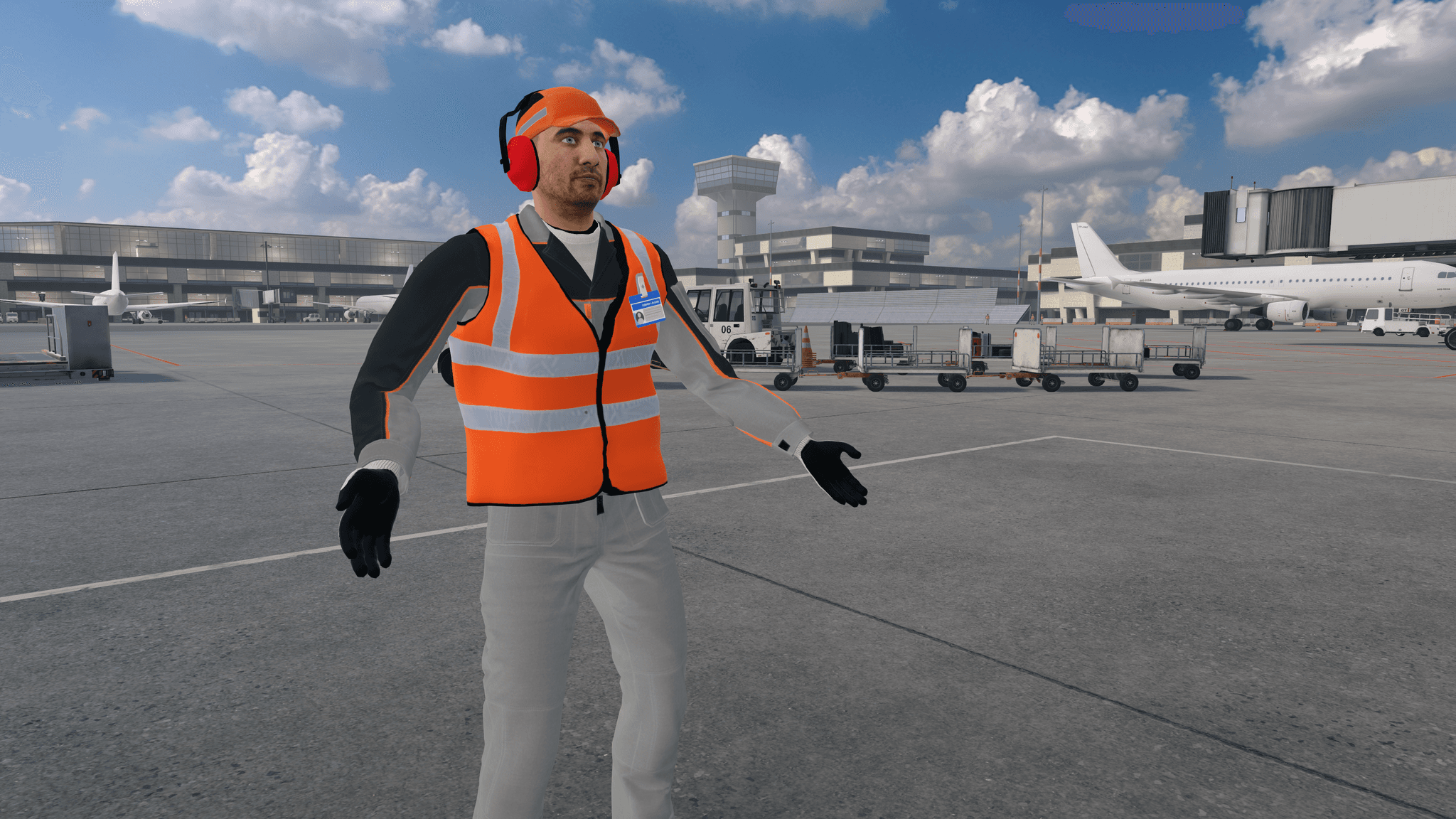
Highlights of the Hand Signals Training Module
Get to know the key outcomes of the Hand Signals VR training.

Recognize and Perform Every Signal
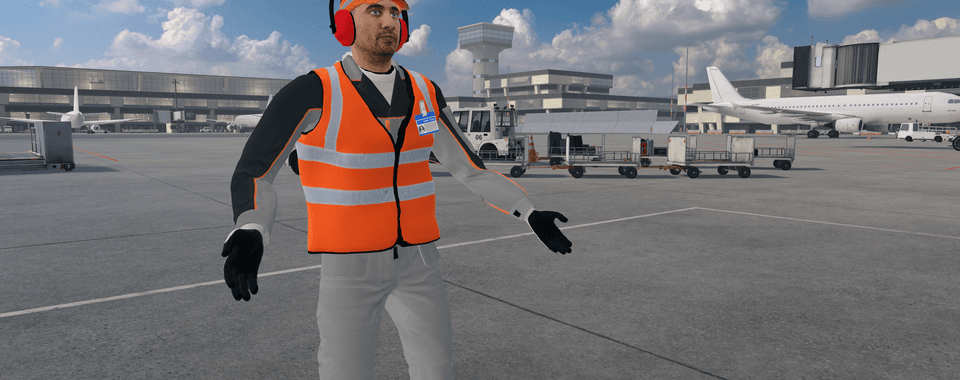
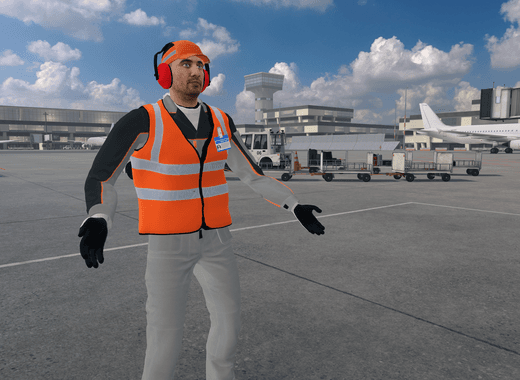
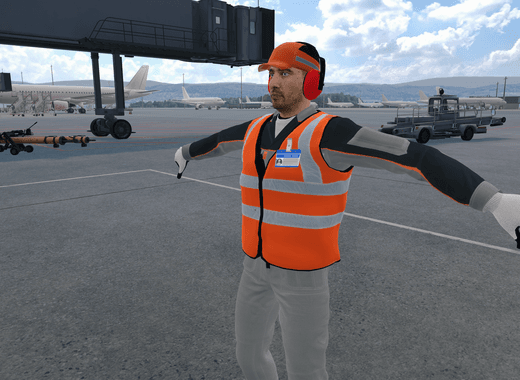
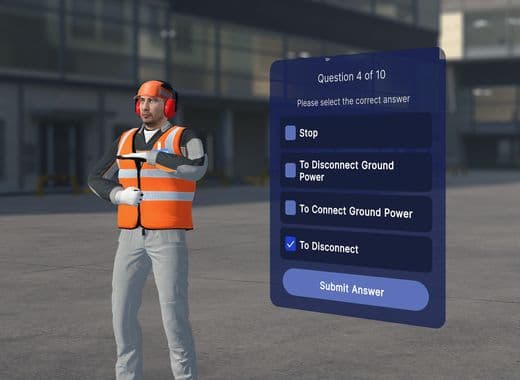
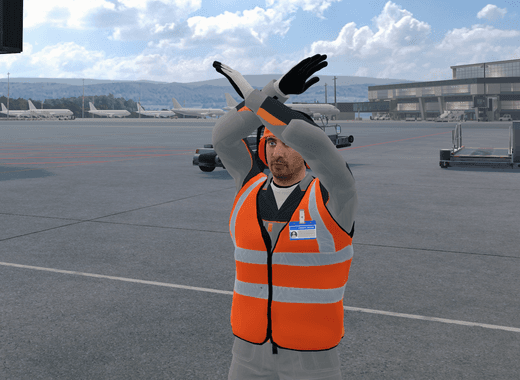
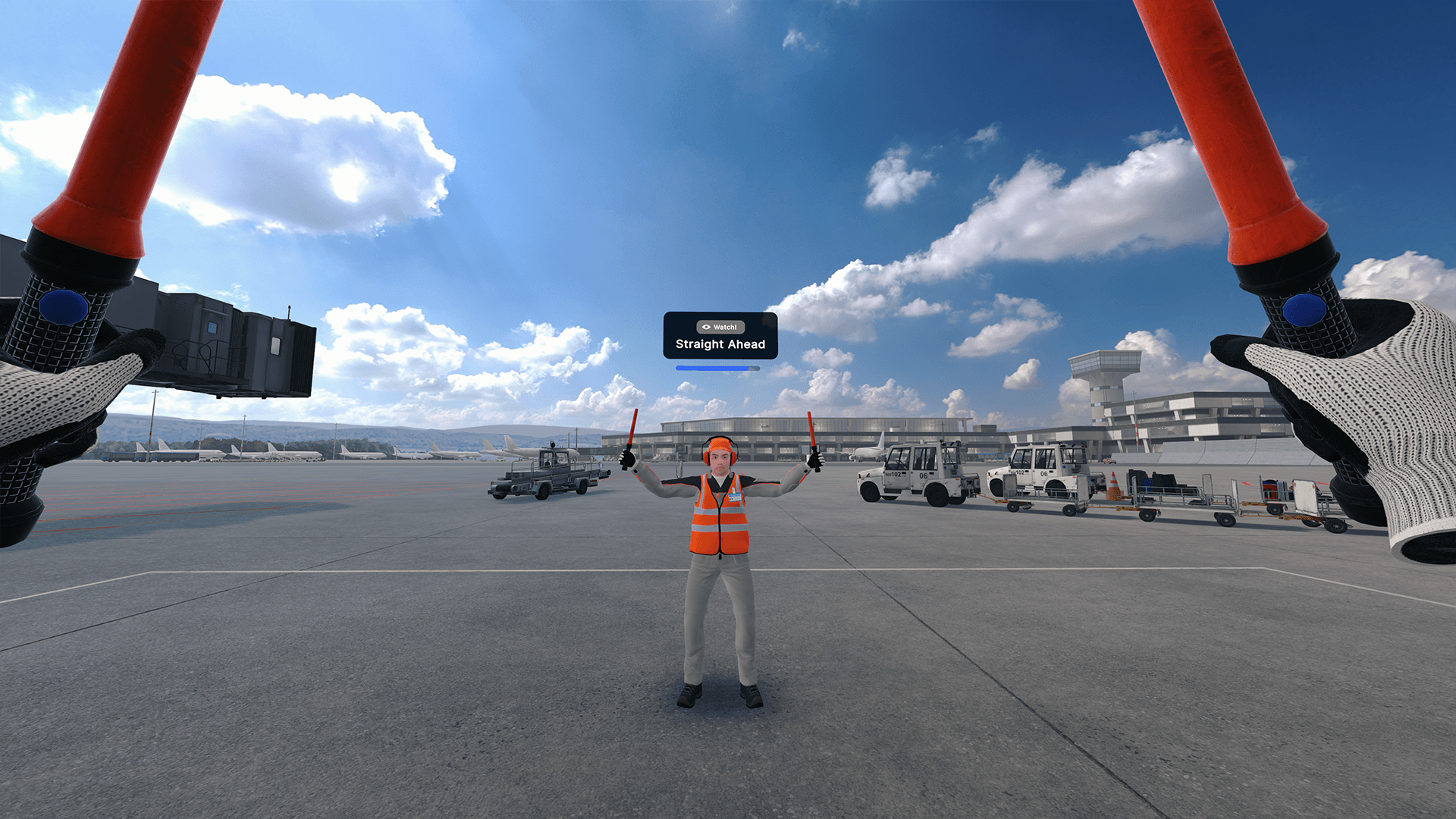
Trainees watch each signal, then perform it in real time against a colleague's held pose — building accurate recognition and correct hands-on execution across the full standard set.

Muscle Memory Through Real Practice
Per-signal coaching on hand shape, orientation, and motion builds the muscle memory to perform each signal reliably from memory on the live ramp.

Built-in Error Scenario Training
Integrated error detection challenges trainees with confusable and visually similar signals, delivering corrective feedback that sharpens recognition accuracy and reduces the risk of dangerous miscommunication.

Communication Discipline
Trainees develop the visual attention and situational awareness needed to reliably read hand signals under realistic apron conditions, building the professional discipline required for clear, safe coordination on the live ramp.
Meeting the Highest Industry Standards
IATA
Built to meet IATA's global operational and safety requirements, supporting standardized and efficient aviation practices.
EASA
Aligned with EASA safety and regulatory standards to ensure consistent, reliable, and compliant aviation training.

GDPR
Designed with full GDPR compliance, ensuring secure data handling, privacy protection, and trusted information management.
Explore more training

Ready to start Hand Signals training?
Get everything you need to roll out VR training for your teams.
Questions? We have answers:
What skills are gained in the Hand Signals VR Training module?
Trainees learn to both recognize and perform the full set of 27 standard ramp hand signals — the 13 core signals for movement and direction and the 14 advanced signals for vehicle operations and pushback. For each signal, a colleague demonstrates it and then holds the pose as a live reference while the trainee performs it, with coaching on hand state, orientation, and motion until the movement becomes second nature. The training also builds awareness of paired signals with opposite meanings — where confusion could cause serious incidents — and reinforces consistent eye contact and signalling discipline. A recognition exam and a graded performing exam then confirm both recall and hands-on execution before trainees operate on a live ramp.
Are the Hand Signals Training lessons videos to watch?
No — the Hand Signals VR Training is fully interactive and hands-on. Rather than watching passive instructional videos, trainees watch each signal demonstrated and then immediately perform it themselves in real time, using the colleague's held pose as a live reference. Immediate feedback on hand state, orientation, and motion guides trainees to the correct technique, making learning active and retention-focused.
Can the Hand Signals VR Training module help reduce time needed for classroom training?
Yes — the VR training replaces traditional classroom theory by placing trainees directly in a virtual environment where they practice recognizing and performing hand signals. Instant corrective feedback reinforces correct technique without requiring an instructor to be present for every repetition, significantly reducing the time and resources needed for classroom-based or on-ramp initial instruction.
What are the benefits of the Hand Signals VR Training for real-world operations?
Practicing hand signals in VR before working on a live ramp helps trainees build reliable recognition and execution habits in a safe environment. This reduces the risk of miscommunication between ramp personnel, supports consistent signal standards across teams, and enables new operators to develop competency before being exposed to real aircraft, vehicles, and ramp traffic — accelerating readiness and reducing operational incidents.
Can people with a tendency to motion sickness do the Hand Signals VR training?
Yes — less than 3% of trainees report any symptoms. The Hand Signals VR Training is designed with purposeful, smooth movement and natural interaction patterns that minimize vestibular conflict, making it accessible and comfortable for the vast majority of trainees.
Is the Hand Signals VR training applicable for initial training?
Yes — the Hand Signals VR Training is ideal for initial training. New hires can learn and practice the complete set of standard ramp hand signals in a safe virtual environment, building foundational competency before they encounter real aircraft, vehicles, and ramp operations. Watching and then performing each signal builds genuine muscle memory, giving new operators a reliable baseline before live deployment.
Is the Hand Signals VR Training aligned with IATA standards?
Yes — the Hand Signals VR Training was developed in alignment with IATA AHM 1110 and IGOM guidelines. The training covers the standardized hand signal categories referenced in IATA ground handling standards, including correct signal execution for aircraft movement and direction control, vehicle operations coordination, and safe pushback communication — supporting consistent and compliant ramp communication practices.
Is the Hand Signals VR Training aligned with EASA standards?
Yes — the training design is aligned with EASA safety principles. The Hand Signals VR Training reinforces safety-critical communication routines on the apron, including correct signal discipline, avoidance of confusable signals, and standardized procedures for directing aircraft and vehicle movements, in line with EASA apron safety requirements for ground handling operations.