Draxon VR Training Syllabus
De-icing the Fuselage (Guided)
 Virtual Reality
Description
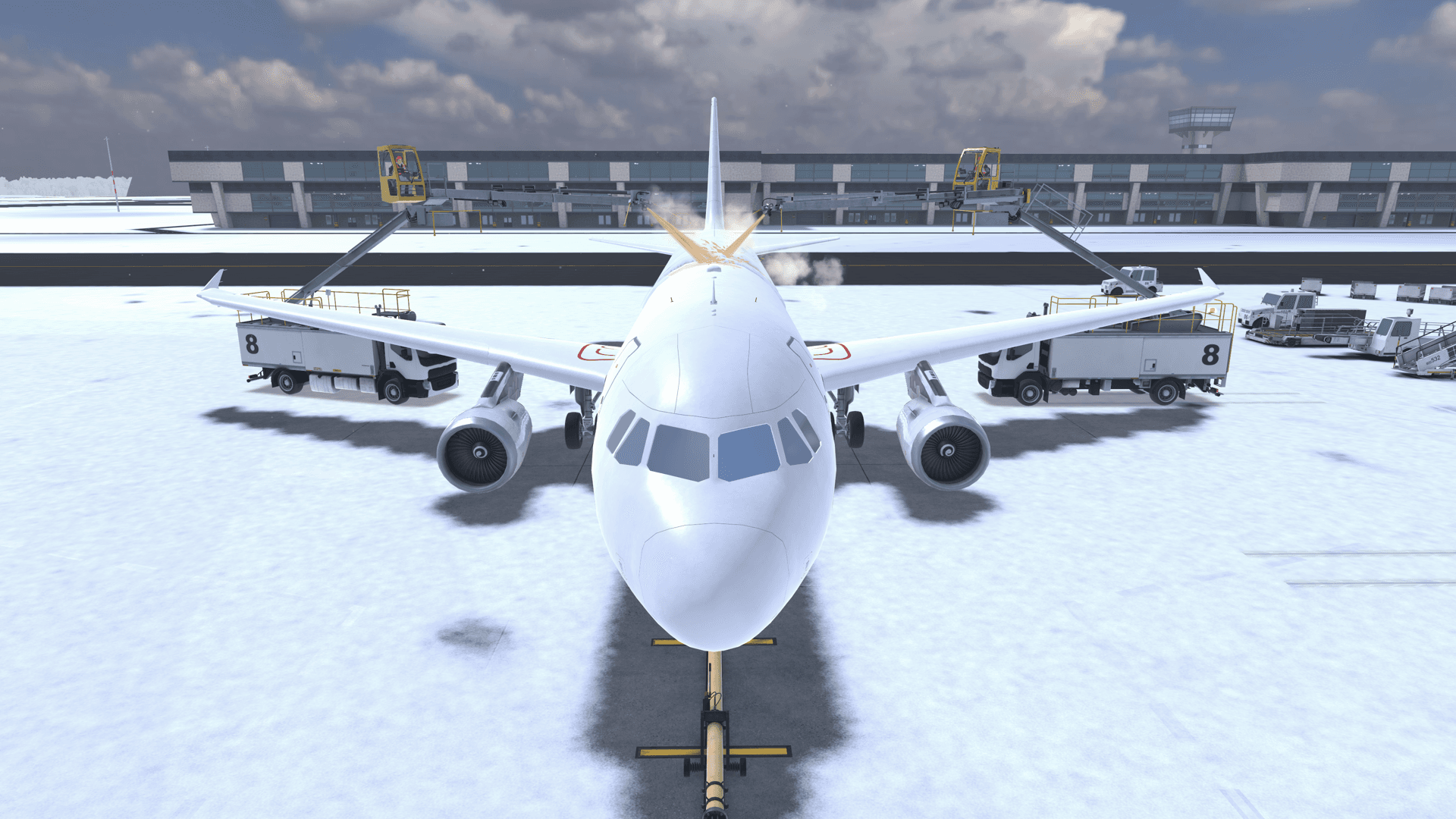
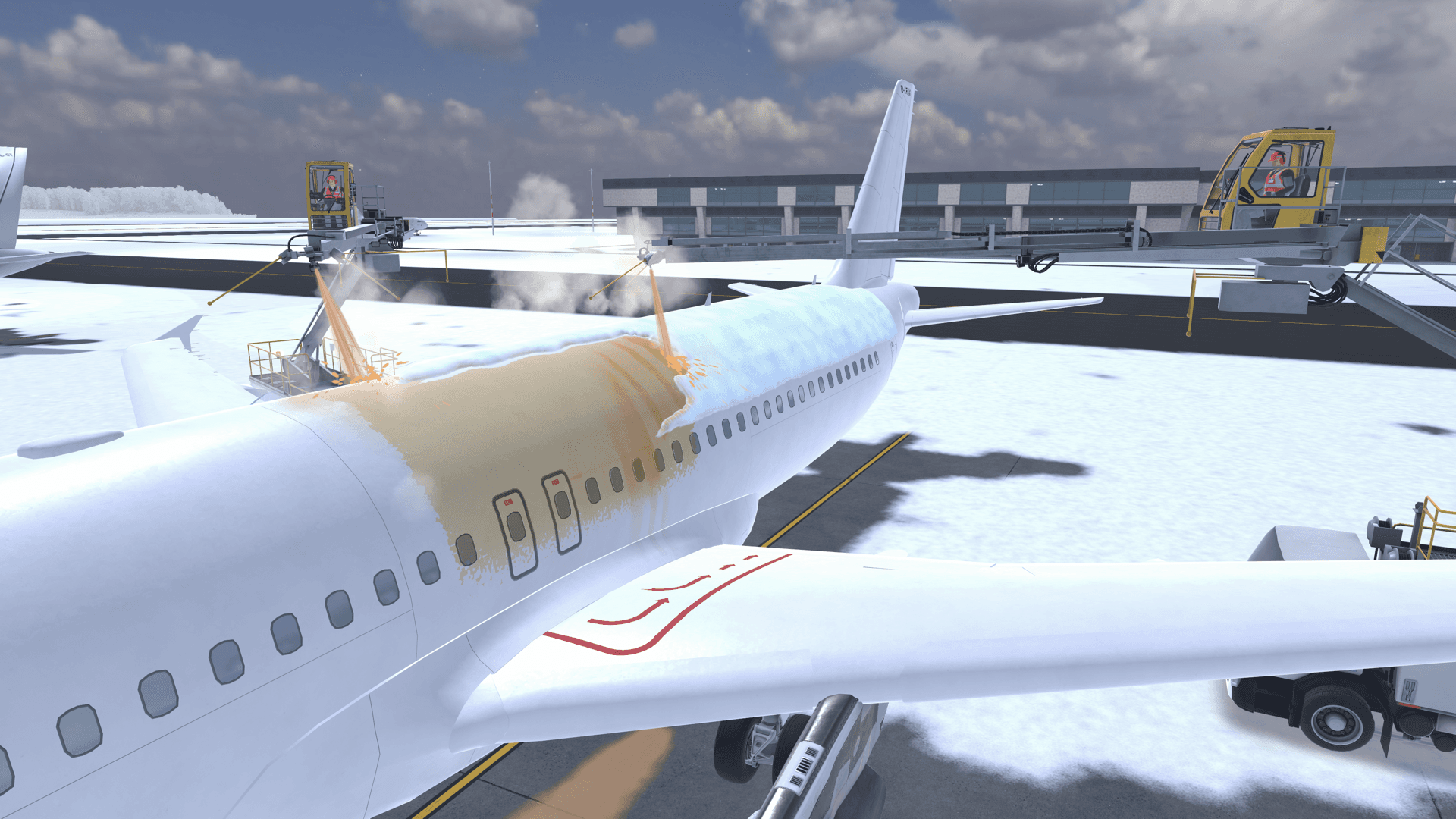
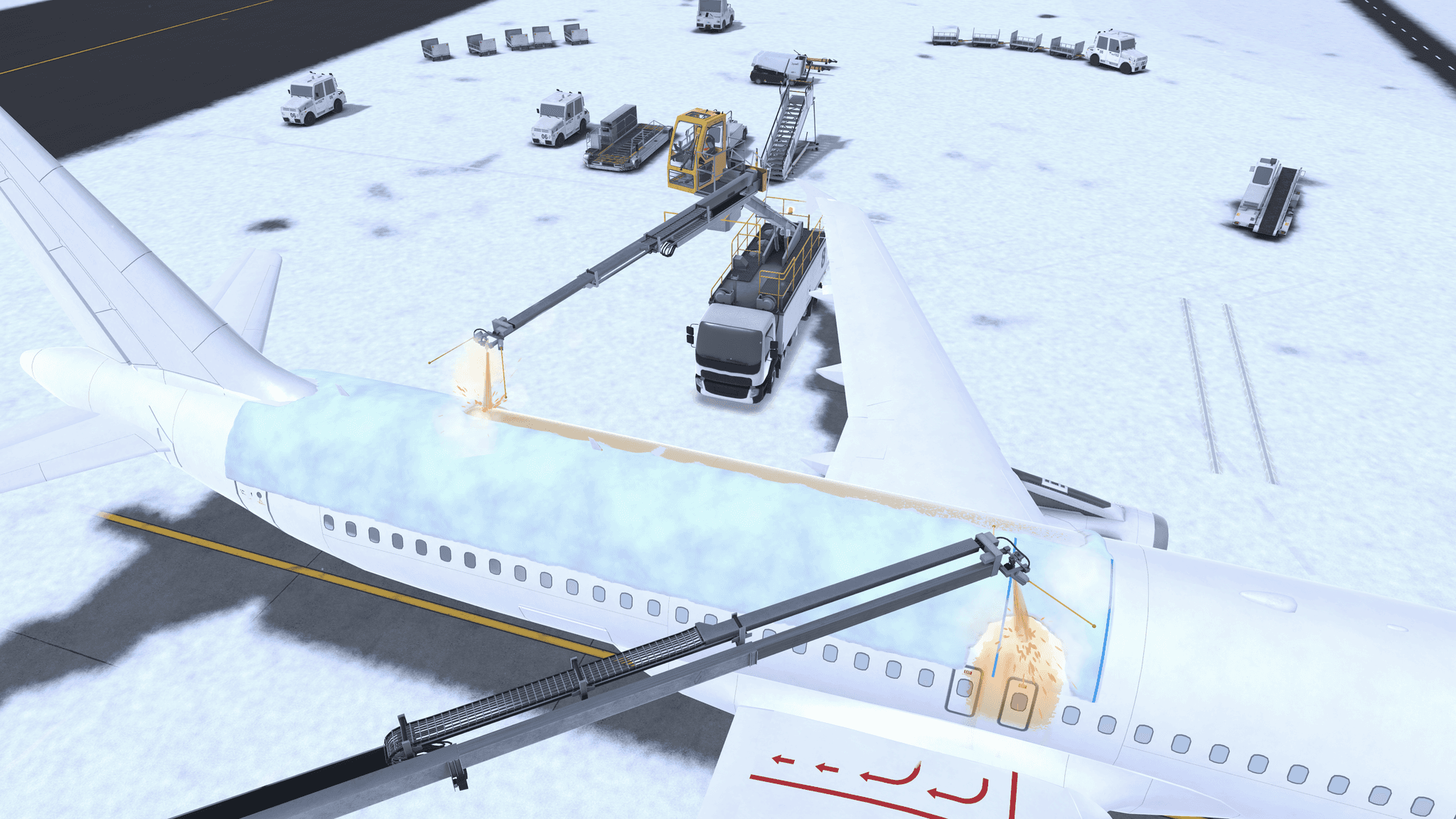
This lesson trains a complete one-step de-icing job on the right side of the fuselage of an Airbus A320, from accepting the job to recording it as done. Trainees watch a demonstration with a second de-icer on the other side, then clear the front section and the rear section strip by strip, from the top down and from the front to the back. The focus is on spraying above the windows and doors and letting the fluid run down, so the cockpit windows, cabin windows, doors, emergency exits and sensors are never sprayed directly.
Description
This lesson trains a complete one-step de-icing job on the right side of the fuselage of an Airbus A320, from accepting the job to recording it as done. Trainees watch a demonstration with a second de-icer on the other side, then clear the front section and the rear section strip by strip, from the top down and from the front to the back. The focus is on spraying above the windows and doors and letting the fluid run down, so the cockpit windows, cabin windows, doors, emergency exits and sensors are never sprayed directly.
Lesson Overview
- 1Accept the job, drive to the working position, and set up the procedure and the spray
- 2Watch a demonstration of the technique with a second de-icer on the other side of the fuselage
- 3De-ice the front section, from right behind the cockpit windows back to the wing
- 4De-ice the rear section from a second working position behind the wing
- 5Record the treated area and the working positions, and close the job
Skills Acquired
- Apply the top-down, front-to-back sequence for de-icing the fuselage
- Spray above windows, doors and emergency exits so the fluid clears them without direct spray
- Identify the no-spray zones on the fuselage, including the sensors on the nose
- Keep the nozzle 1 to 1.5 meters above the fuselage to prevent contact with the aircraft
- Record a de-icing job worked from more than one position on the Data Transmission System
Lesson Procedure
- The trainee starts in the operator cabin on an open stand at minus 1 °C, with the A320 prepared for de-icing: parking brake set, and air conditioning and APU air switched off so no fluid is drawn into the aircraft.
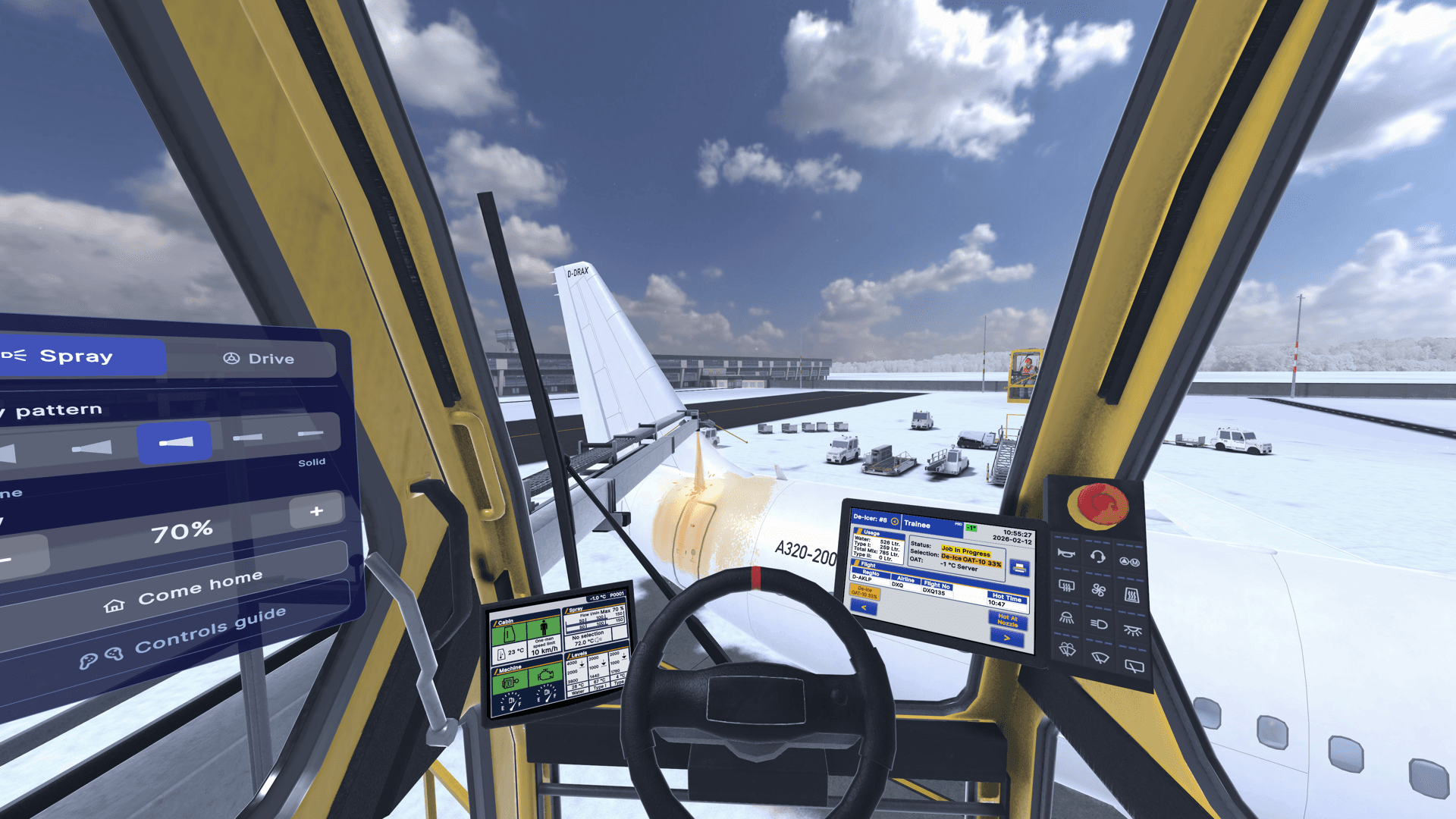
- The trainee accepts the job, drives into the working position next to the front fuselage, reports At Location, selects the one-step procedure and the de-icing fluid, and sets the medium cone and 70 percent flow.
- A second de-icer demonstrates the technique on the left side: the nozzle 1 to 1.5 meters above the fuselage, short strokes from the top down to just above the cabin windows, and the cabin turning toward the tail. The demonstration can be watched again.
- The no-spray zones are shown in red: the cockpit windows, cabin windows, doors, emergency exits and the sensors on the nose.
- The trainee brings the nozzle above the fuselage right behind the cockpit windows in three guided steps, then clears the highlighted strips of the front section toward the wing.
- The de-icer is repositioned behind the wing, and the trainee clears the rear section from the wing root toward the tail.
- On the task page, the trainee records the fuselage and the front right and rear right positions, ends the job and reviews the Job Summary.
Safety Scenarios & Learnings
Stopping outside the working position or touching the aircraft while driving in
Error and rewind; the de-icer stops in its working position, clear of the aircraft
Error and rewind; the de-icer stops in its working position, clear of the aircraft
Spray directly at the windows, doors or emergency exits
Red error and rewind; spray above them and let the fluid run down
Red error and rewind; spray above them and let the fluid run down
Spray at a sensor on the nose
Red error and rewind; sensors are never sprayed directly
Red error and rewind; sensors are never sprayed directly
Proximity sensor touching the aircraft
Red error and rewind; contact can damage the aircraft
Red error and rewind; contact can damage the aircraft
Nozzle more than 3.5 meters above the fuselage
Red error and rewind; the spray loses its effect at that distance
Red error and rewind; the spray loses its effect at that distance
Gallery