 Draxon VR Training Syllabus
VR Training
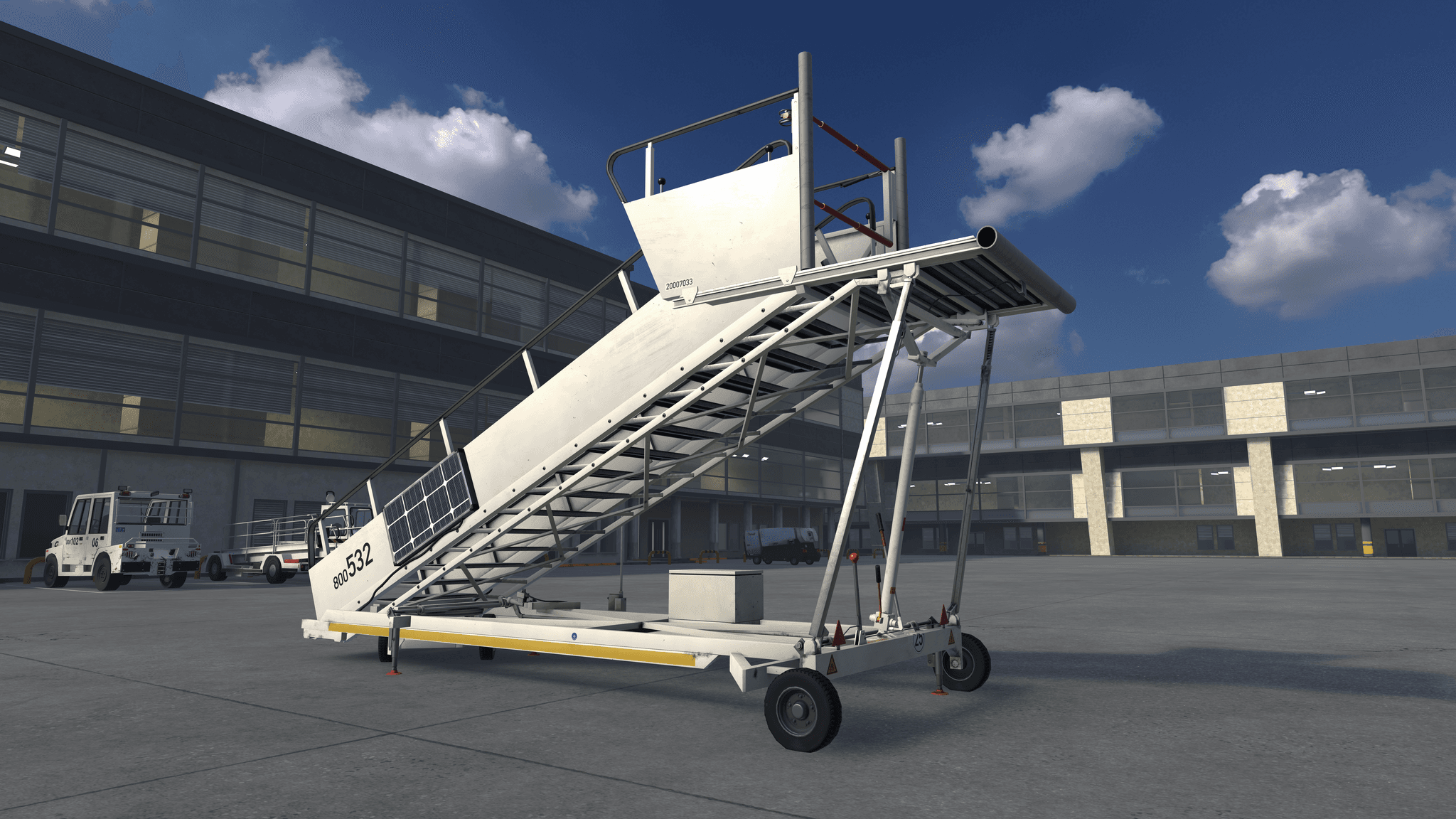
Towable Stairs
 Virtual Reality
Description
The Towable Stairs VR Training Course equips ramp and passenger service personnel with the skills and confidence to operate towable passenger stairs safely and efficiently. Through immersive, hands-on simulation, trainees learn proper movement, positioning, stabilization, and passenger safety procedures. Built-in error scenarios allow users to recognize and correct unsafe behavior, promoting awareness, precision, and compliance in live ramp conditions. The result is faster qualification, reduced supervision needs, and consistent performance across stations.
Scope
- Course with 10 lessons combining theoretical and practical training
- Includes exams and continuous trainee assessment
- Covers all towable stairs operations: setup, movement, elevation, positioning, and passenger use
- Designed for new ground handling personnel and experienced operators to refresh their skills
Languages
English, German, Dutch, Spanish, French, Greek, Arabic, Cantonese Chinese, Turkish
Duration
Initial Training: 32-50 Minutes
Recurrent Training: 20-28 Minutes
Audience
Ground Handling Operators
New Starters & Professionals
Standards
IATA: AHM 1110, Edition 46
IATA: IGOM, Edition 14
Equipment
Reference: TEC Hünert 5.17-01
Applicable across other stair types
Foundational Training
Learning Outcomes
- Ensures comprehensive understanding of towable stairs components and safety systems
- Builds operator confidence and competence in manual handling and elevation control
- Establishes standardized procedures for towing, securing, and stabilizing the unit
- Reinforces awareness of passenger safety features and hazard prevention
- Promotes consistent, compliant behavior across ground handling operations
Training Methodology
- Immersive Virtual Reality simulation replicating ramp environments and towable stairs behavior
- Realistic equipment interaction including hand pumps, levers, and stabilizer jacks
- Step-by-step guidance with voice and visual cues to ensure understanding and correct sequencing
- Built-in feedback and failure scenarios reinforce correct operation and procedural accuracy
- Knowledge assessment through multiple-choice examination and continuous evaluation
Operational Training
Learning Outcomes
- Develops confident, accurate operation of towable stairs in live aircraft environments, from approach to final positioning and departing
- Ensures operators can perform all aircraft-side procedures safely and consistently, including alignment, height adjustment, and handrail preparation
- Strengthens communication discipline and coordination with cabin crew during boarding and disembarking sequences
- Establishes reliable execution of departure routines to remove the stairs safely from the aircraft and hand over to tractor operator for towing away
- Promotes consistent adherence to operational safety principles, including no-touch compliance, hazard prevention, and controlled movement around the aircraft
Training Methodology
- Immersive Virtual Reality simulation replicating aircraft-side positioning, fuselage proximity cues, and live apron dynamics
- Realistic operational workflows including manual alignment, hydraulic height adjustment, handrail lock verification, and stabilizer jack deployment and retraction
- Step-by-step guidance supported by visual, audio, and proximity indicators to ensure proper sequencing and safe maneuvering around the aircraft
- Built-in safety scenarios exposing trainees to common operational errors such as incorrect positioning and height adjustment of the stairs platform, forgetting to properly secure the stairs or improper handrail use
- Knowledge assessment through a structured multiple-choice examination validating operational readiness and procedural accuracy
Recurrent Training
Learning Outcomes
- Refreshes and reinforces essential knowledge of towable stairs operation, positioning, and safety
- Ensures continued alignment with aircraft-side procedures, clearance requirements, and no-touch compliance
- Covers various aspects of stairs operation such as manual handling, height adjustment, handrail operation, and stabilizer jacks
Training Methodology
- Refresher module focusing on the most critical foundational and operational lessons
- Concise, targeted practice sessions simulating common aircraft-side hazards
- Scenario-based corrections reinforcing precision in clearance, communication, and sequencing
- Integrated performance feedback ensuring operators uphold safety, consistency, and procedural accuracy