Draxon VR Training Syllabus
Walkaround
 Virtual Reality
Description
This lesson trains the trainee to perform a full pre-operation inspection of a towable stairs unit. It emphasizes identifying defects, ensuring equipment readiness, and maintaining operational safety before use on the apron. The session builds systematic inspection habits and reinforces awareness of how of how major and even minor faults can compromise safety and cause delays.
Description
This lesson trains the trainee to perform a full pre-operation inspection of a towable stairs unit. It emphasizes identifying defects, ensuring equipment readiness, and maintaining operational safety before use on the apron. The session builds systematic inspection habits and reinforces awareness of how of how major and even minor faults can compromise safety and cause delays.
Lesson Overview
- 1Introduction to the purpose and importance of the pre-operation walkaround
- 2Visual and functional checks of tires, stabilizer jacks, handrails, and platform controls
- 3Explanation of what to look for at each inspection point and why each check matters
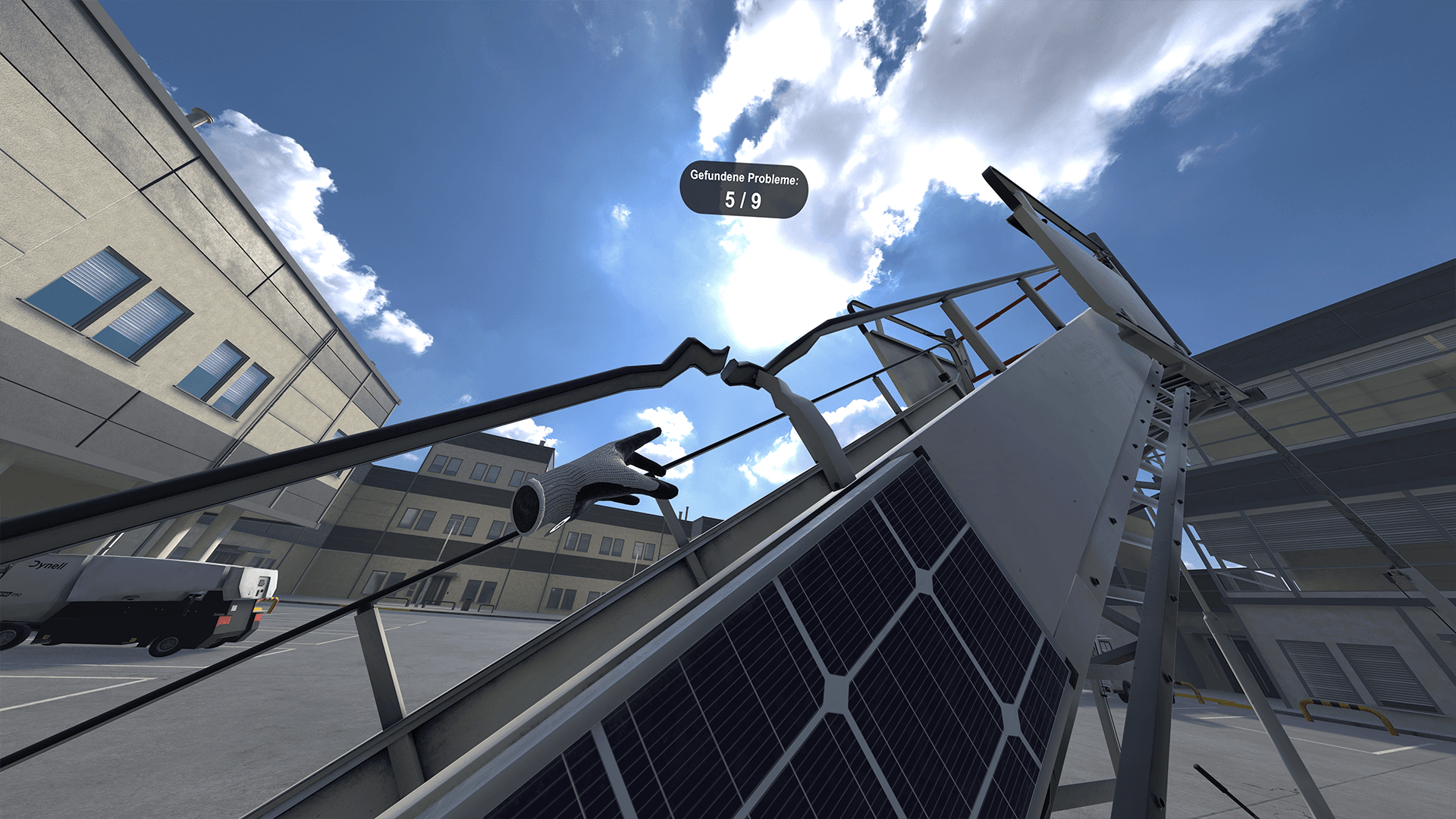
- 4Fault-finding exercise with 9 planted defects such as deflated tires and damaged handrails
Skills Acquired
- Perform a systematic pre-operation inspection of the towable stairs
- Inspect structural, mechanical, and safety-critical components to detect damage, leaks, or malfunctions before use
- Verfiy correct setup and positioning of stabilizer jacks, handrails, and safety systems to ensure full operational readiness
- Build consistent inspection discipline to prevent ramp incidents
Lesson Procedure
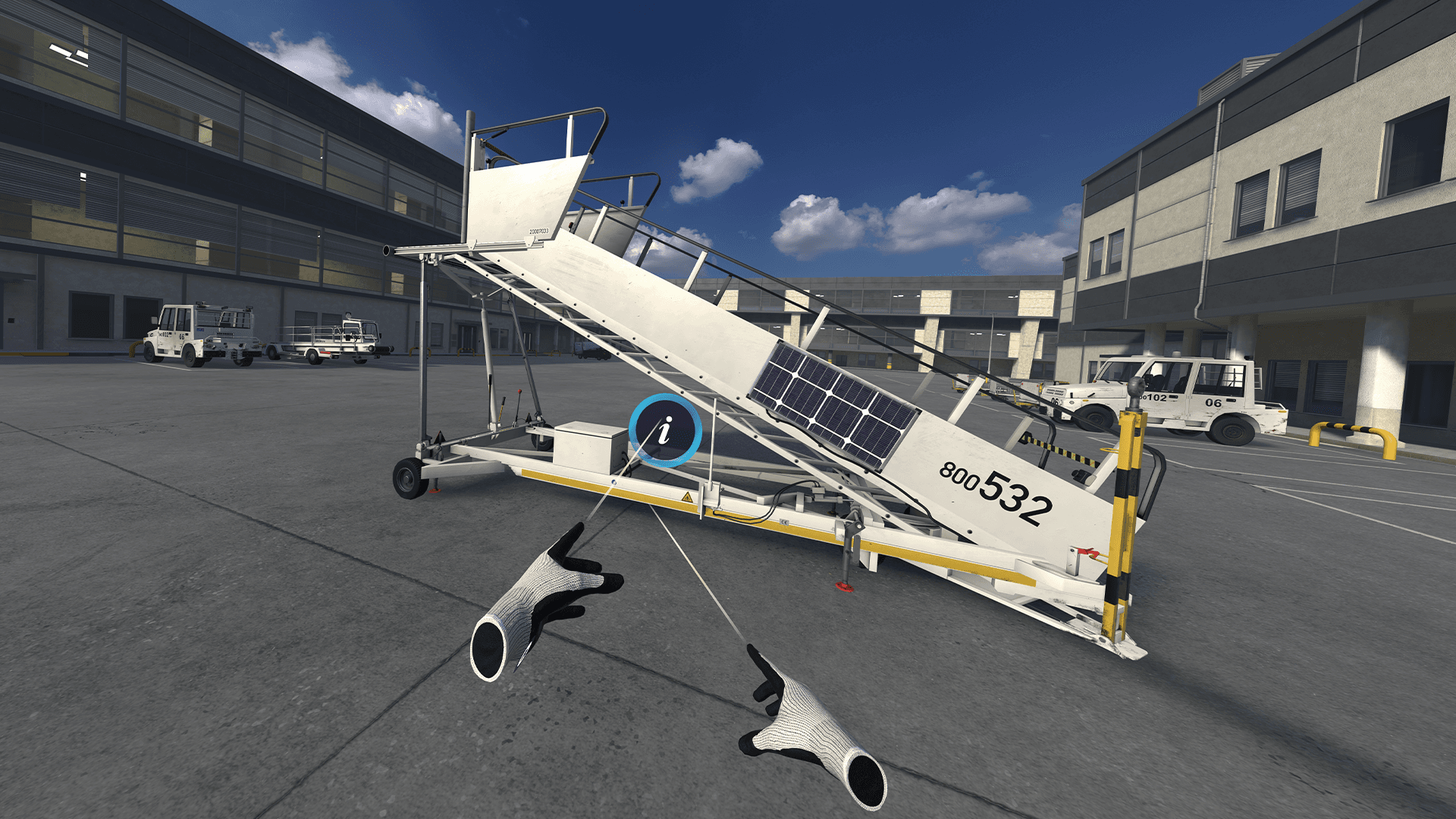
- The trainee begins beside the towable stairs as the purpose of the walkaround—to ensure the equipment’s safety and readiness before use—is introduced.
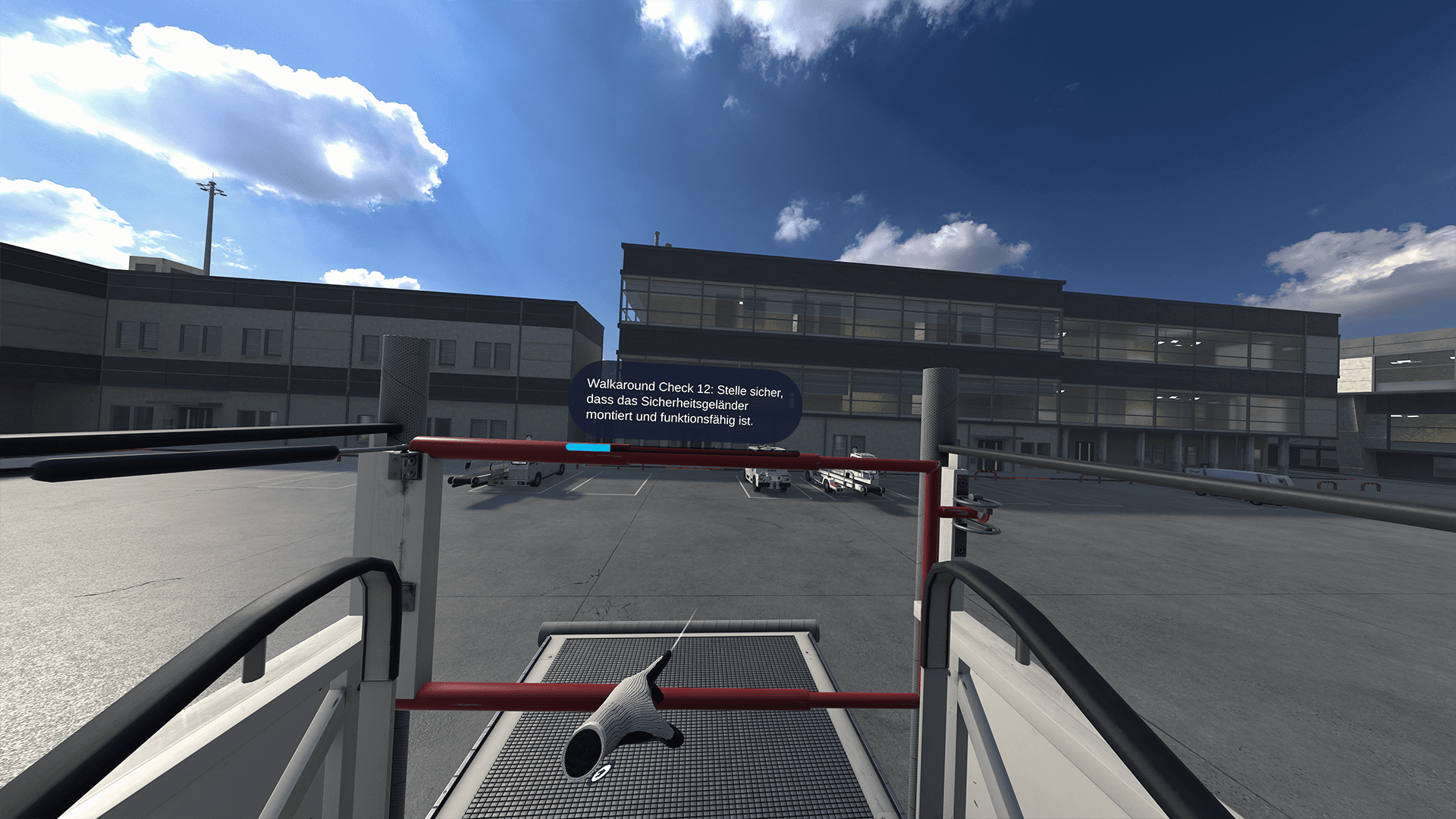
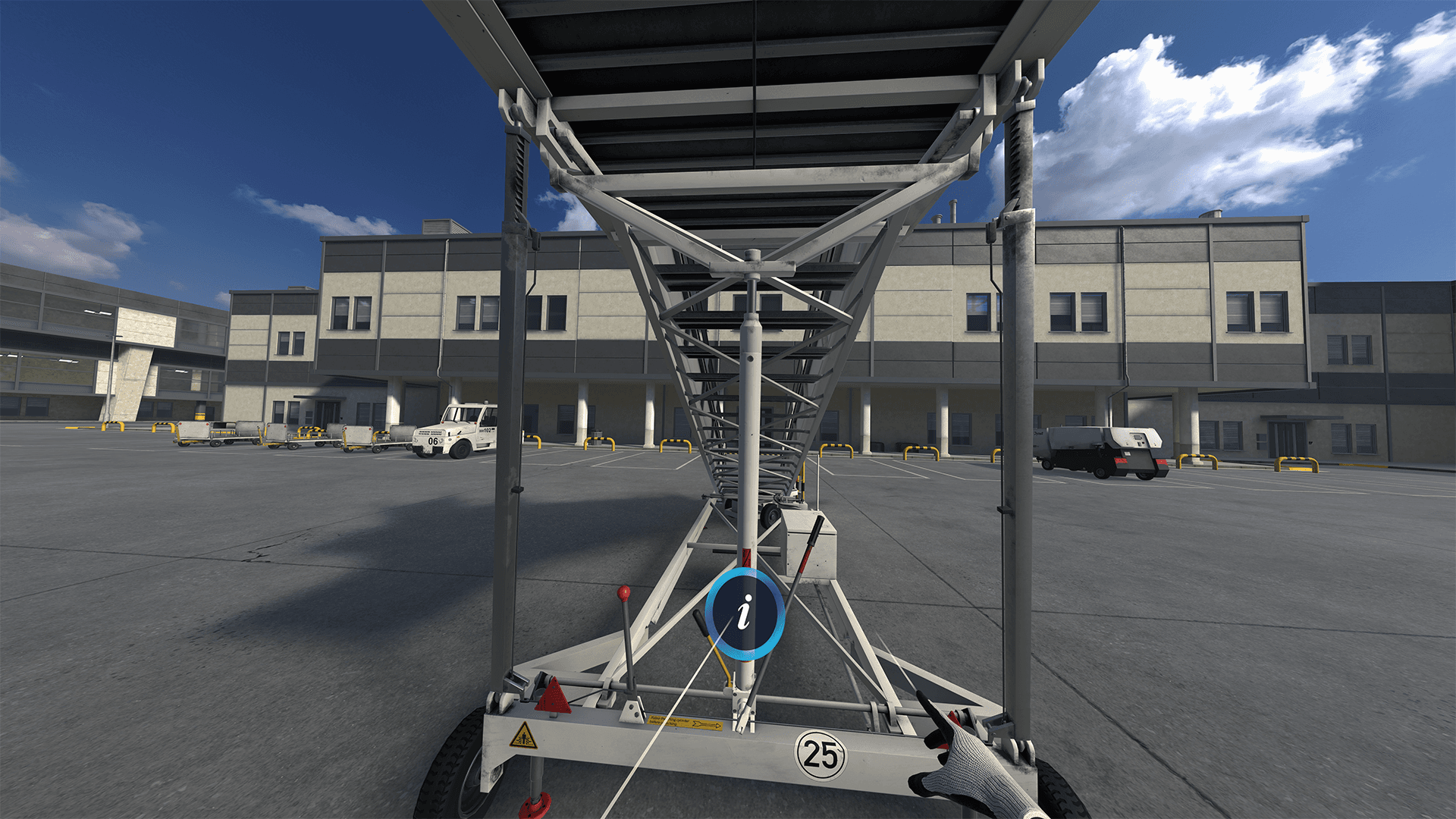
- The system leads the trainee through many inspection points covering tires, towingbar, stabilizer jacks, handrails, safety gate, and height control levers. Each checkpoint includes visual and voice guidance explaining what to inspect and why it matters for operational safety.
- After completing all inspection steps, a summary reinforces that every towable stairs unit must undergo a full pre-operation check before being positioned at an aircraft.
- The environment then reloads with a stairs unit containing 9 planted faults. The trainee identifies each issue by selecting the affected component, receiving immediate visual and audio confirmation. A counter displays progress as problems are found.
- The first two defects are demonstrated to show the correct identification method. Remaining issues must be found independently, with optional guidance after inactivity.
- The lesson concludes once all faults have been discovered, summarizing correct inspection habits and emphasizing the importance of systematic checks before aircraft servicing.
Safety Scenarios & Learnings
Elevated platform during parking/towing
Reinforces the rule to fully lower the platform before movement to prevent tip-over and infrastructure strikes
Reinforces the rule to fully lower the platform before movement to prevent tip-over and infrastructure strikes
Broken towbar latch / ineffective handbrake
Emphasizes securing the towbar so the integrated brake holds the unit and prevents roll-away
Emphasizes securing the towbar so the integrated brake holds the unit and prevents roll-away
Damaged stabilizer jack or hand-pump leakage
Stresses verifying smooth jack operation, alignment, and leak-free hydraulics to ensure stable, level positioning
Stresses verifying smooth jack operation, alignment, and leak-free hydraulics to ensure stable, level positioning
Deflated tire or missing/loose wheel nuts
Highlights tire and wheel condition as critical for safe towing and controllability on the ramp
Highlights tire and wheel condition as critical for safe towing and controllability on the ramp
Damaged bumper at platform front
Underscores the need for an intact buffer to prevent aircraft contact damage
Underscores the need for an intact buffer to prevent aircraft contact damage
Oil leakage at lift mechanism / misaligned controls
Teaches that hydraulic integrity and neutralized controls are mandatory for safe lifting and locking
Teaches that hydraulic integrity and neutralized controls are mandatory for safe lifting and locking
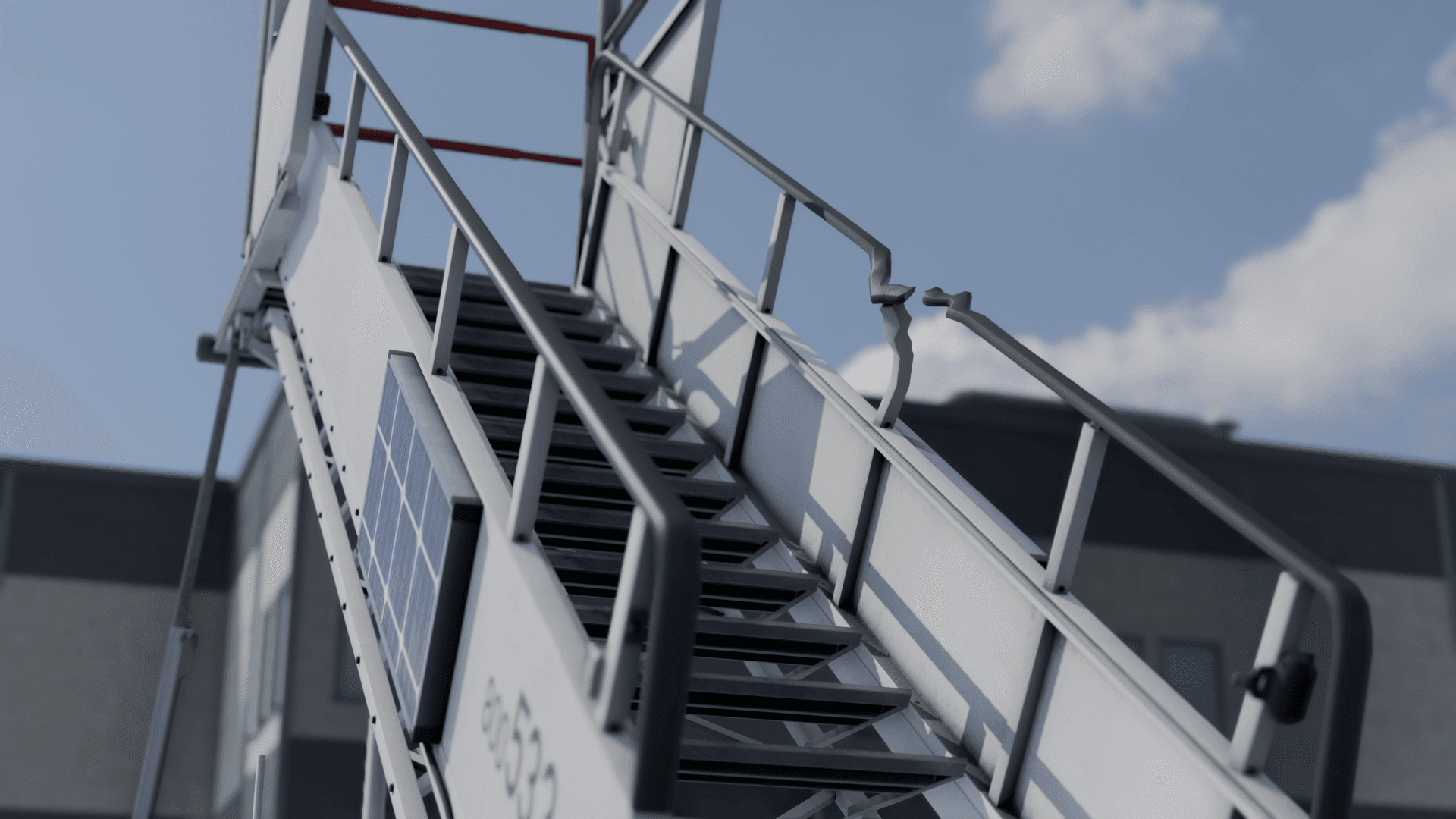
Damaged or unsecured handrails
Reinforces inspection of fixed and extendable handrails for cracks and proper locking to prevent falls
Reinforces inspection of fixed and extendable handrails for cracks and proper locking to prevent falls
Belt barrier open or nonfunctional
Instills the habit of closing/functional barriers to block unauthorized access and reduce injury risk
Instills the habit of closing/functional barriers to block unauthorized access and reduce injury risk
Steps contaminated with F.O.D., ice, or dirt
Emphasizes clearing tread surfaces to prevent slips and trips during boarding and disembarking
Emphasizes clearing tread surfaces to prevent slips and trips during boarding and disembarking
Gallery