Draxon VR Training Syllabus
Equipment Basics
 Virtual Reality
Description
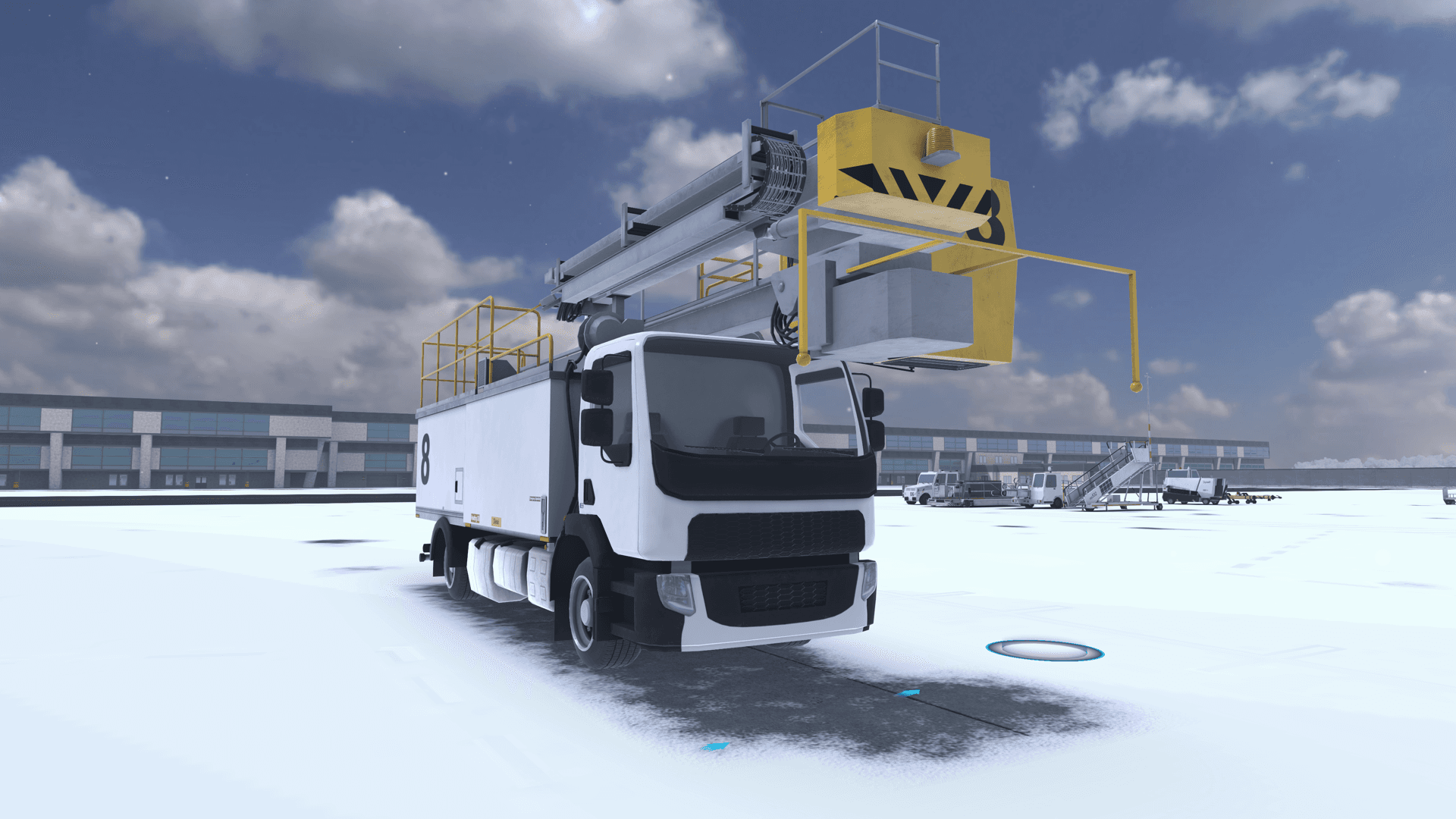
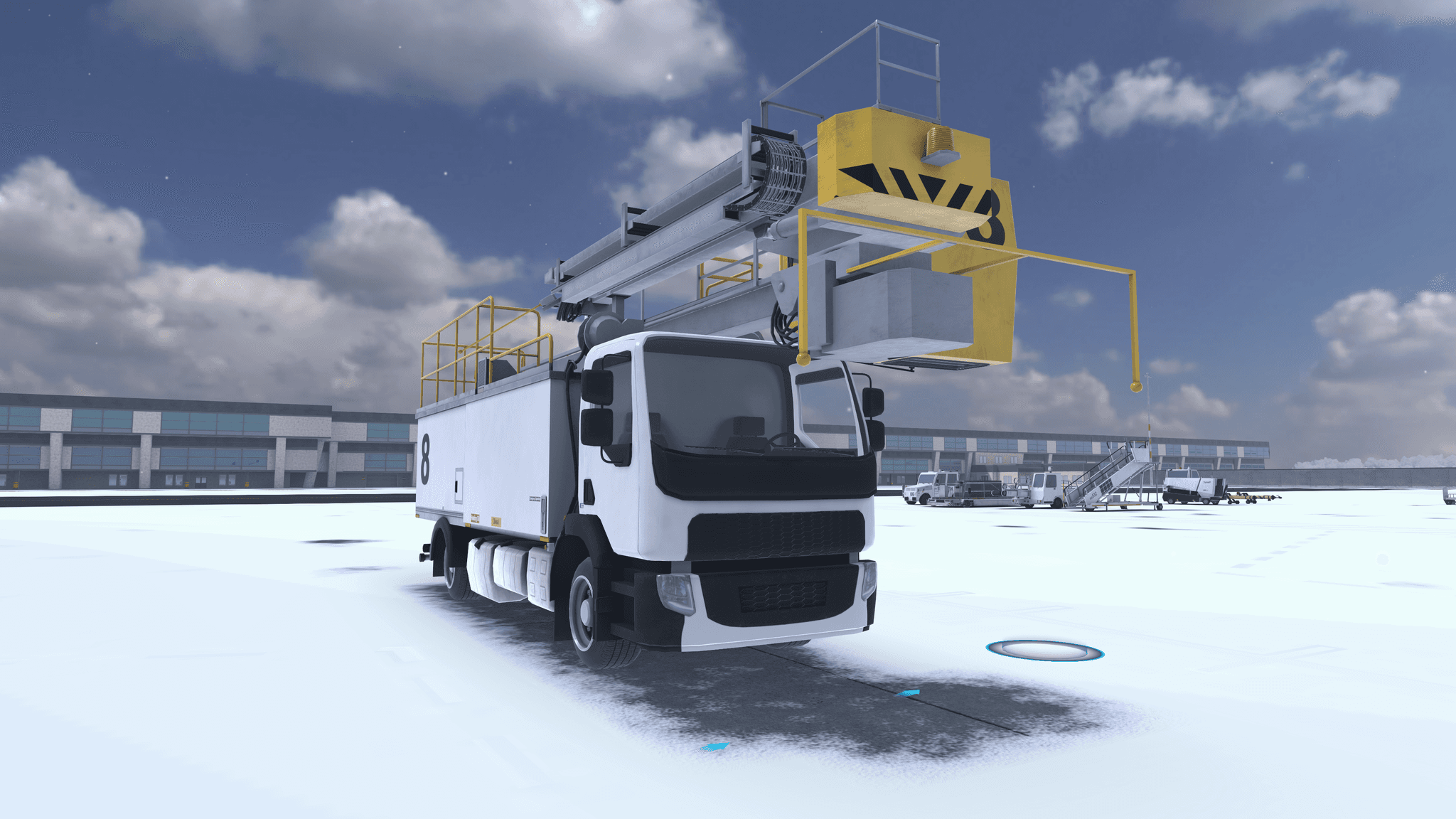
Introduces trainees to the de-icer, a Vestergaard Elephant BETA with a 12 meter telescopic spray boom and an enclosed operator cabin, before any operation or spraying. Trainees walk around the truck on the ground and then along the walkway on top. The lesson examines the fluid tanks and filling points, the mixing and heating systems, the telescopic boom and spray nozzle, and safety features including the proximity sensors, the beacon and work lights, and the emergency boom controls.
Description
Introduces trainees to the de-icer, a Vestergaard Elephant BETA with a 12 meter telescopic spray boom and an enclosed operator cabin, before any operation or spraying. Trainees walk around the truck on the ground and then along the walkway on top. The lesson examines the fluid tanks and filling points, the mixing and heating systems, the telescopic boom and spray nozzle, and safety features including the proximity sensors, the beacon and work lights, and the emergency boom controls.
Lesson Overview
- 1Walk around the de-icer on the ground and examine the driving cab, side gun, filling points and lights
- 2Climb to the walkway and examine the fluid tanks, the telescopic boom and the spray nozzle
- 3Identify the safety features and the operator cabin in its working position
Skills Acquired
- Identify the main de-icer components and the role each plays in a de-icing job
- Understand the difference between Type I de-icing fluid and Type II, III and IV anti-icing fluids
- Recognize the proximity sensors and emergency controls that protect the aircraft and the operator
- Understand why correct tank filling and working lights matter for an effective treatment
Lesson Procedure
- The trainee starts on an empty stand facing the de-icer, parked with the operator cabin flipped upside down above the driving cab.
- On the ground, the trainee visits the lower driving cab, the hand-held side gun for areas the boom cannot reach, and the fluid mixing and heating systems, which keep Type I fluid at least 60 °C at the nozzle.
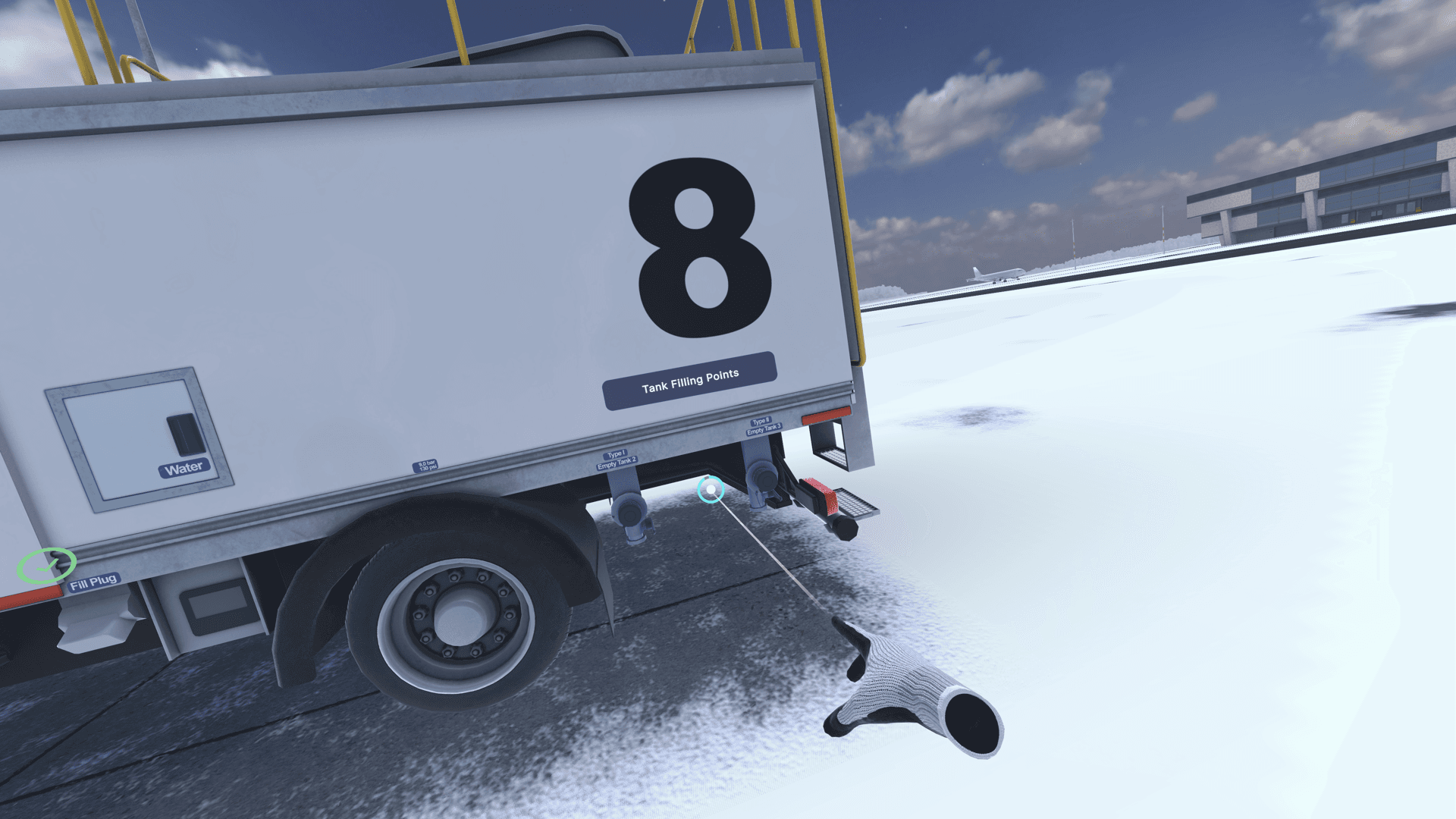
- At the tank filling points, the trainee learns that each coupling is labeled for one fluid and that filling the wrong tank contaminates its contents, followed by the rotating beacon and the work lights.
- The trainee climbs the access ladder to the walkway, keeping three points of contact on rungs that may be icy.
- On the walkway, the openings of the water, de-icing and anti-icing fluid tanks introduce the four fluid types and when each is used.
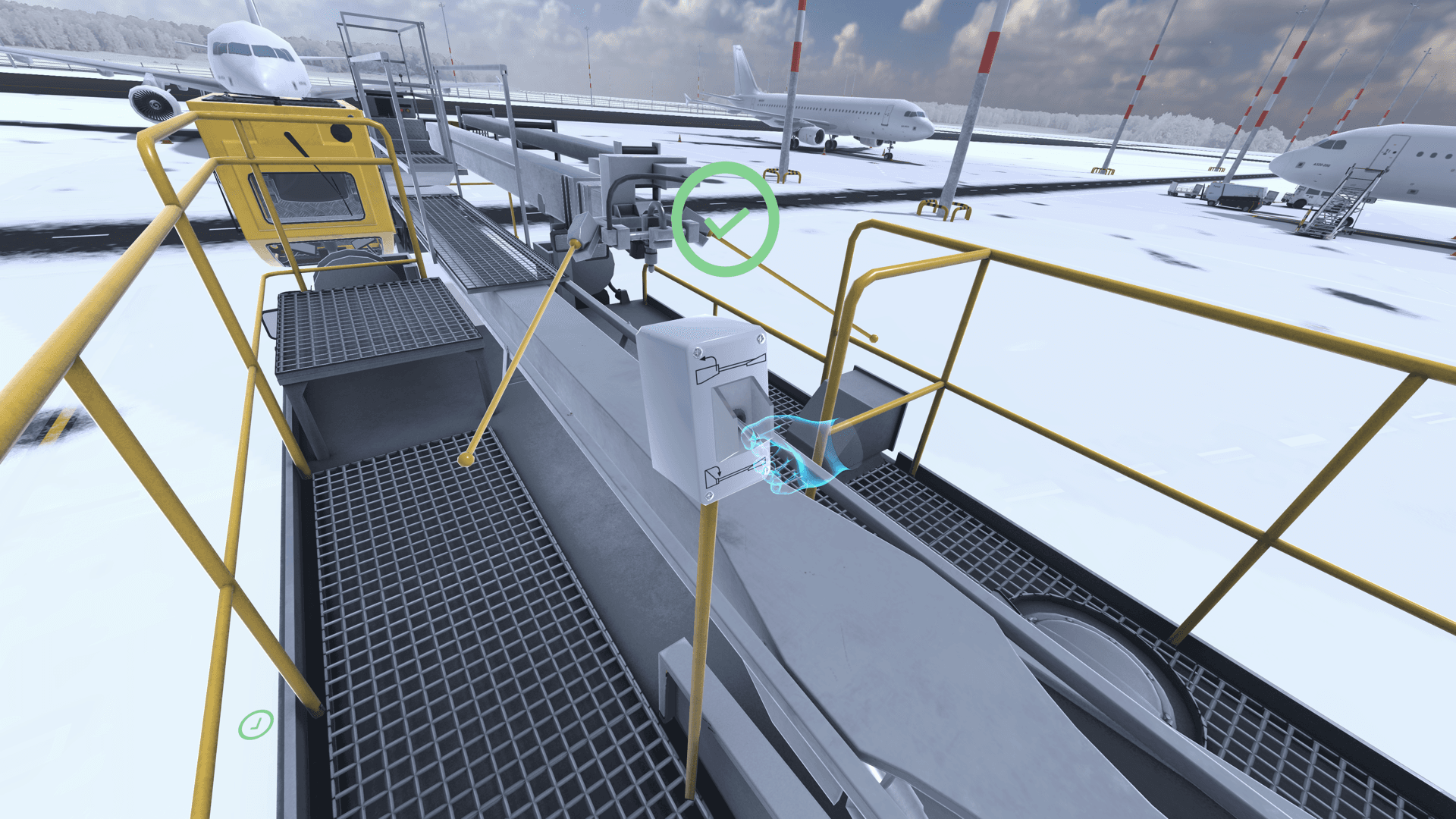
- The trainee moves the cabin turning switch and turns the operator cabin from its parked position into its working position.
- The trainee then examines the telescopic spray boom, the spray nozzle and its spray patterns, the proximity sensors ahead of the nozzle, the emergency boom controls, and the operator cabin built for one-person operation.
Gallery