
Marshalling Training
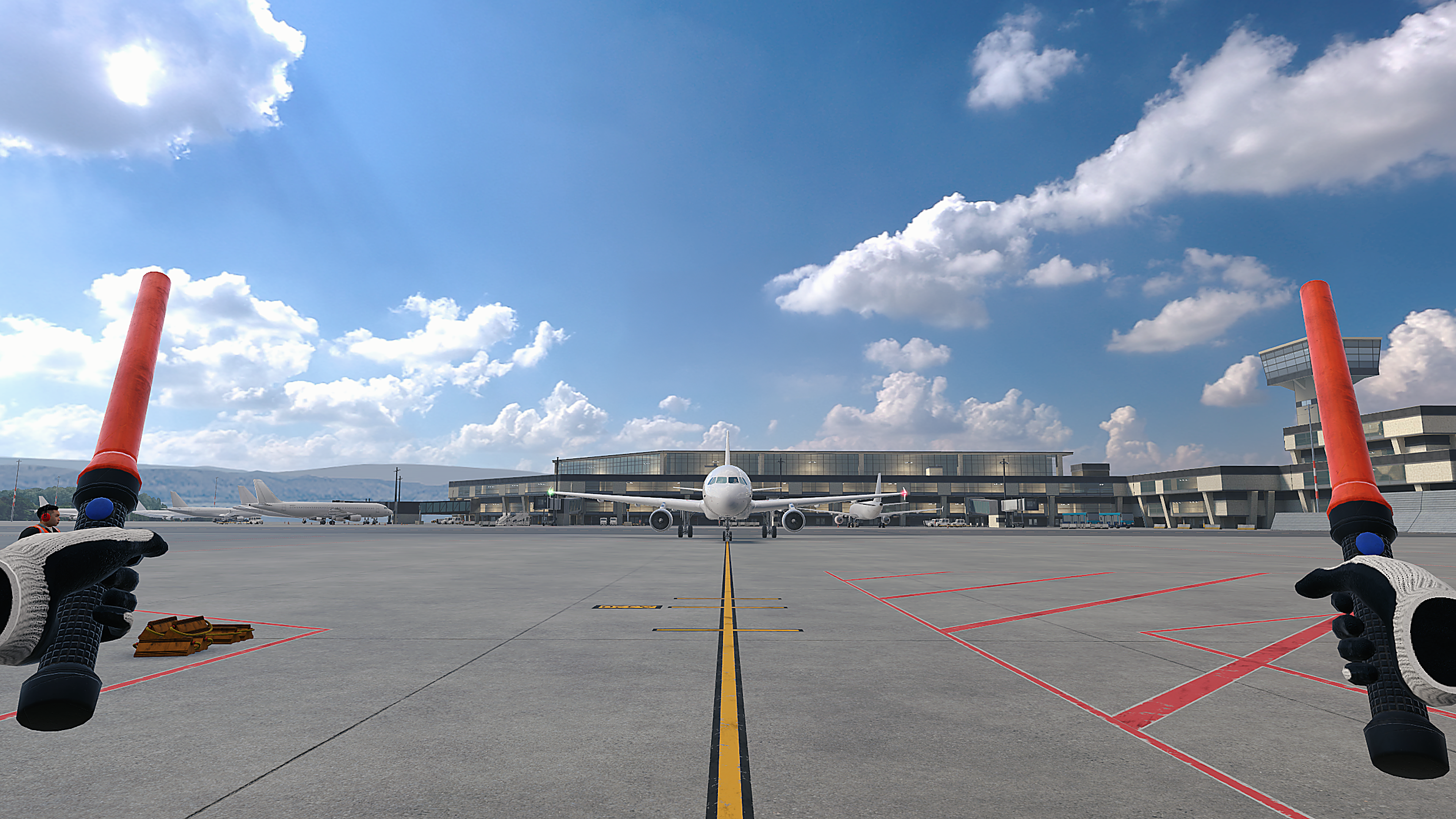
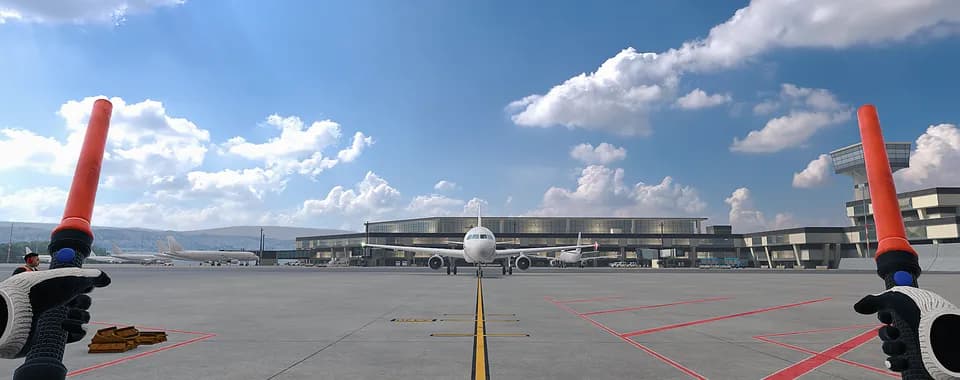
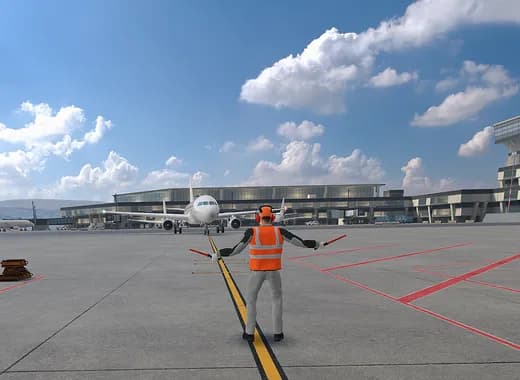
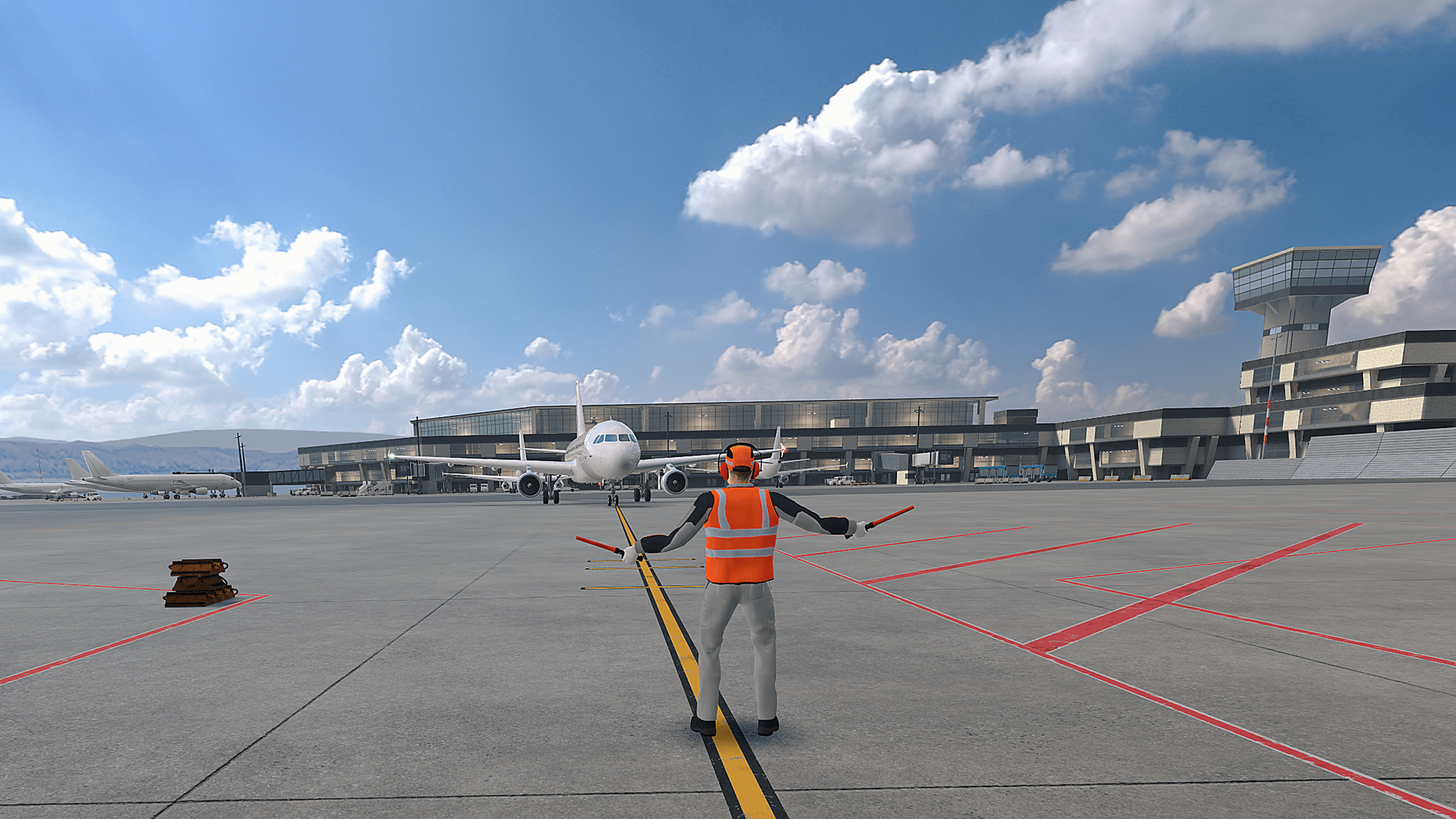
Practical Marshalling Training in Virtual Reality: Learn the marshalling signals and guide an arriving aircraft onto the stand.

Course with 5 lessons across theoretical and practical training

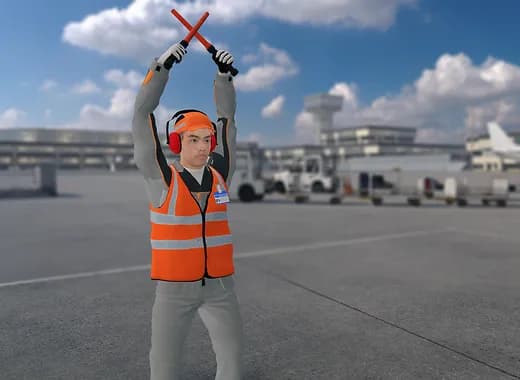
Trains the 20 core marshalling signals, from aircraft guidance to the emergency signals.

In-depth marshalling training with 28 learning minutes.

Available in 9 languages: English, German, Dutch, Spanish, French, Greek, Arabic, Cantonese Chinese, and Turkish.
Training Content
All use cases covered by Draxon Marshalling VR Training
Learning Outcomes
Course Overview Video
In use at innovative airports and trusted by industry leaders












Real Results, Real Feedback
Hear from industry leaders transforming their training programs.
People are really, really excited. Top notch! And I'm thrilled because I don't have to rattle off the PowerPoint slides anymore. And everyone learns the same thing.
Draxon is easy to use and extremely efficient. Our trainees enjoy the VR trainings, and the knowledge really sticks.

If you aren't using AI and VR now, you're already behind.
Highlights of the Marshalling Training Course
Get to know the key outcomes of the marshalling VR training.
Muscle Memory for Every Signal
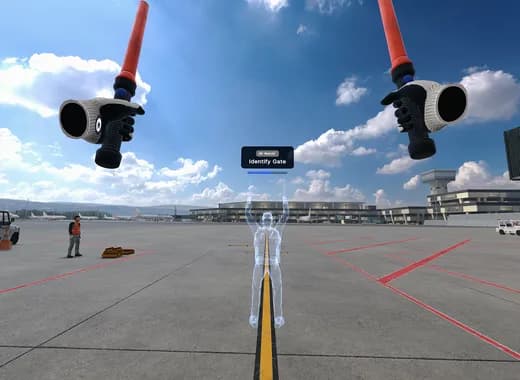
Motion detection coaches each repetition until the form is right, so trainees carry the 20 core signals onto the apron as habit, not theory.
Full Aircraft Arrival Practice
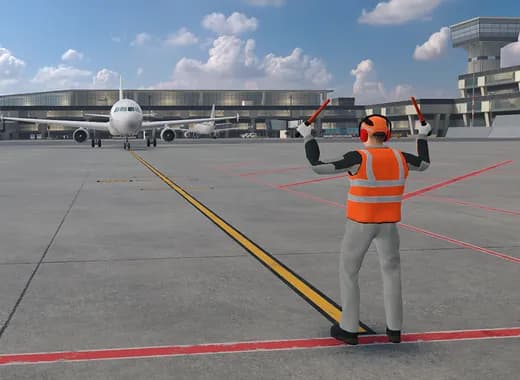
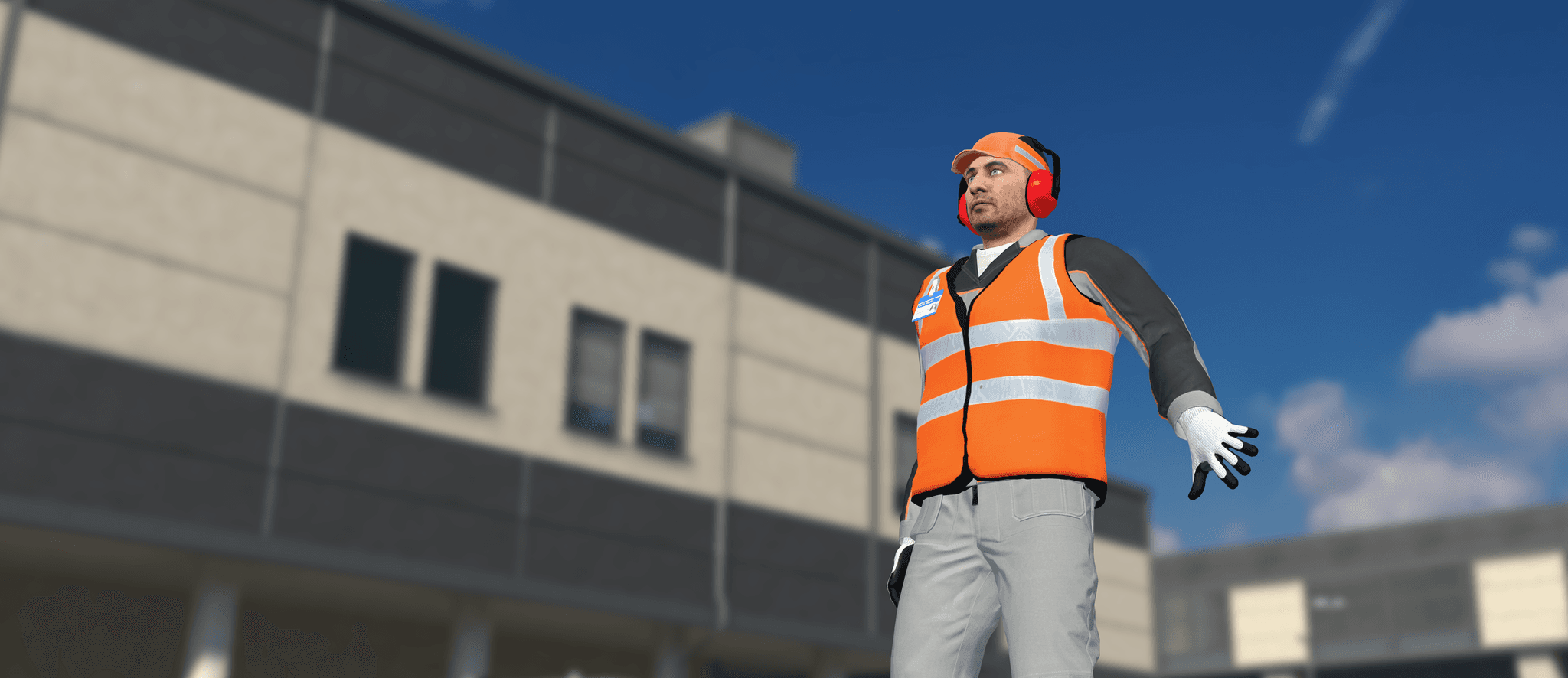
Trainees guide a real arrival end to end, from identifying the gate to stopping the aircraft on its marking and securing it.
Stop the Aircraft in Time
A tractor crossing the aircraft's path trains the immediate stop signal, and shows the collision that follows when it comes too late.
Scored Arrival Assessment
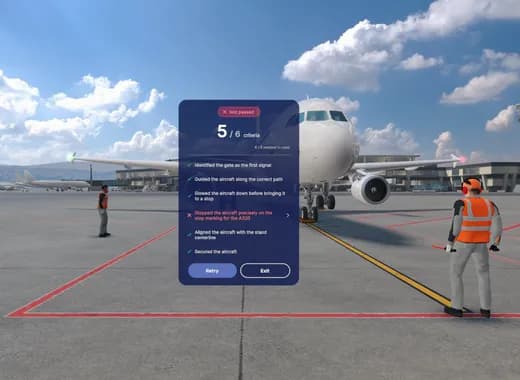
A final unguided arrival is scored against six criteria, giving training managers an objective record of marshalling competence.
Meeting the Highest Industry Standards
IATA
Built to meet IATA's global operational and safety requirements, supporting standardized and efficient aviation practices.
EASA
Aligned with EASA safety and regulatory standards to ensure consistent, reliable, and compliant aviation training.

GDPR
Designed with full GDPR compliance, ensuring secure data handling, privacy protection, and trusted information management.

Ready to start marshalling training?
Get everything you need to roll out VR training for your teams.
Questions? We have answers:
What skills are gained in the Marshalling VR Training course?
Trainees learn what the marshaller is responsible for: confirming the stand is clear of personnel and ground support equipment before the aircraft arrives, then guiding it to its parking position. They learn to handle the marshalling wands and perform the 20 core marshalling signals, from Identify Gate and the turn signals through to the emergency signals. They then apply those signals to a complete aircraft arrival, controlling the aircraft's path and speed, stopping it precisely on the stop marking, and securing it with set brakes and chocks inserted.
How is Marshalling different from the Hand Signals course?
They cover different signal sets for different jobs. The Hand Signals course trains the 27 standard hand signals ramp personnel use at close range to direct vehicles and ground support equipment on the apron, including the signals used to coordinate a pushback. Marshalling trains the wand signals that guide an arriving aircraft onto its stand from a distance, where the marshaller is the flight crew's only visual reference. Most ground handlers need both, but they are separate roles and separate signal vocabularies.
Are the Marshalling Training lessons videos to watch?
No. Apart from one demonstration arrival that trainees observe, every lesson is hands-on. Trainees hold the wands and perform each signal themselves, and motion detection assesses arm position, wand orientation and the speed of the movement, coaching until the signal is clear. That is feedback a video cannot give.
Can the Marshalling VR Training course help reduce time needed for classroom training?
Yes. Marshalling signals are traditionally taught from a chart in a classroom and then rehearsed on an empty stand. In VR the trainee performs each signal against live feedback and then applies it to a moving aircraft, which is the part a classroom cannot provide at all. That replaces most of the theory session and much of the supervised rehearsal.
What are the benefits of the Marshalling VR Training for real-world operations?
A misread or mistimed marshalling signal can put an aircraft off the centerline, into an adjacent stand, or past its parking position, and the flight crew has no way to correct it. Practising complete arrivals, including the case where a vehicle crosses the aircraft's path, means trainees have already made and corrected those mistakes before they marshal a live aircraft. Stations get fewer stand incidents and a consistent marshalling standard across shifts.
Can people with a tendency to motion sickness do the Marshalling VR training?
Yes. Less than 3% of trainees report any symptoms. The trainee stands at the marshaller position throughout and the aircraft moves rather than the trainee, so there is very little of the self-motion that causes discomfort.
Is the Marshalling VR Training applicable for initial training?
Yes. It is built as a complete path for someone new to the role: what marshalling is, then the signals, then supported arrivals with a demonstration before each signal, then unguided arrivals, and finally a scored assessment. A new marshaller can work through all of it before going near a live aircraft.
Is the Marshalling VR Training aligned with IATA standards?
Yes, the course is developed in alignment with IATA AHM 1110 and IGOM guidelines. The signal set follows the standard marshalling signals defined in IGOM, and the arrival procedure covers the stand clearance check, guidance onto the stand centerline, and the securing sequence as IATA-compliant ramp operations describe them.
Is the Marshalling VR Training aligned with EASA standards?
Yes, the training design is aligned with EASA safety principles. The stand clearance check before the aircraft arrives, the discipline of stopping an aircraft when its path is not clear, and the accurate parking that maintains clearance to buildings and adjacent stands all reflect the apron safety expectations EASA sets for ground handling.