Draxon VR Training Syllabus
Aircraft Arrival (Advanced)
 Virtual Reality
Description
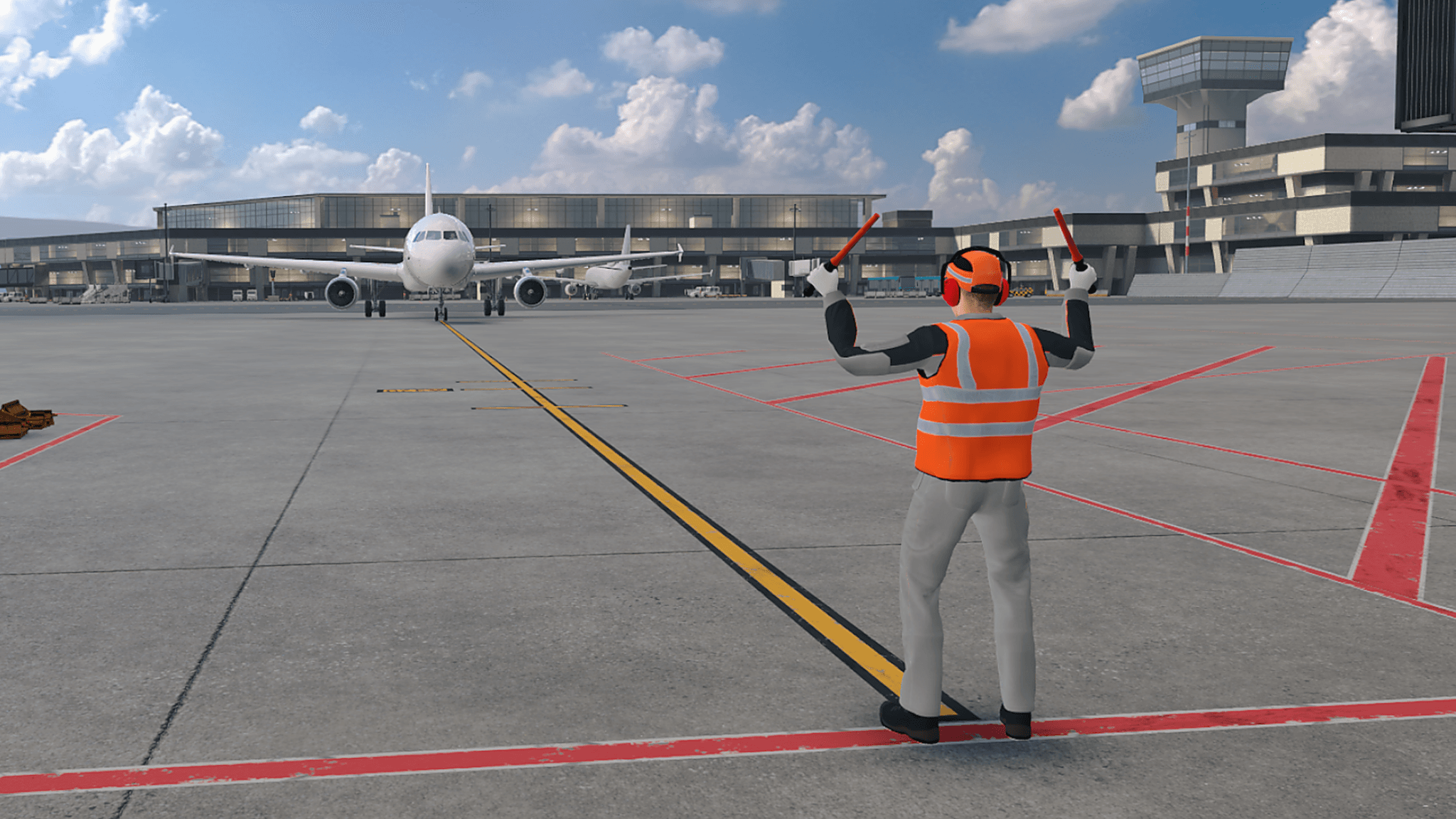
This lesson trains the complete marshalling of an inbound aircraft onto the stand, with the trainee deciding which signal to give and when with only minimal guidance. Trainees identify the gate to the flight crew, guide the aircraft onto the stand centerline, manage its approach speed, and bring it to a halt precisely on the stop marking. The focus is on watching the aircraft's path throughout the arrival, since a vehicle crossing in front of the aircraft has to be answered with an immediate stop that the flight crew cannot judge from the cockpit.
Lesson Overview
- 1Identify the assigned gate to the flight crew as the aircraft taxis in
- 2Guide the aircraft onto the stand centerline and manage its approach speed
- 3Stop the aircraft when a tractor crosses its path and resume once the path is clear
- 4Bring the aircraft to a halt on the stop marking, aligned with the centerline
- 5Secure the aircraft with brakes set and chocks confirmed
Skills Acquired
- Guide an inbound aircraft onto the stand and into its parking position without prompting
- Judge which signal an approaching aircraft needs and at which moment to give it
- Recognize a vehicle or person entering the aircraft's path and halt the aircraft to prevent a collision
- Bring an aircraft to a stop on the correct stop marking to keep clearance to buildings, taxiway and neighbouring stands
- Reduce an aircraft's speed gradually before bringing it to a halt to avoid an abrupt stop
Lesson Procedure
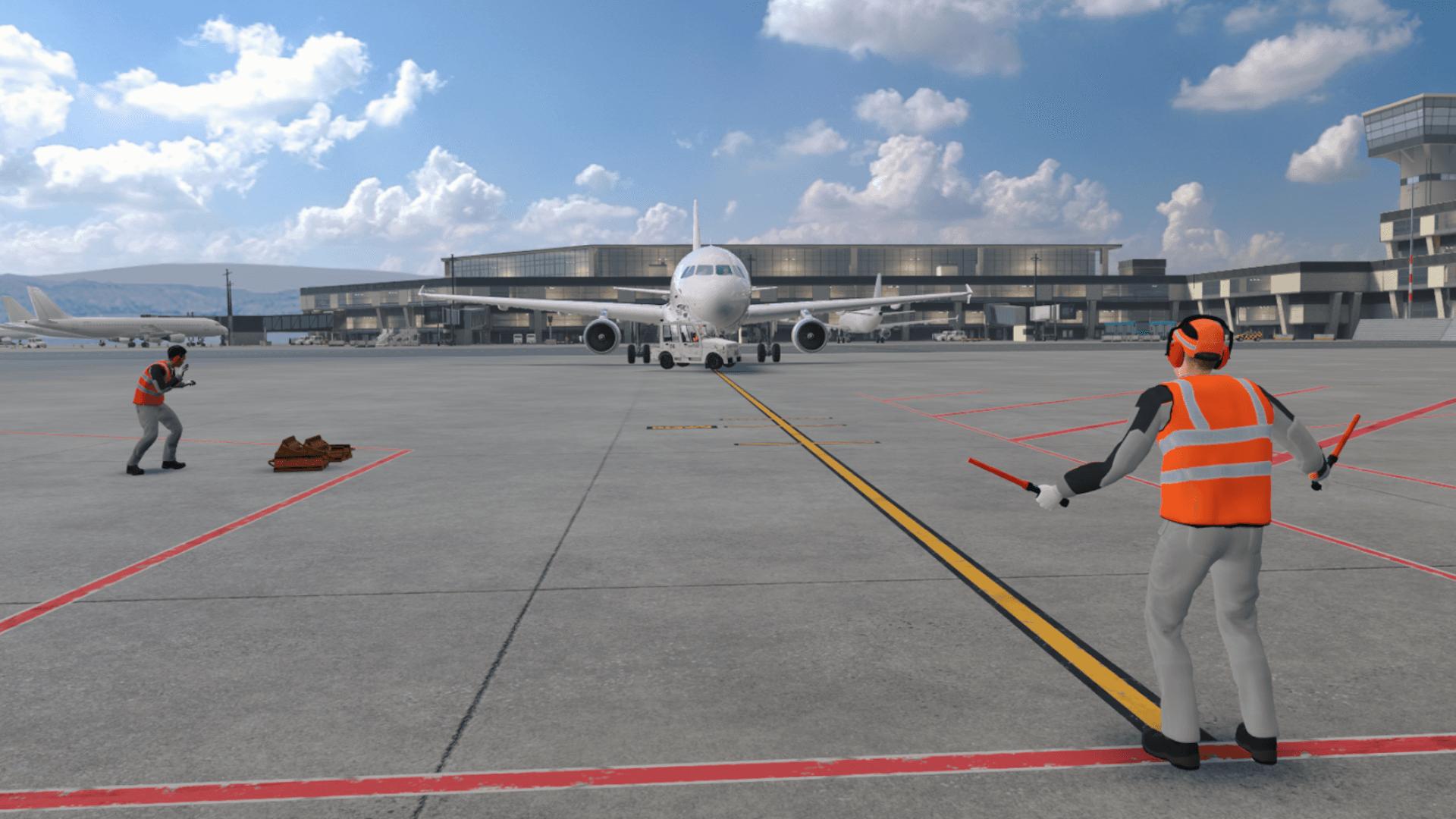
- The trainee takes up the marshalling position at the stand with the wands in hand, facing the aircraft taxiing in.
- The trainee shows the Identify Gate signal and holds it until the flight crew confirms this is the correct stand and it is safe to approach.
- Using Turn Right and Slow Down, the trainee brings the aircraft through the turn onto the stand centerline and controls its approach speed.
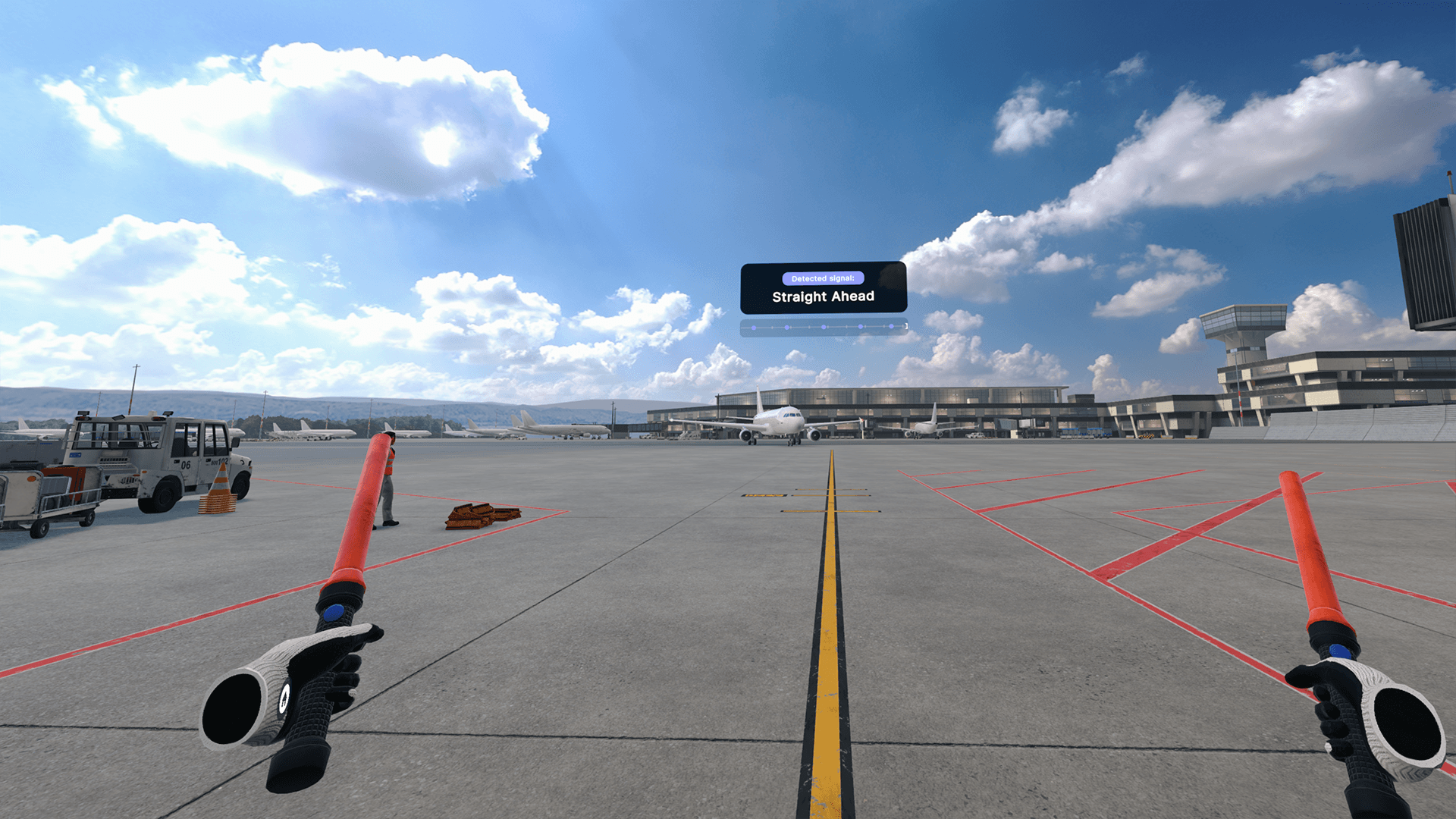
- A tractor drives across the aircraft's path. The trainee has to signal Stop immediately and hold the aircraft until the tractor is clear, then show Straight Ahead to let the flight crew continue taxiing.
- A simulated accident shows what happens when the Stop signal comes too late, because the flight crew has limited visibility and cannot see a crossing tractor from the cockpit.
- As the nose gear reaches the stop marking, the trainee signals Stop. The parking position is assessed on position on the marking and alignment with the centerline.
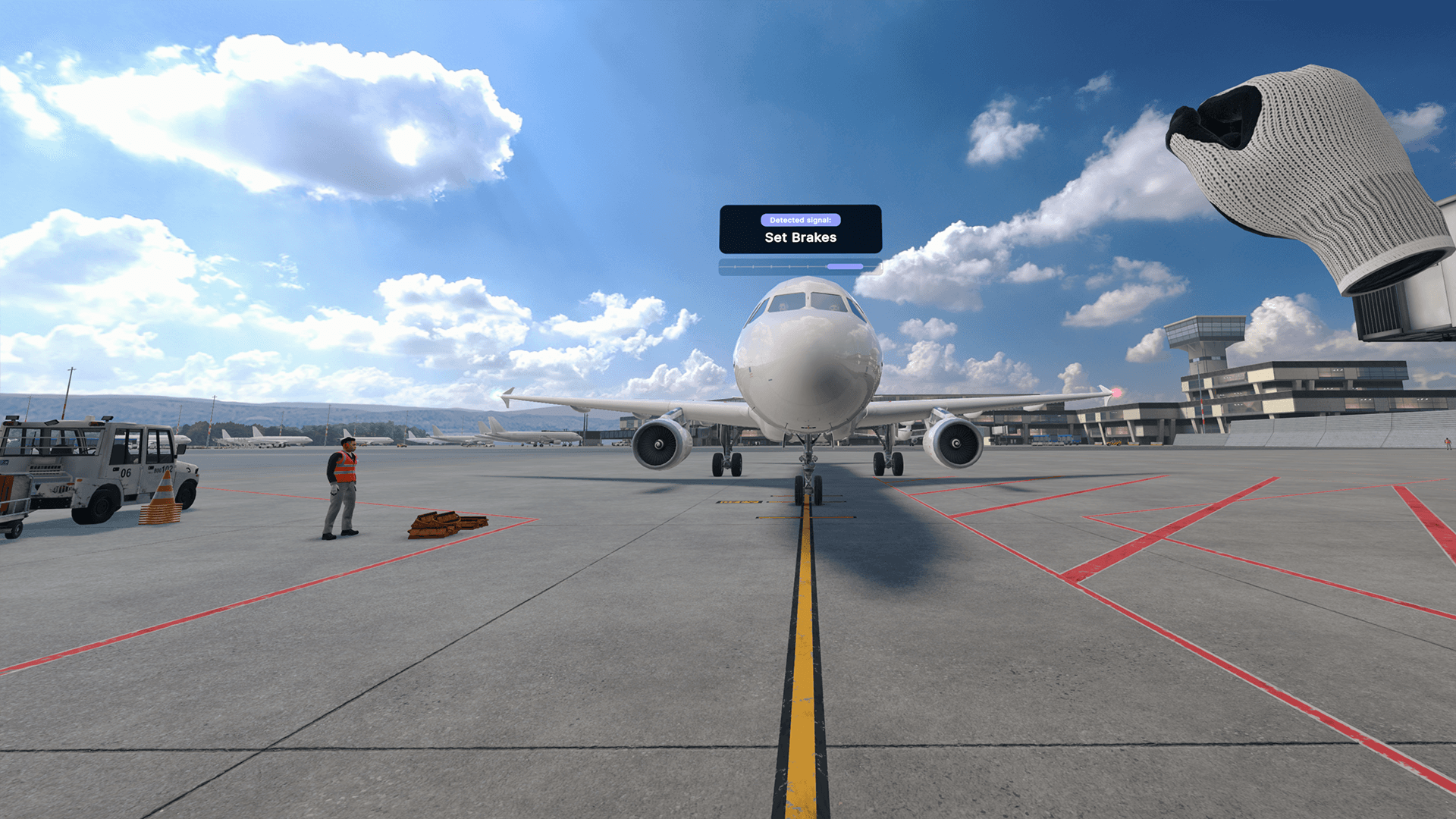
- The trainee signals Set Brakes, a colleague places the chocks at nose and main gear, and the trainee confirms with the Chocks Inserted signal.
- If the aircraft is guided off the path, into an adjacent stand, or brought to a halt in the wrong place, a marshaller demonstrates the missed signal and the arrival starts again.
Safety Scenarios & Learnings
Identify Gate not shown before the aircraft commits to the turn
Arrival restarts with a demonstration of the signal; the flight crew needs confirmation that this is the correct stand before approaching
Arrival restarts with a demonstration of the signal; the flight crew needs confirmation that this is the correct stand before approaching
Tractor crossing the aircraft's path without a Stop signal
Simulated collision; a vehicle, ground support equipment or person in the path means an immediate stop
Simulated collision; a vehicle, ground support equipment or person in the path means an immediate stop
Straight Ahead given while the tractor is still in the path
Warning; the aircraft only resumes once the path is clear
Warning; the aircraft only resumes once the path is clear
Turn Right signalled too late
The aircraft carries straight on instead of turning onto the centerline; the turn has to be initiated before the stand centerline is passed
The aircraft carries straight on instead of turning onto the centerline; the turn has to be initiated before the stand centerline is passed
Stop signalled while the aircraft still carries a lot of speed
Abrupt stop by the flight crew; arriving aircraft are slowed down gradually before being halted
Abrupt stop by the flight crew; arriving aircraft are slowed down gradually before being halted
Stop signalled after the nose gear passes the stop marking
The aircraft rolls beyond its parking position; each aircraft type has its own stop marking that keeps clearance to buildings, taxiway and neighbouring stands
The aircraft rolls beyond its parking position; each aircraft type has its own stop marking that keeps clearance to buildings, taxiway and neighbouring stands
Aircraft guided off the taxi path or toward an adjacent stand
Arrival restarts; the aircraft has to be kept clear of the positions left and right
Arrival restarts; the aircraft has to be kept clear of the positions left and right
Aircraft halted while not aligned with the centerline
Arrival restarts; alignment has to be corrected before the stop marking is reached
Arrival restarts; alignment has to be corrected before the stop marking is reached
Gallery