Draxon VR Training Syllabus
Marshalling: Signals
 Virtual Reality
Description
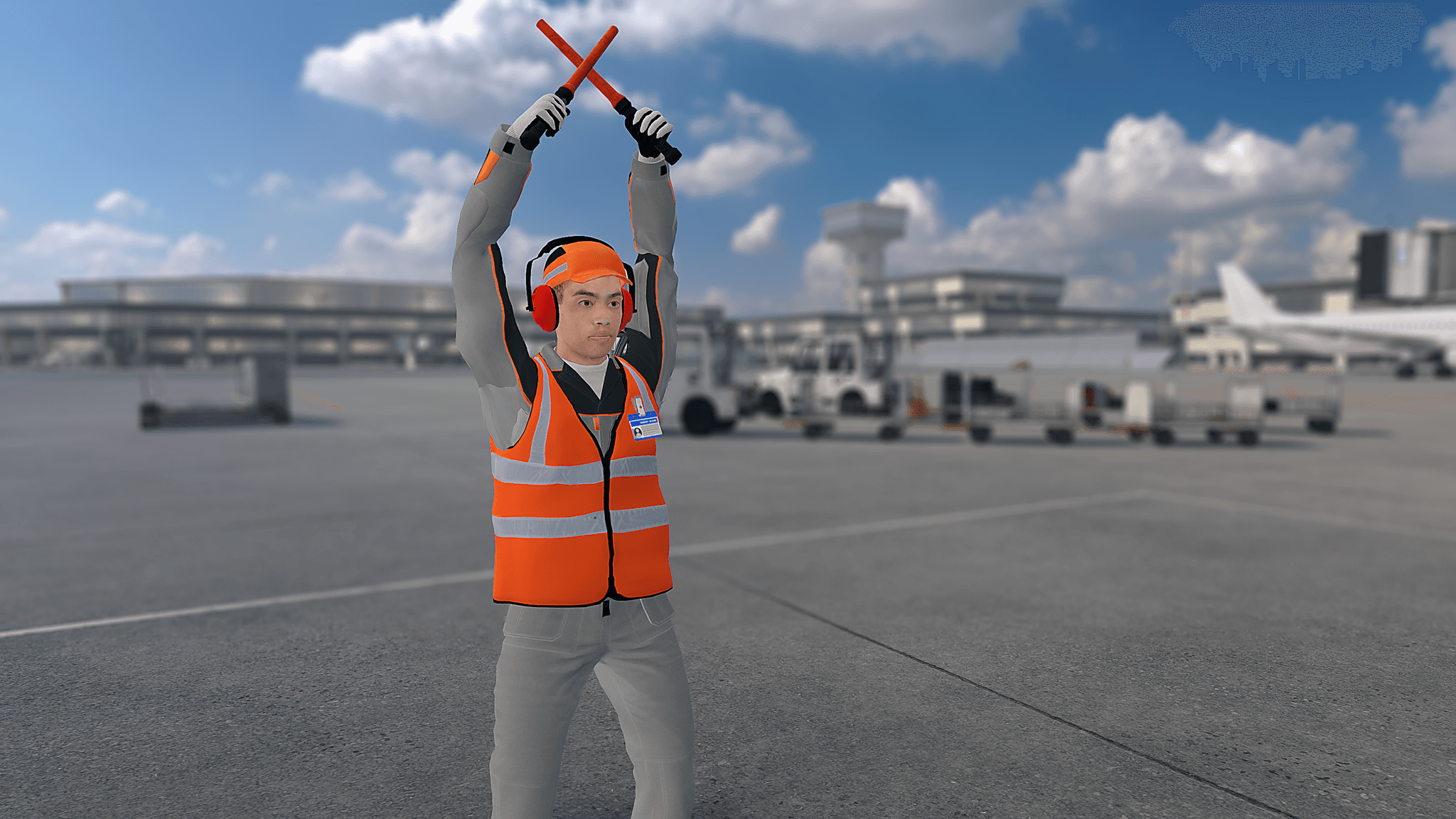
This lesson trains the standardized marshalling signals used to direct aircraft on the apron, from guiding an aircraft onto its stand through to the emergency signals. Trainees watch a colleague demonstrate each signal with the wands and then perform it themselves, working on arm position, wand orientation, and the speed and direction of the motion. The focus is on execution precise enough that the flight crew reads the instruction as intended, because a signal that is unclear or held too briefly can be misinterpreted.
Lesson Overview
- 1Set up a clear working area and take up the marshalling wands
- 2Observe a colleague demonstrate each marshalling signal and its meaning
- 3Perform each signal in turn, with coaching on arm position, wand orientation and motion until the form is right
- 4Complete the full set of signals, covering aircraft guidance, ground coordination and emergencies
Skills Acquired
- Recognize each standard marshalling signal and the instruction it gives the flight crew
- Execute signals with the arm position, wand orientation and motion each one requires
- Distinguish signals that mirror one another, such as the turn, brake and chock pairs, to prevent a misread instruction
- Apply the emergency signals, including fire and engine shutdown, to stop aircraft movement without delay
Lesson Procedure
- The trainee stands with enough space to extend both arms fully to the sides, confirms the area is clear, and picks up the marshalling wands.
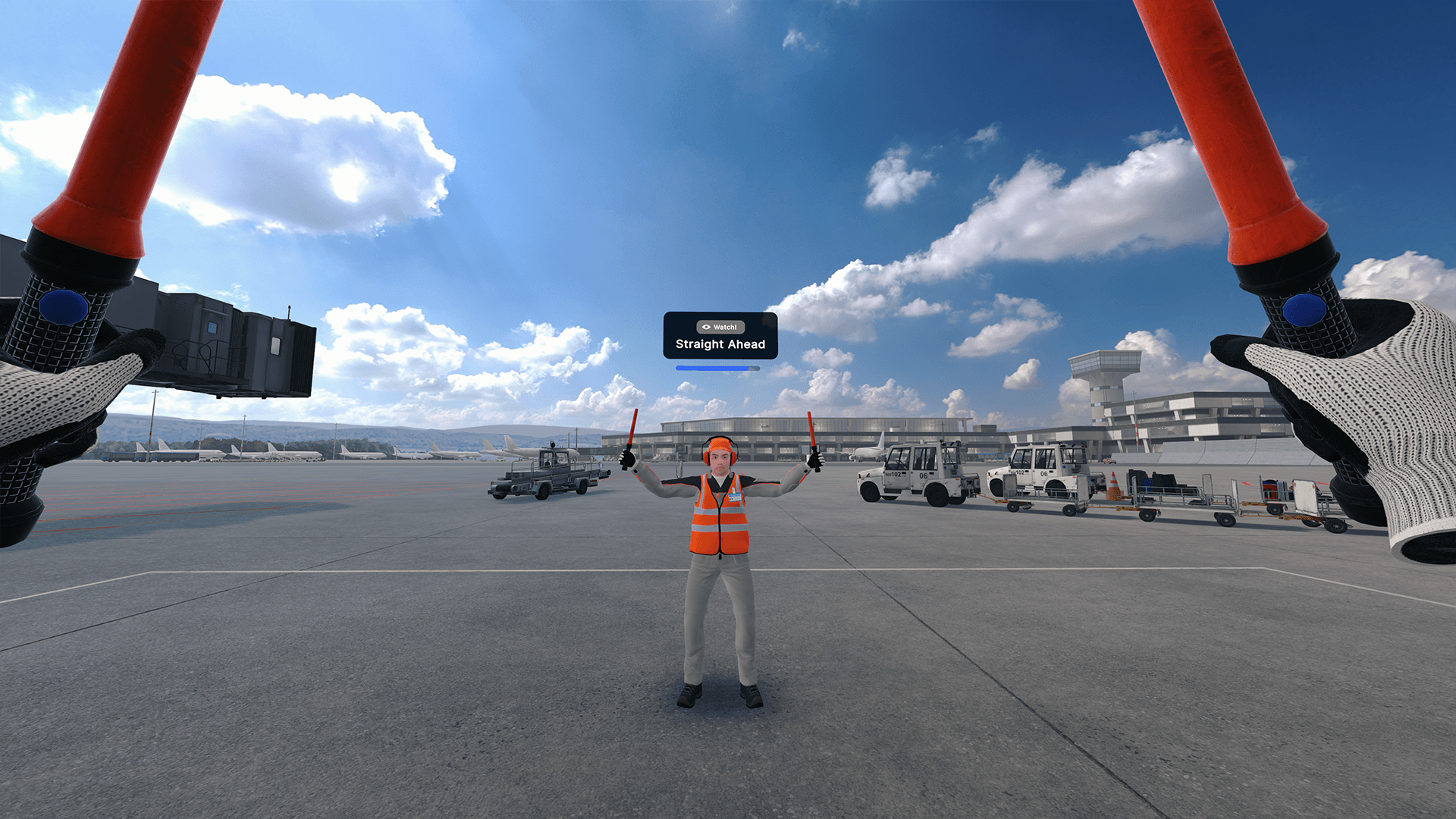
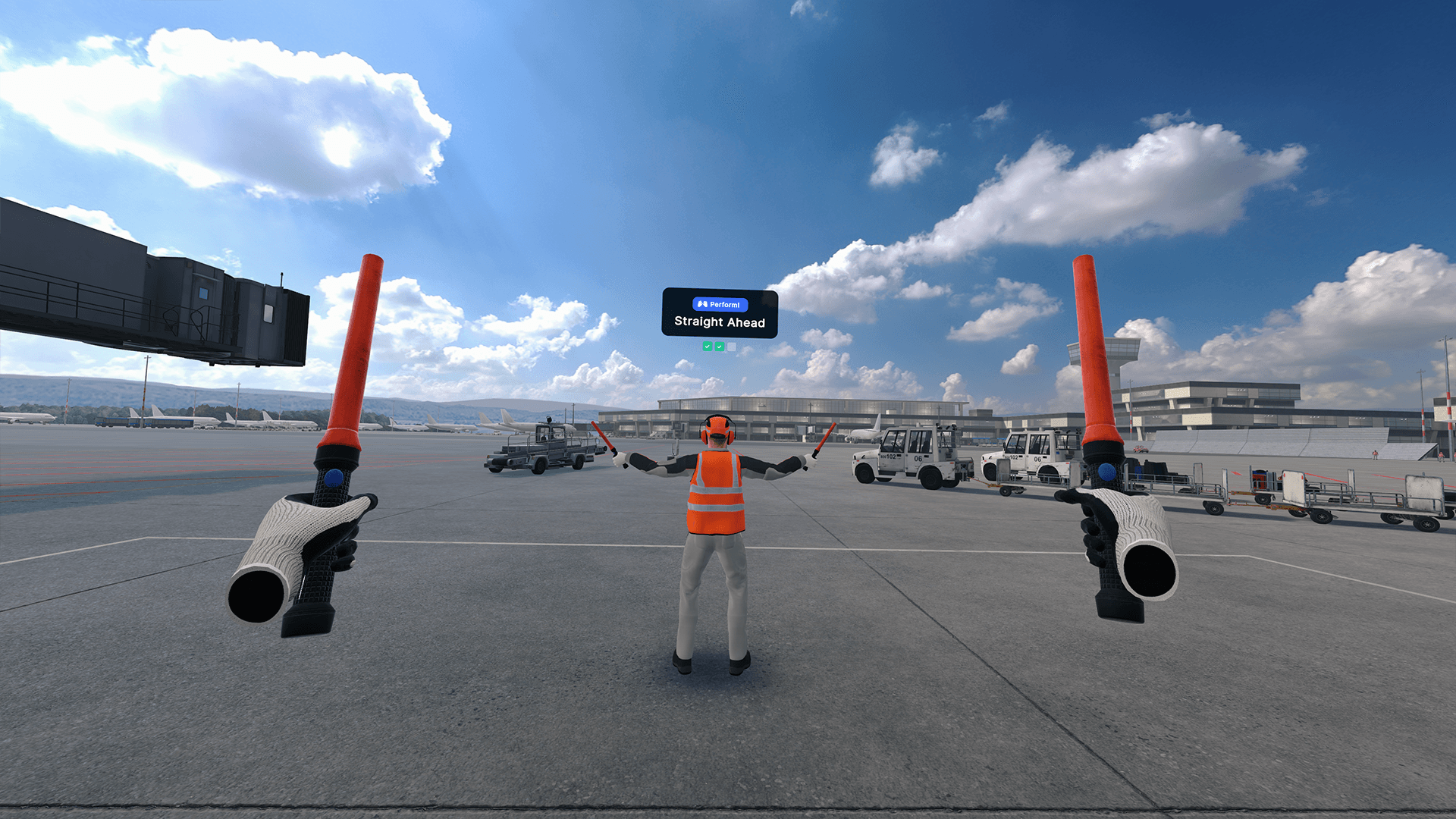
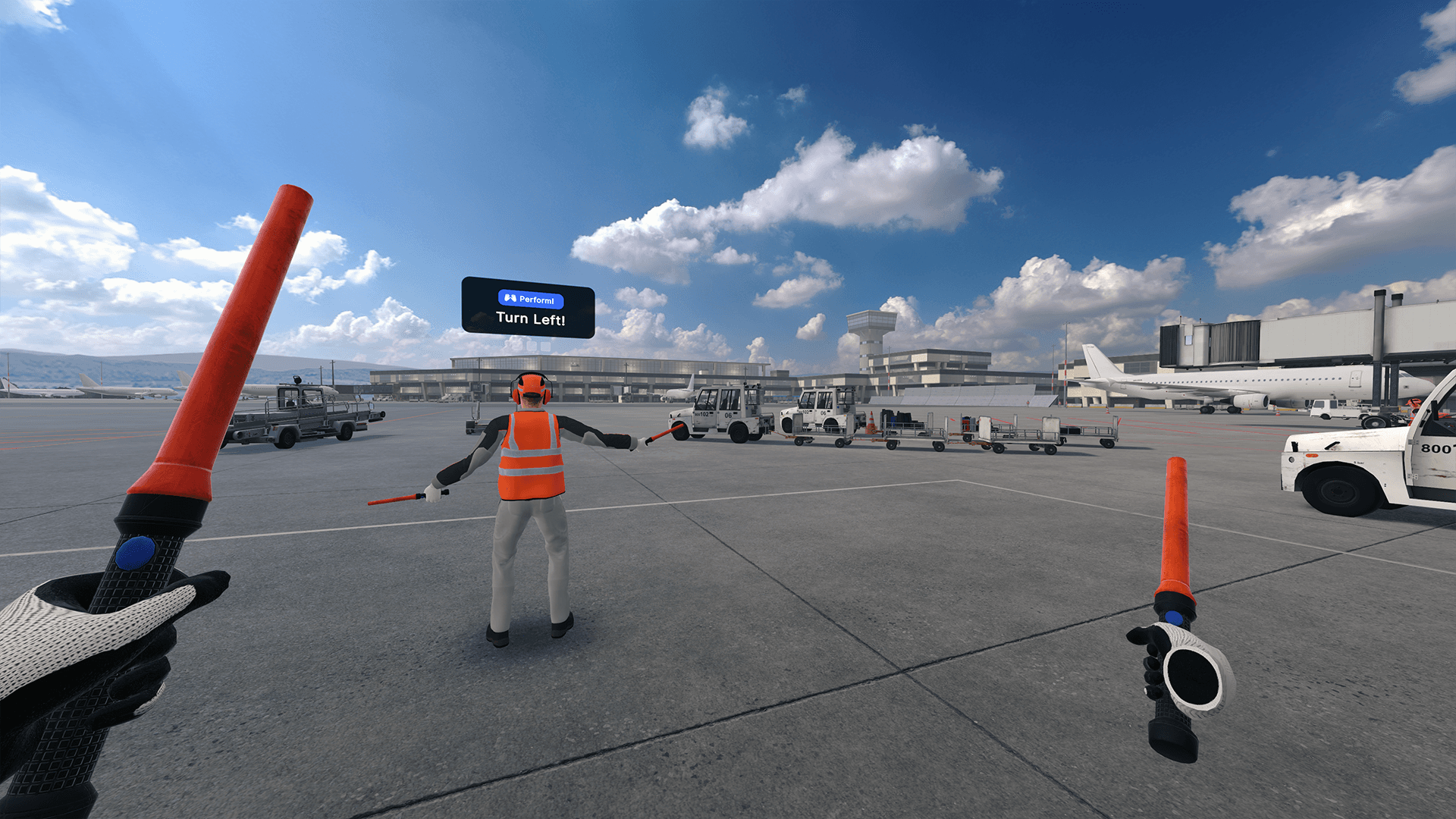
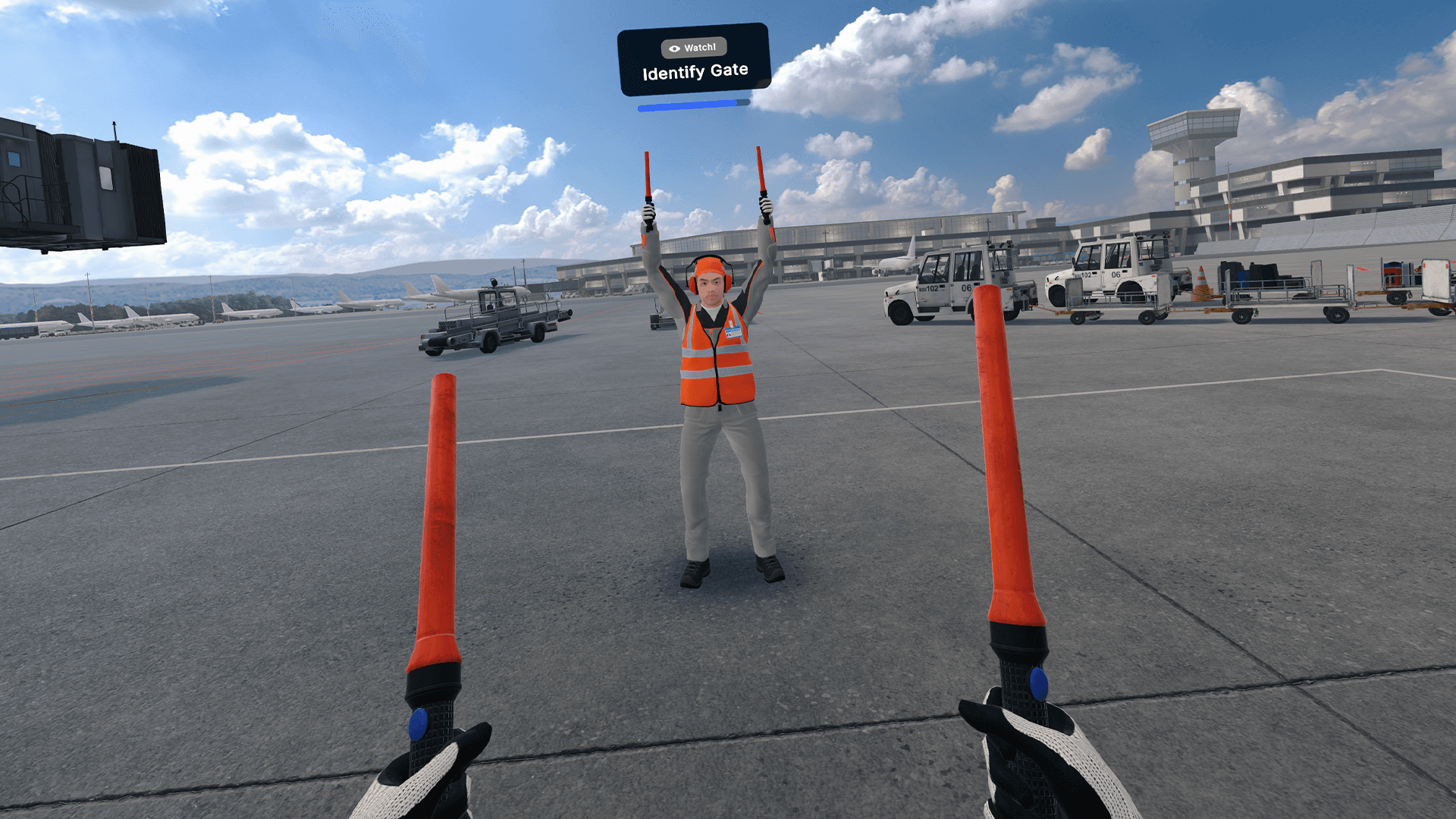
- A colleague on the apron introduces each signal, demonstrates it, and explains what it tells the flight crew. The trainee then performs the same signal, repeating or holding it as the signal requires.
- Aircraft guidance signals are covered first: Identify Gate, Turn Right, Turn Left, Straight Ahead, Slow Down, Stop and Hold Movement.
- Response and restriction signals follow: Affirmative, Negative and Do Not Touch Controls.
- Ground coordination signals are trained next: Chocks Inserted, Chocks Removed, Start Engines, Open and Close Stairs, Set Brakes and Release Brakes.
- The emergency and departure signals complete the set: Fire, Cut Engines, Proceed to Next Marshaller and Dispatch Aircraft.
- The lesson closes once all 20 core signals have been performed, confirming the trainee carries the correct form, motion and meaning of each signal onto the ramp.
Safety Scenarios & Learnings
Moving the wrong arm during a turn signal
Correction naming the opposite turn; the turn signals mirror each other and the wrong arm sends the aircraft the wrong way
Correction naming the opposite turn; the turn signals mirror each other and the wrong arm sends the aircraft the wrong way
Wand pointed down for Affirmative or up for Negative
Correction; wand orientation alone separates confirmation from refusal
Correction; wand orientation alone separates confirmation from refusal
Wand moved in the wrong direction
Correction; direction and speed of the motion carry the instruction, including the rate of turn
Correction; direction and speed of the motion carry the instruction, including the rate of turn
Looking away while performing a signal
Reminder to face forward; the flight crew can only act on a signal they can read
Reminder to face forward; the flight crew can only act on a signal they can read
Signal performed unclearly or held too briefly
Repeat of the signal; each signal must stay readable long enough to be recognized
Repeat of the signal; each signal must stay readable long enough to be recognized
Gallery