Draxon VR Training Syllabus
Marshalling: Basics
 Virtual Reality
Duration
4 Minutes
Training Type
Initial Training
IATA Standard
IATA AHM 1110, Edition 46 & IATA IGOM, Edition 14
Languages
English, German, Dutch, Spanish, French, Greek, Arabic, Cantonese Chinese, Turkish
Description
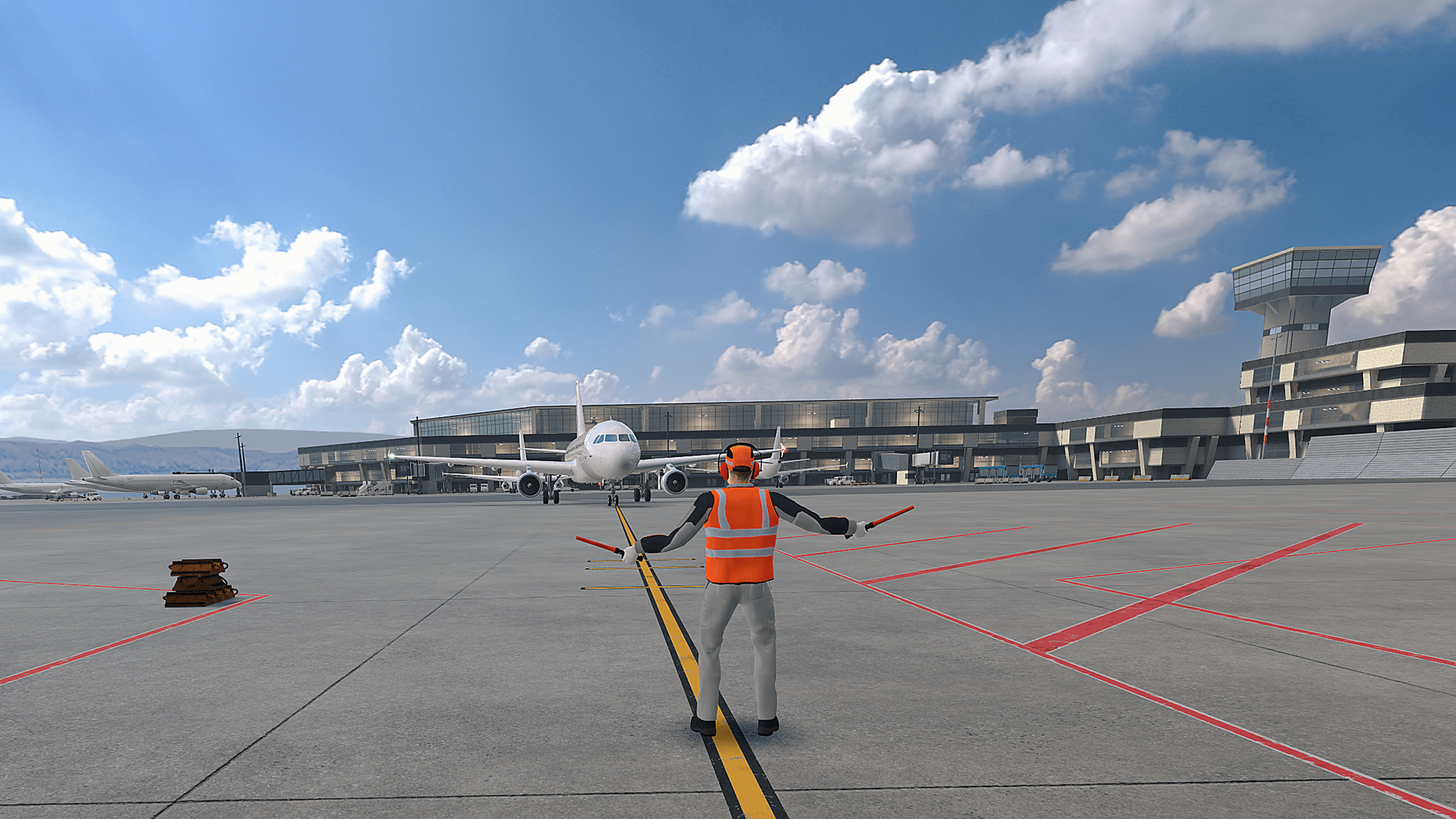
Introduces marshalling as the role responsible for clearing an aircraft stand before arrival and then guiding the aircraft to its final parking position. Trainees learn why the flight crew depends entirely on the marshaller's visual signals, and observe a complete aircraft arrival guided from the taxiway to the stop line. The lesson examines the marshalling wands, including how they are held, how both wands together form each signal, and how they are illuminated for night and low-visibility operations.
Lesson Overview
- 1Introduction to the marshalling role, its two core tasks, and the marshaller's responsibility toward the flight crew
- 2Marshalling wands: grip, how both wands form a signal, and illumination for night and low-visibility operations
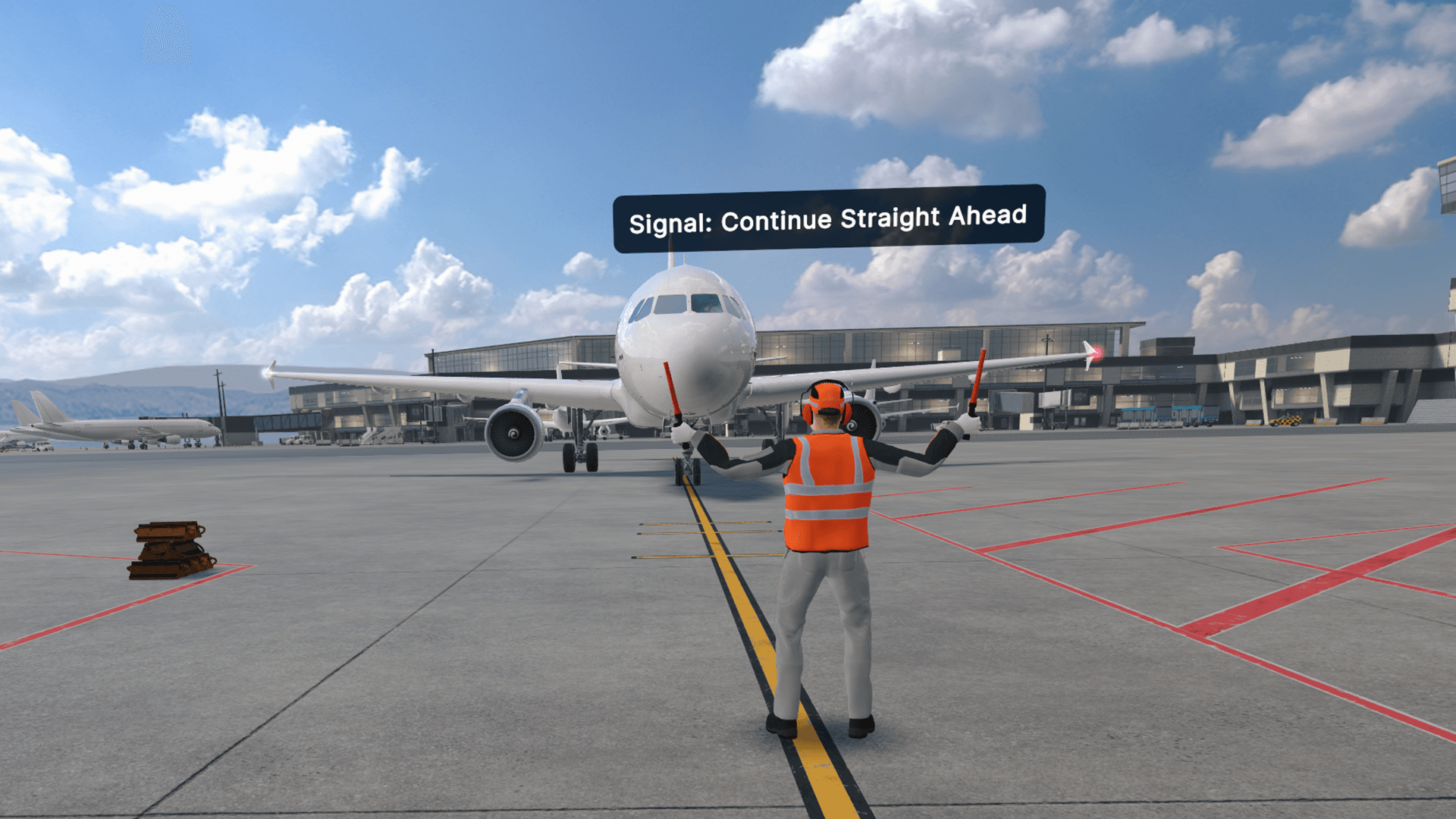
- 3Observation of a full aircraft arrival guided signal by signal, including the corrections that bring the aircraft back onto the stand centerline
Skills Acquired
- Understand the marshaller's responsibility for clearing the aircraft stand and guiding arriving aircraft to their parking position
- Recognize how marshalling wands are held and how they make each signal legible from the cockpit across a busy apron
- Identify when illuminated wands are required to keep signals visible in night and low-visibility conditions
- Understand how alignment corrections keep an arriving aircraft on the stand centerline up to the stop line
Lesson Procedure
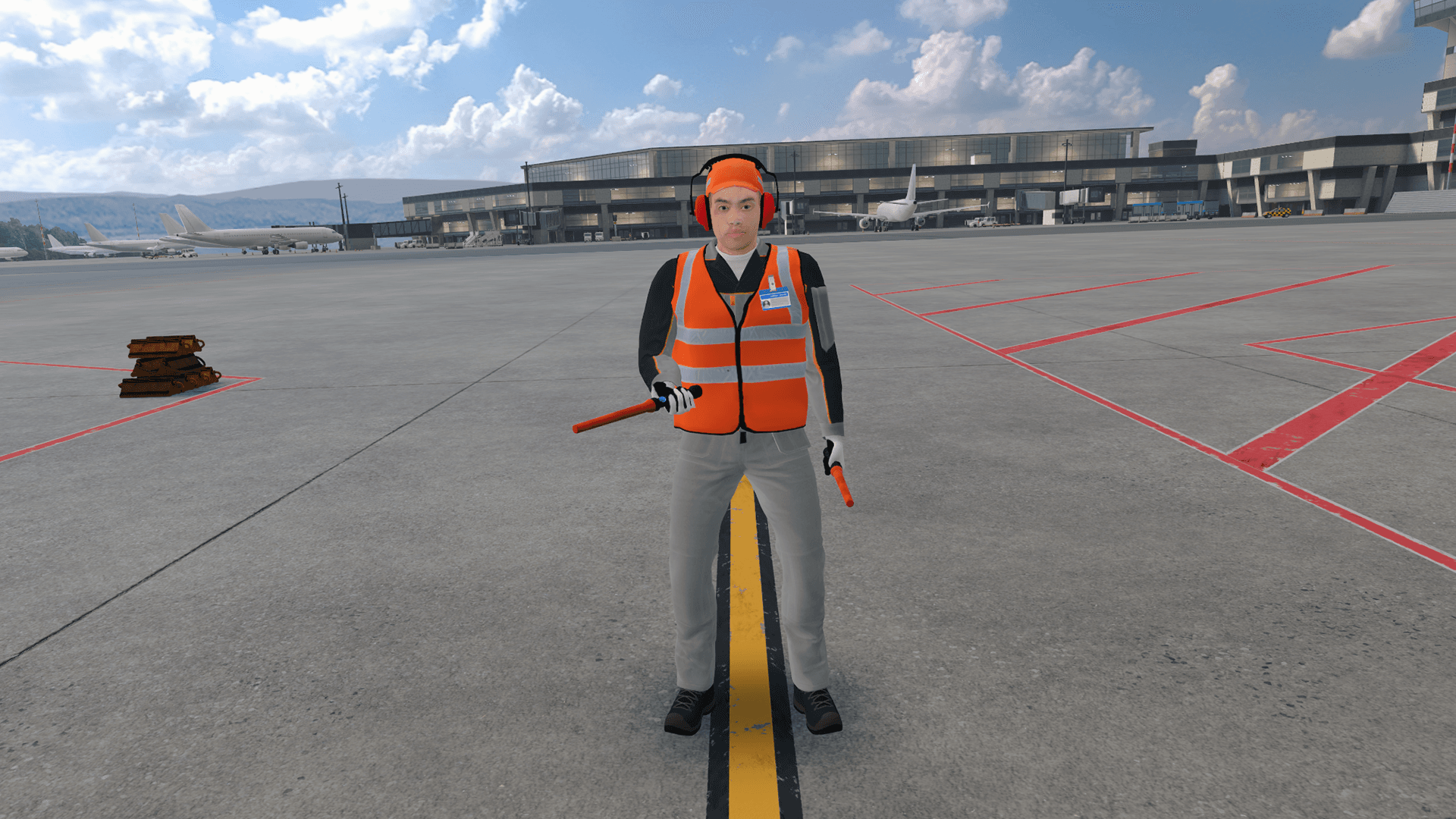
- The trainee stands on the apron at an empty aircraft stand, facing a colleague who is a trained marshaller holding marshalling wands.
- The two core tasks are explained: clearing the stand of F.O.D, personnel and ground support equipment, then guiding the arriving aircraft to its parking position.
- The marshaller is introduced as the flight crew's main visual reference, since the pilots cannot see the ground directly ahead of them.
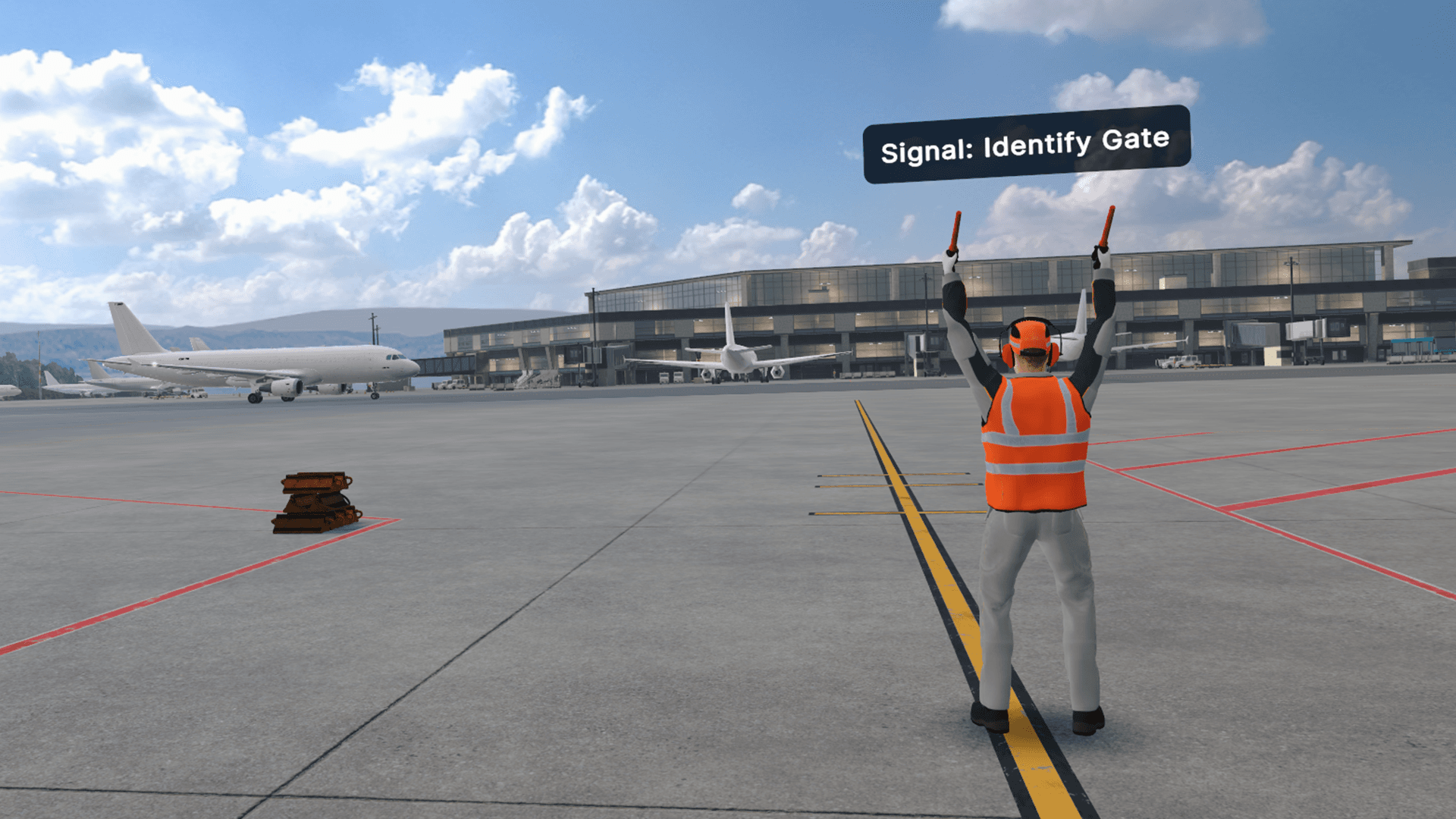
- The wands are presented: one in each hand, with their position and movement together forming each signal, and illuminated so they stay readable at night and in low visibility.
- The colleague then marshals an arriving aircraft while the trainee observes from a safe distance, with each signal named as it is given.
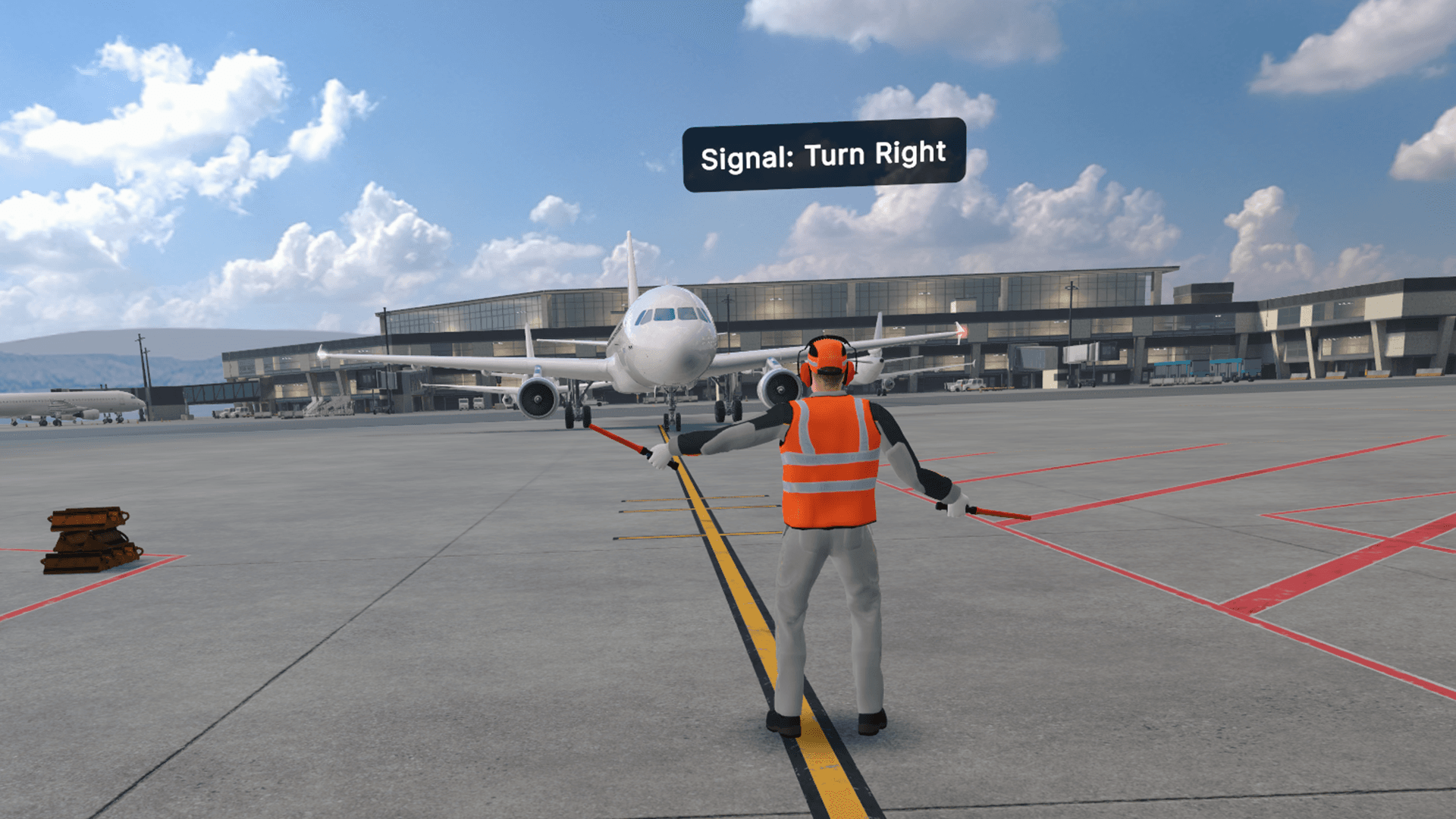
- Partway through the approach the aircraft drifts off the centerline, and the Turn Left and Turn Right corrections bring it back before the stop line.
- The lesson closes with what follows parking: chocking the wheels, connecting ground power and securing the aircraft for the turnaround.
Gallery