Draxon VR Training Syllabus
Incident Scenario: Towbar Disconnect
 Virtual Reality
Description
This lesson recreates a real accident that happened at a large international airport, with the trainee in the pushback driver's seat. The trainee is deliberately guided through the unsafe sequence: a pushback finished off-angle, a disconnect attempted in the wrong order, and a forward push ordered with the towbar coupling unsecured, then experiences the resulting aircraft rollaway firsthand. A calm review then works back through each decision, focusing on the human factors that let time pressure and an order from a superior override a safe call.
Description
This lesson recreates a real accident that happened at a large international airport, with the trainee in the pushback driver's seat. The trainee is deliberately guided through the unsafe sequence: a pushback finished off-angle, a disconnect attempted in the wrong order, and a forward push ordered with the towbar coupling unsecured, then experiences the resulting aircraft rollaway firsthand. A calm review then works back through each decision, focusing on the human factors that let time pressure and an order from a superior override a safe call.
Lesson Overview
- 1Finish the pushback under time pressure and give the set brakes signal as requested
- 2Observe the disconnect attempt fail with the towbar under tension and the safety pin unable to be reseated
- 3Follow the crew chief's order to push forward and experience the towbar releasing and the aircraft rolling onto it
- 4Review the three decisions that caused the accident and see the correct action for each
Skills Acquired
- Recognize that a pushback finished off-angle leaves the towbar under tension and prevents a clean disconnect
- Apply the correct disconnect sequence, tractor coupling before nose gear, so the towbar comes off unloaded
- Refuse an unsafe order regardless of who gives it, and stop the operation when a towbar coupling cannot be secured
- Understand how time pressure and the urgency of colleagues push a crew toward an unsafe decision
Lesson Procedure
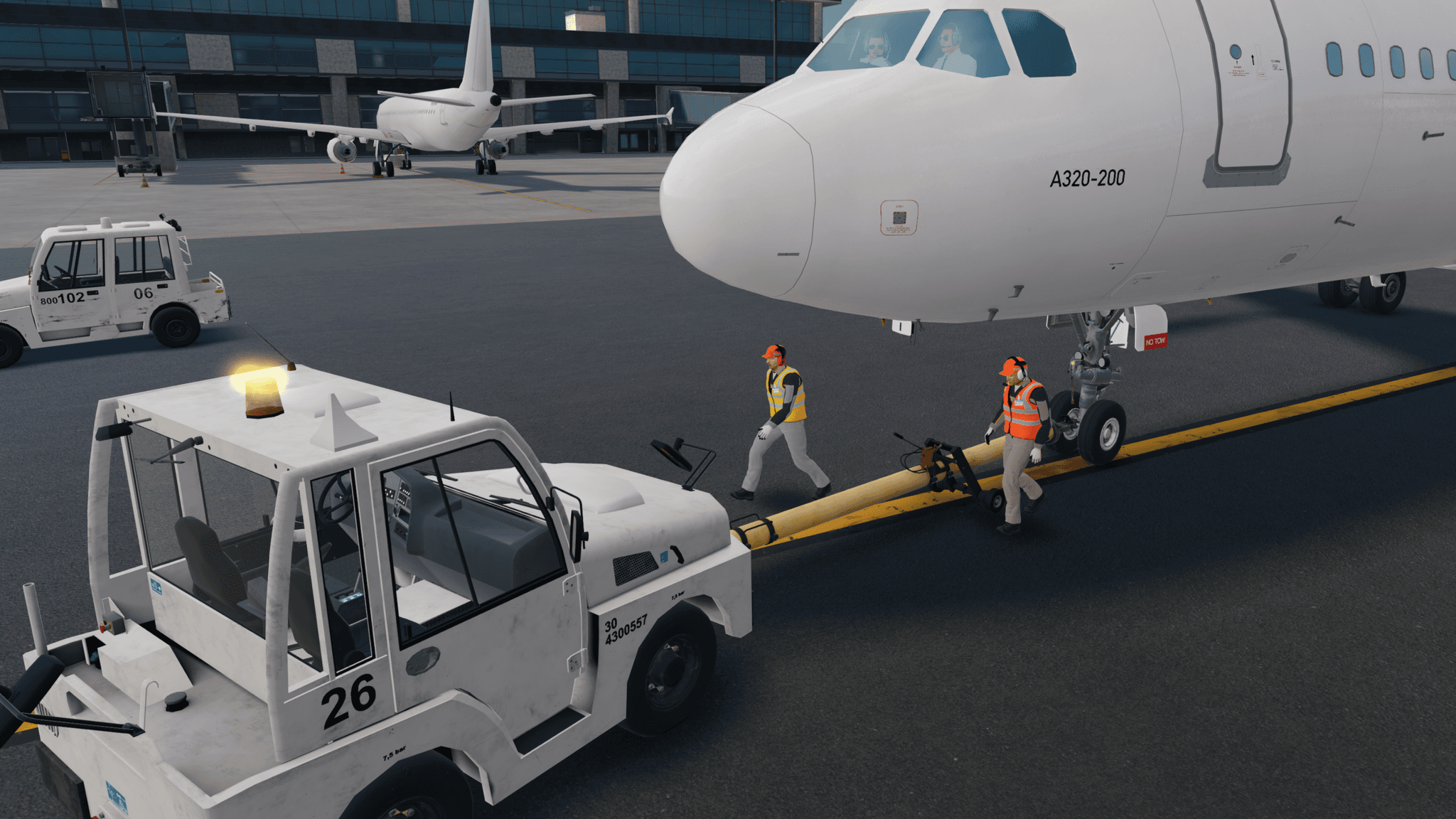
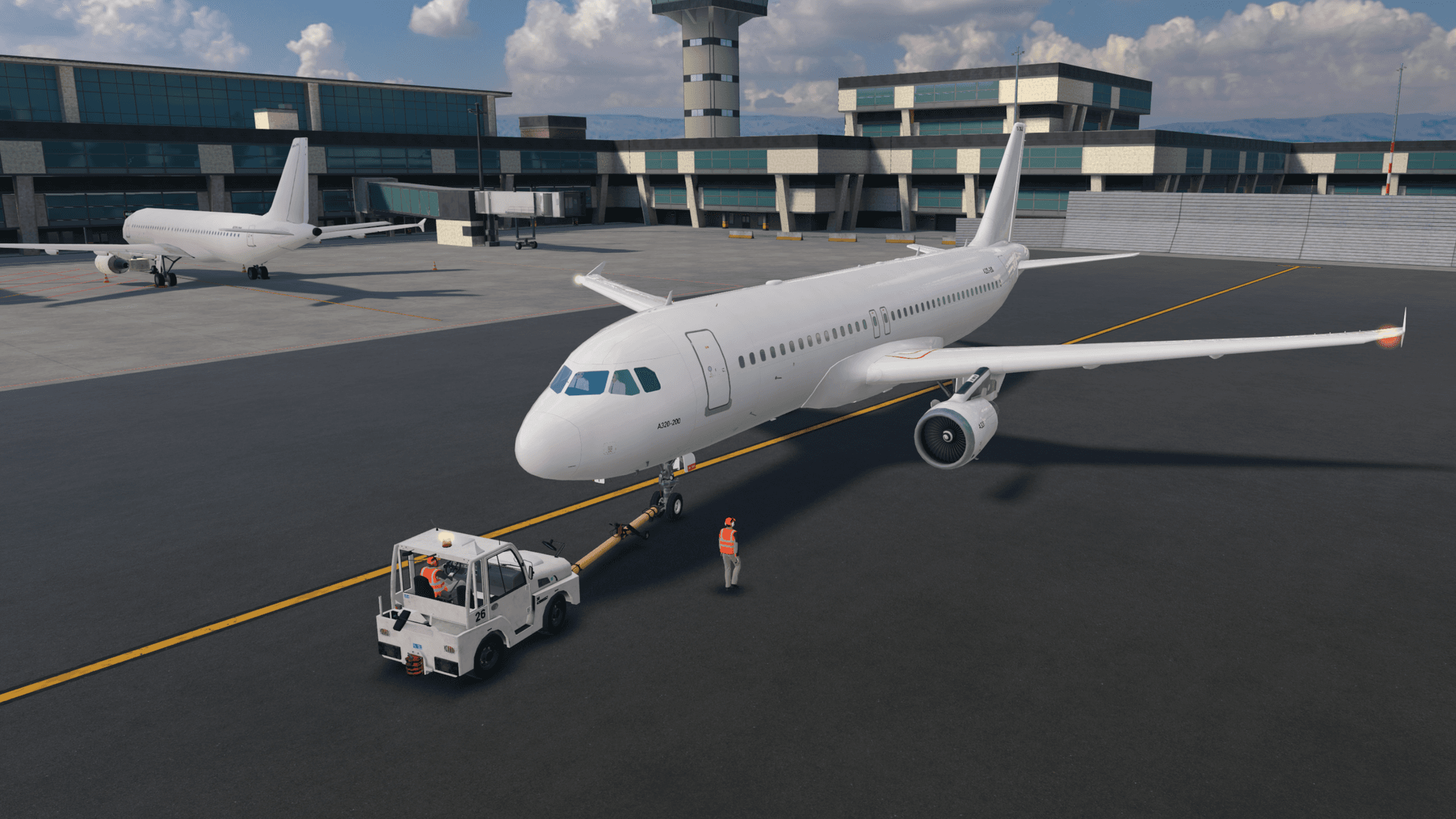
- The trainee observes the final stage of a pushback from outside, then takes the pushback driver's seat with the tractor, towbar and aircraft still connected on the taxiway centerline.
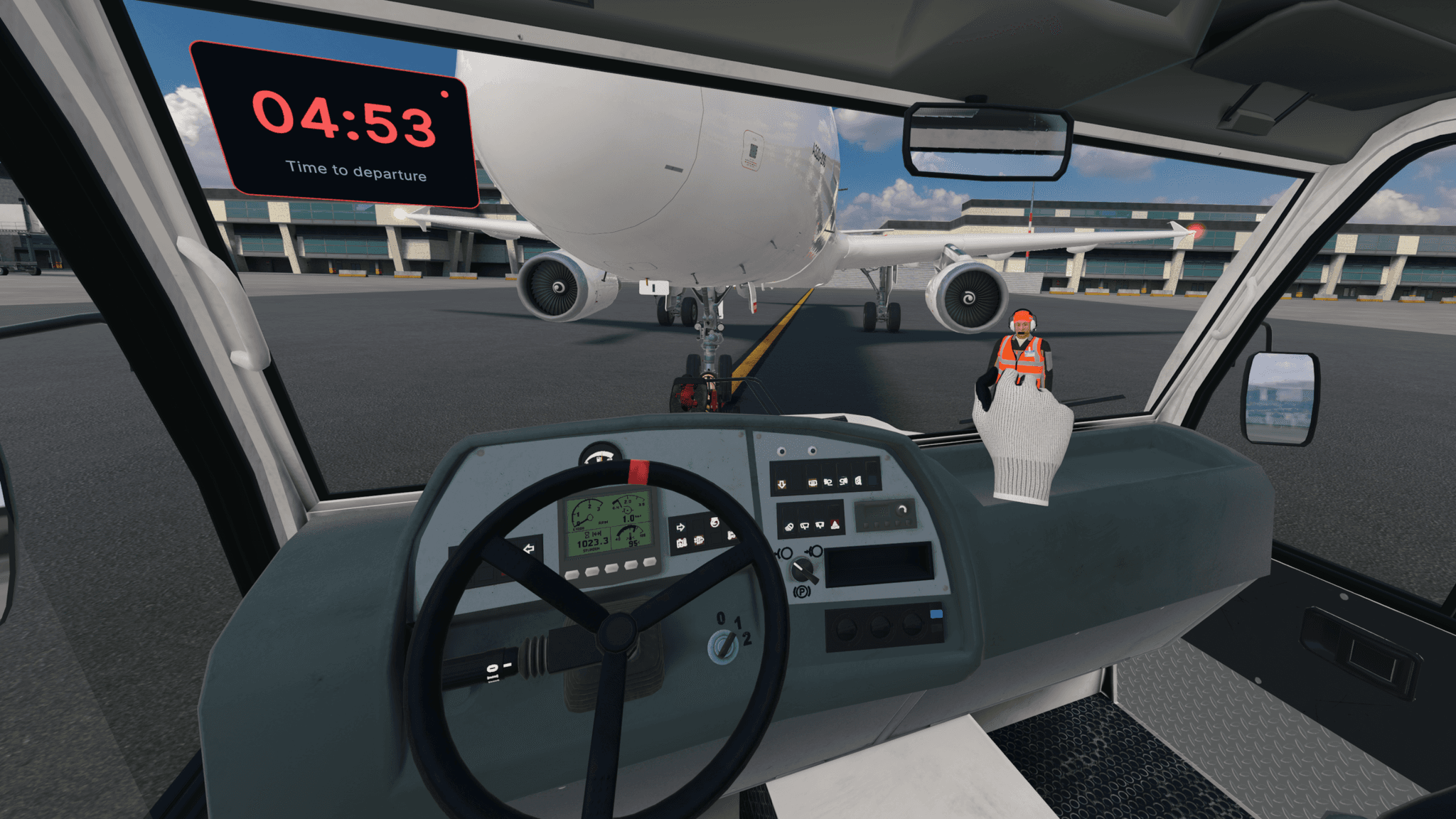
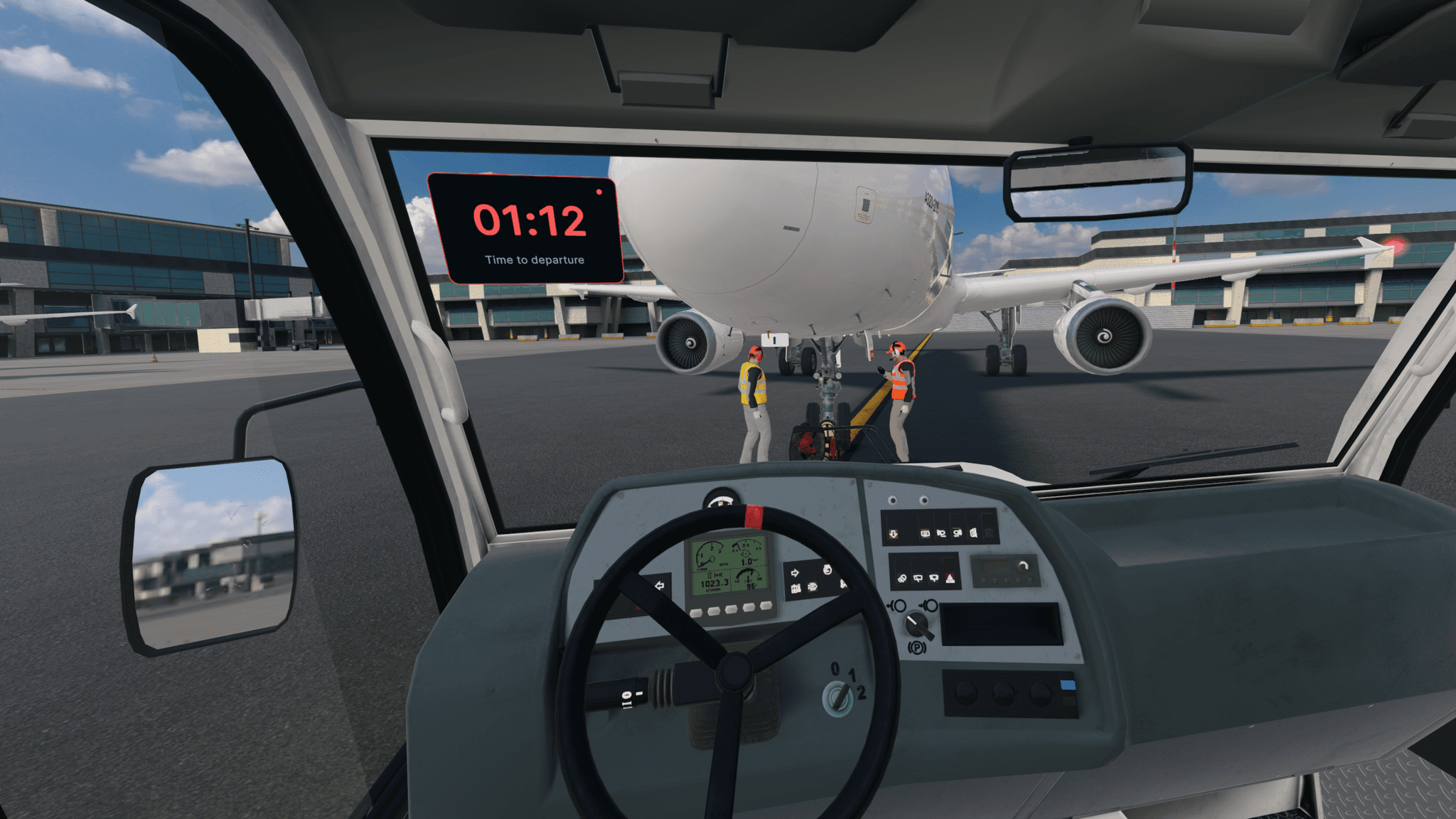
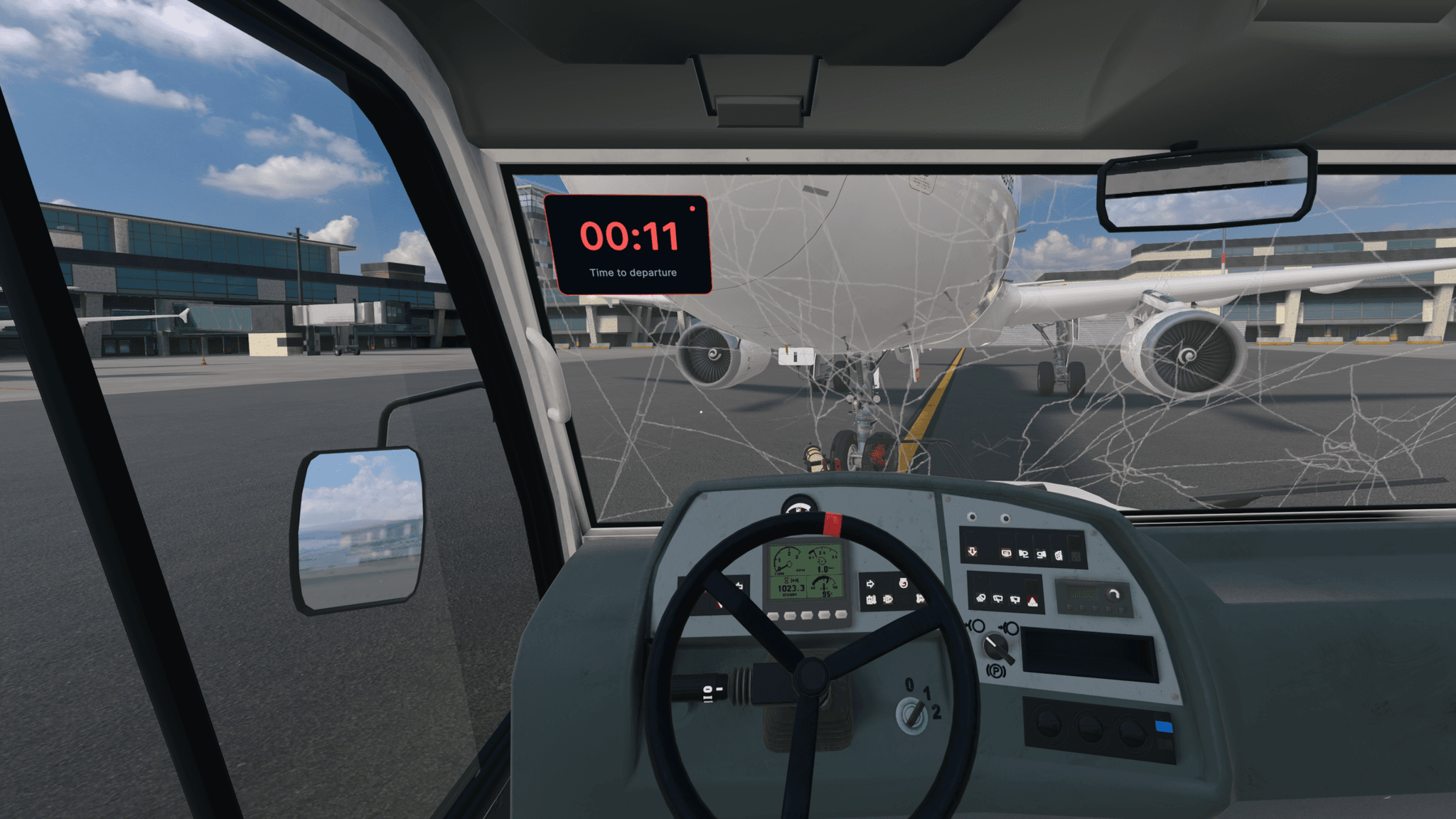
- The flight is minutes from losing its departure slot and a countdown to departure runs in view. The headset operator is already waiting for the set brakes signal.
- The trainee shows the closed fist for set brakes. The headset operator relays it to the cockpit, confirms brakes set, lowers the towbar wheels and goes to the nose gear to release the coupling there.
- The coupling lever is stuck and the towbar stays locked to the nose gear. The headset operator pulls the safety pin, cannot open the lever, and calls the crew chief over the radio.
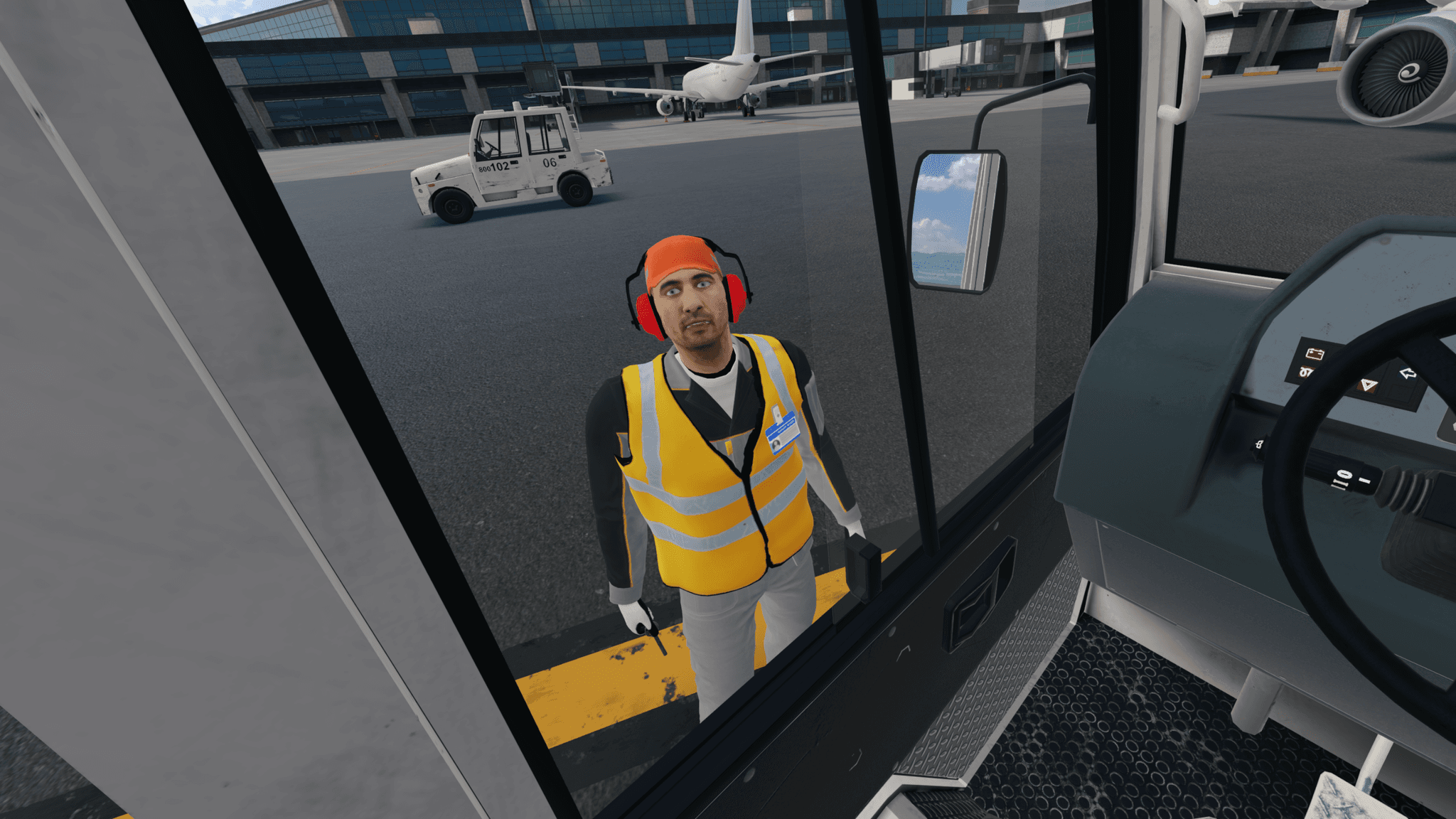
- The crew chief arrives, fails to open the coupling himself and cannot get the safety pin back in. He walks to the tractor cab and orders the trainee to drive forward to straighten the tractor and towbar, saying the cockpit has already released the parking brake.
- The trainee drives forward. The towbar disconnects, the aircraft rolls onto it, and the towbar is driven back into the tractor, damaging the nose gear, the towbar and the tractor.
- Positioned outside the tractor, the trainee reviews the three moments where things went wrong, each shown as it happened and then as it should have been handled: following the unsafe order, disconnecting from the nose gear before the tractor, and finishing the pushback misaligned.
- The lesson closes on four key learnings: ramp safety as a shared responsibility, finishing straight and aligned, disconnecting the towbar from the tractor first, and never pushing an aircraft with an unsecured towbar.
Safety Scenarios & Learnings
Following an unsafe order from the crew chief
Reinforces that an aircraft is never pushed with an unsecured towbar, no matter who gives the order or how tight the departure slot is.
Reinforces that an aircraft is never pushed with an unsecured towbar, no matter who gives the order or how tight the departure slot is.
Disconnecting the towbar from the nose gear before the tractor
Highlights that the towbar stays under tension while it is still coupled to the tractor, so the nose gear coupling cannot release cleanly.
Highlights that the towbar stays under tension while it is still coupled to the tractor, so the nose gear coupling cannot release cleanly.
Finishing the pushback misaligned
Demonstrates that stopping at an angle loads the towbar, and that this is the root cause everything else in the incident followed from.
Demonstrates that stopping at an angle loads the towbar, and that this is the root cause everything else in the incident followed from.
Gallery