Draxon VR Training Syllabus
Assessment: Approaching the Aircraft
 Virtual Reality
Description
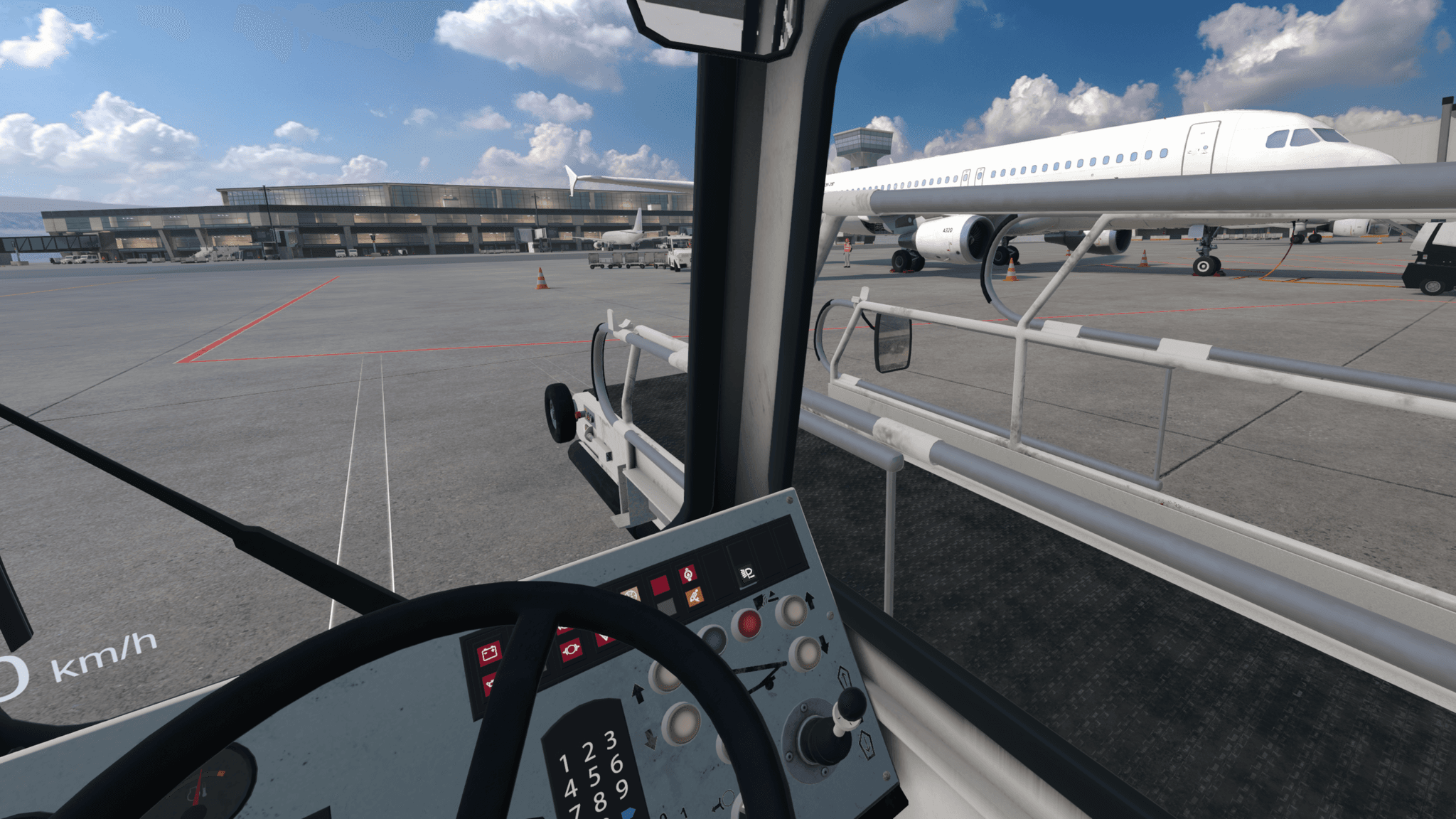
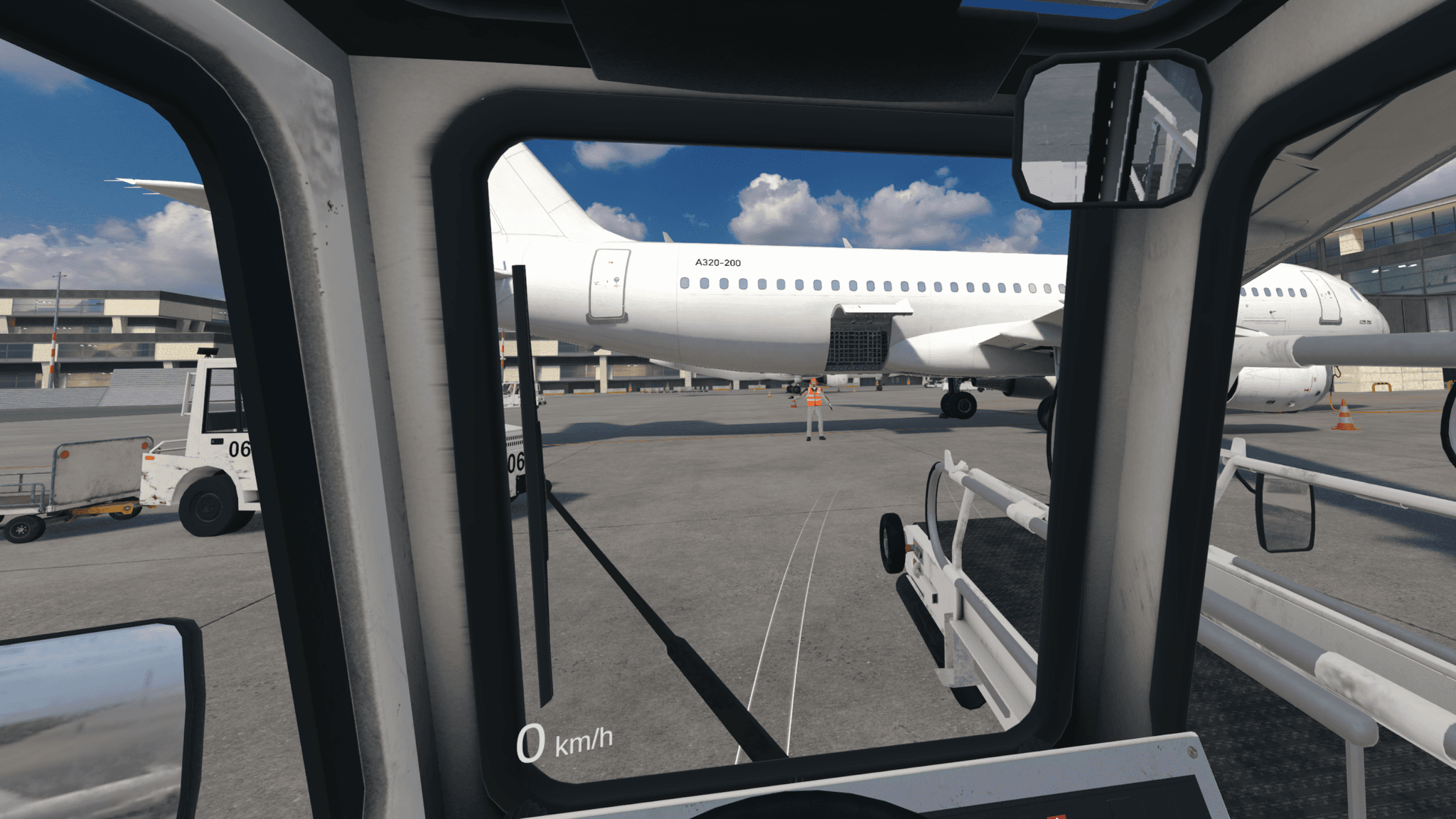
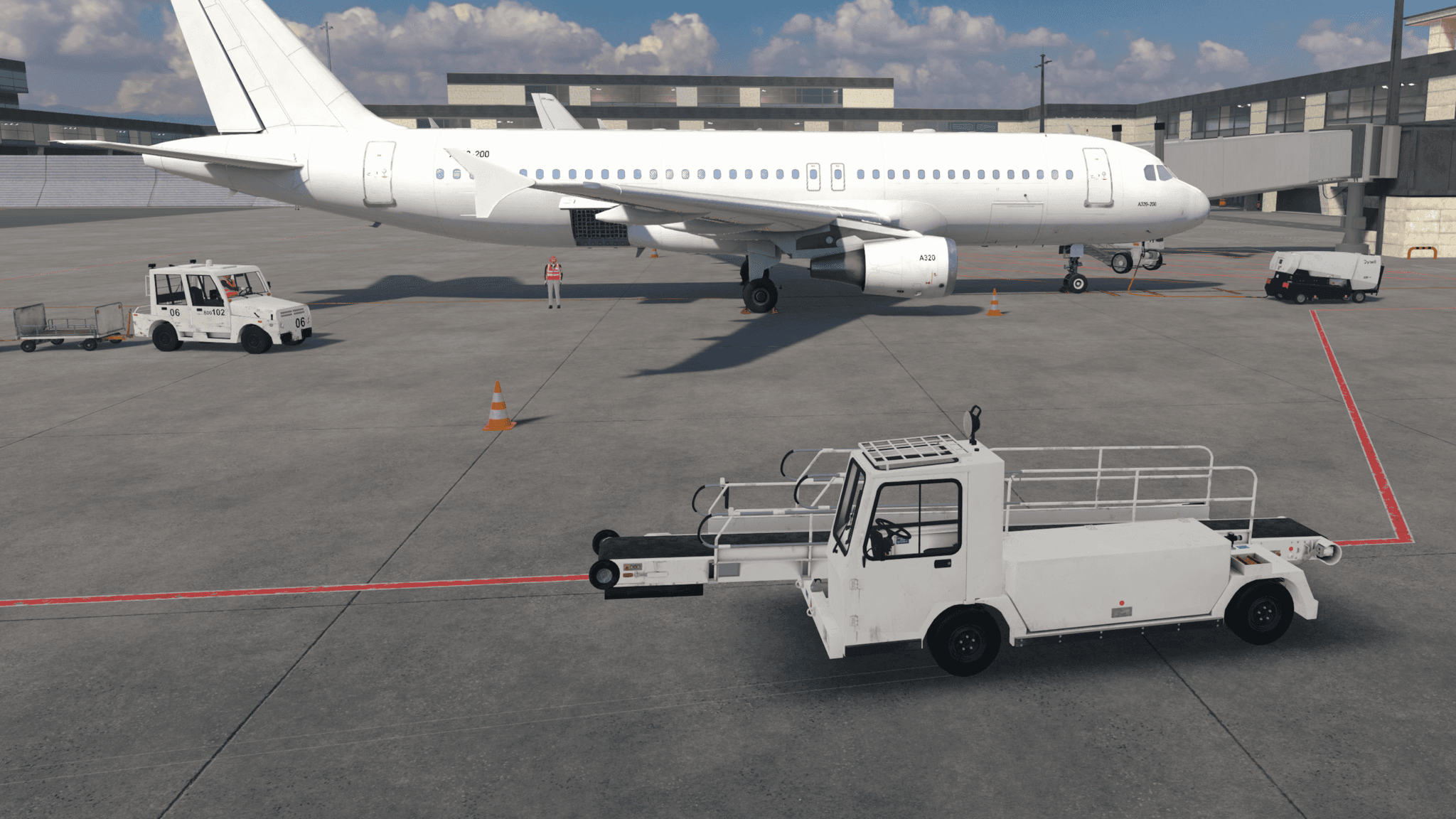
This assessment verifies that the trainee can drive a belt loader to the rear cargo hold of an aircraft without guidance. The approach is performed in full: route selection across the apron, the brake test before the equipment restraint area, coordination with the guide person, and final alignment and securing at the cargo hold. Eight checkpoints must all be passed, and a critical error such as a collision ends the assessment immediately.
Description
This assessment verifies that the trainee can drive a belt loader to the rear cargo hold of an aircraft without guidance. The approach is performed in full: route selection across the apron, the brake test before the equipment restraint area, coordination with the guide person, and final alignment and securing at the cargo hold. Eight checkpoints must all be passed, and a critical error such as a collision ends the assessment immediately.
Lesson Overview
- 1Independent assessment of the apron and selection of the correct route to the rear cargo hold
- 2Brake test before entering the equipment restraint area
- 3Approach under the guide person's signals
- 4Alignment and securing at the cargo hold, then submission of the assessment
Skills Acquired
- Assess the apron and commit to a clear route to the rear cargo hold, keeping clear of the aircraft wing
- Perform the brake test before entering the equipment restraint area to confirm the machine will stop where it must
- Respond to the guide person's signals throughout the approach to prevent contact with people, the aircraft and equipment
- Align and secure the belt loader at the cargo hold in a position the guide person can accept for loading
Lesson Procedure
- The trainee starts seated in the belt loader with the engine running and the gear in drive, tasked with approaching the rear cargo hold and applying the safety procedures learned earlier.
- No guidance is given during the run.
- The trainee scans the area before and during the approach and selects a route to the rear cargo hold that does not pass under the aircraft wing.
- A brake test is performed before the equipment restraint area line is crossed.
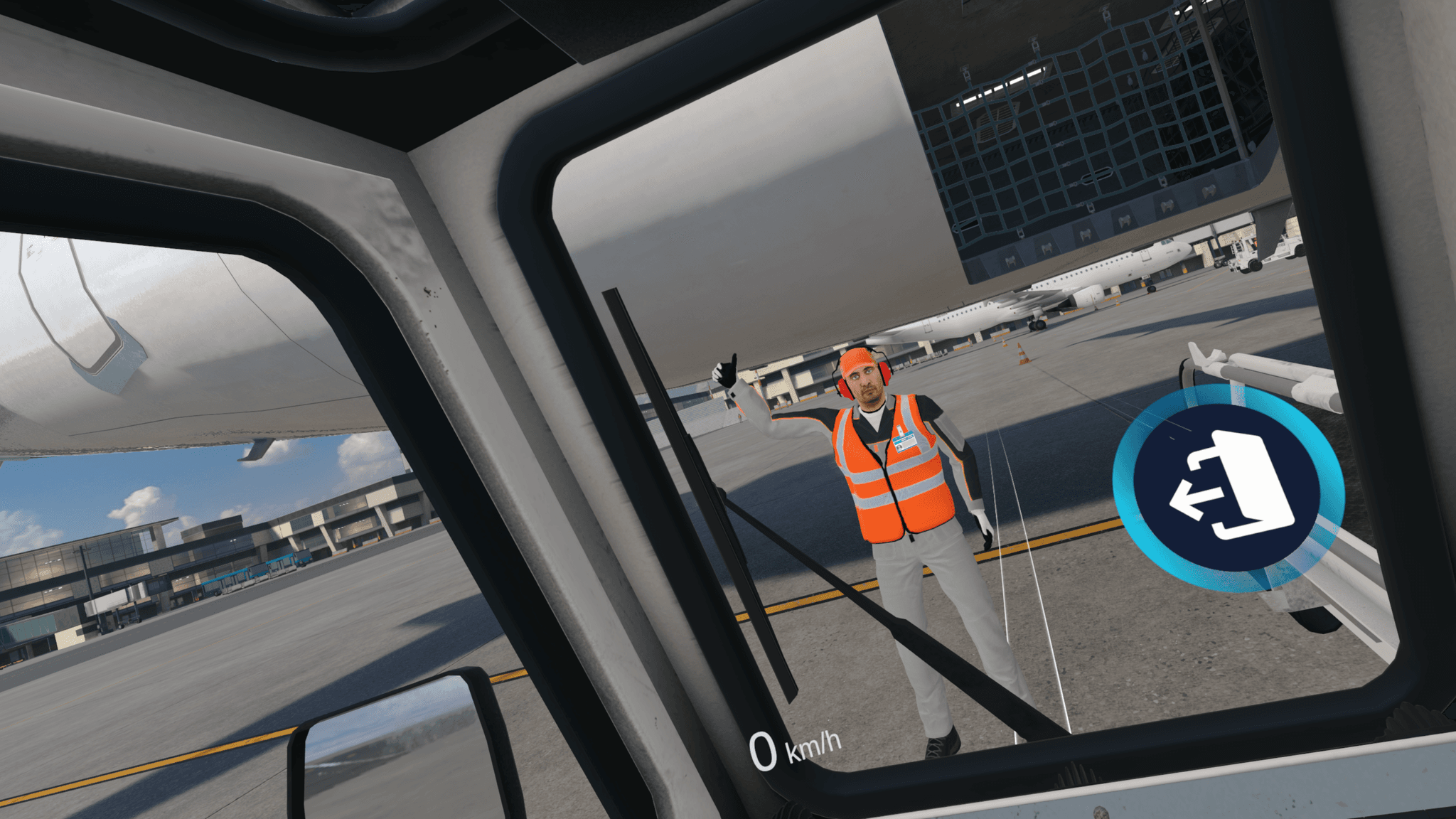
- Closer to the aircraft the trainee follows the guide person's signals, stopping and moving on their direction.
- At the cargo hold the trainee aligns the belt loader straight, stops in a position the guide person can accept, and secures the machine on the OK signal before finishing the assessment.
- A critical error ends the run immediately: hitting a person, the aircraft, another vehicle or a safety cone, driving outside the assessment area, or stopping so badly at the cargo hold that the guide person cannot signal OK.
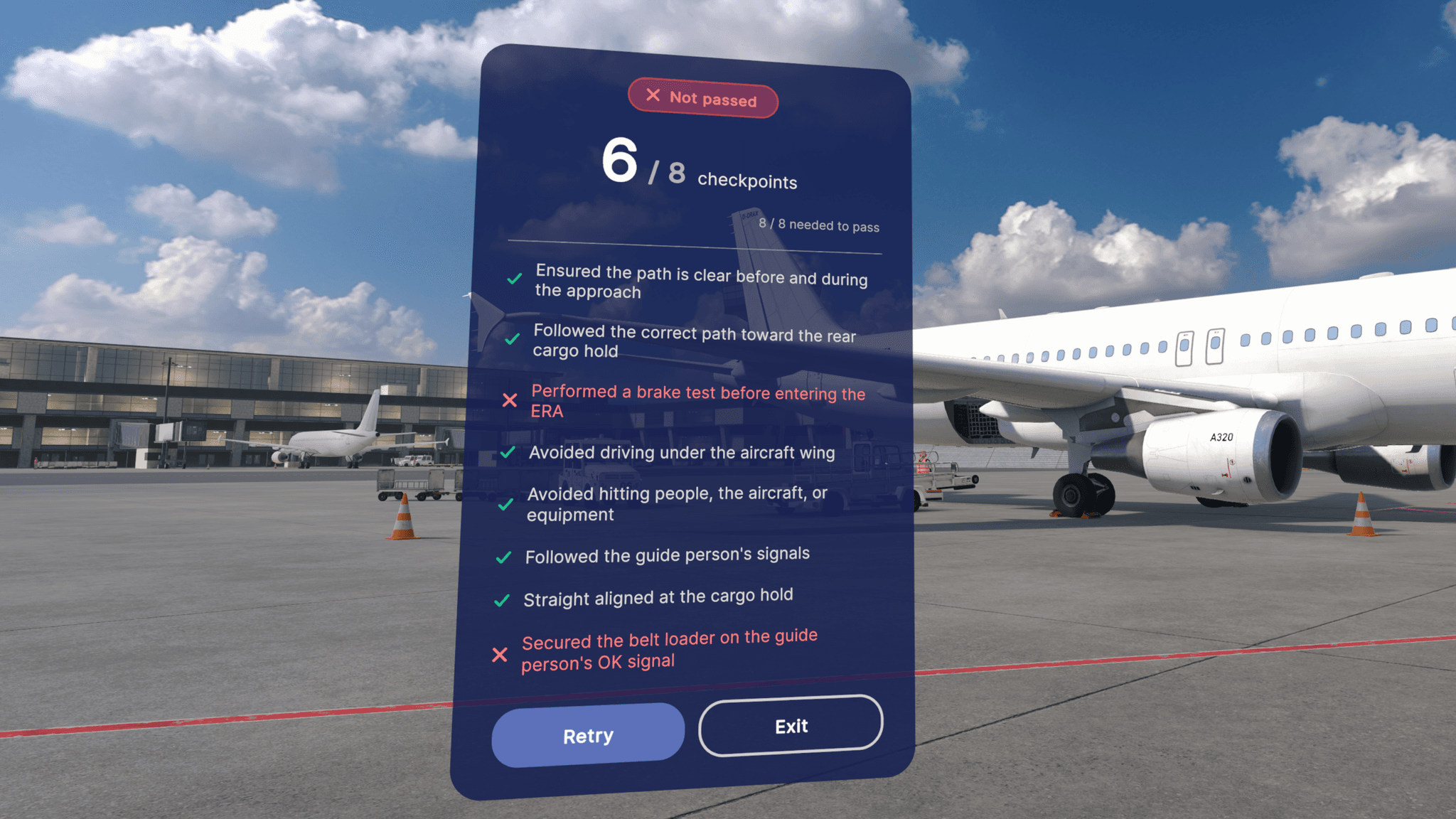
- Eight checkpoints are scored and all must be passed; the trainee is shown which passed and which were missed before retrying.
Safety Scenarios & Learnings
Skipped brake test before the equipment restraint area
Checkpoint failed; the machine must be proven able to stop before it is taken close to the aircraft.
Checkpoint failed; the machine must be proven able to stop before it is taken close to the aircraft.
Driving under the aircraft wing
Checkpoint failed; the route to the cargo hold never passes beneath the wing.
Checkpoint failed; the route to the cargo hold never passes beneath the wing.
Guide person's signals not followed
Checkpoint failed; the guide person controls the last part of the approach, where the driver's view is worst.
Checkpoint failed; the guide person controls the last part of the approach, where the driver's view is worst.
Collision with a person, the aircraft or another vehicle
Assessment ended immediately; contact on the approach is a critical failure, not a scoring deduction.
Assessment ended immediately; contact on the approach is a critical failure, not a scoring deduction.
Safety cone knocked over
Assessment ended; cones mark an area that must be kept clear.
Assessment ended; cones mark an area that must be kept clear.
Driving outside the assessment area
Assessment ended; the approach stays on the designated route.
Assessment ended; the approach stays on the designated route.
Belt loader stopped off-center, tilted, or driven past the cargo hold
Assessment ended; the guide person cannot signal OK from a bad position, so loading cannot begin.
Assessment ended; the guide person cannot signal OK from a bad position, so loading cannot begin.
Belt loader not secured on the OK signal
Checkpoint failed; the machine is only left once it is secured at the hold.
Checkpoint failed; the machine is only left once it is secured at the hold.
Gallery