Draxon VR Training Syllabus
Walkaround

 Virtual Reality
Description
This lesson teaches the complete pre-operation inspection of a tractor, covering both exterior and interior components. Trainees learn to identify critical checkpoints such as tires, lights, and towing equipment, followed by a hands-on fault-finding exercise.
Description
This lesson teaches the complete pre-operation inspection of a tractor, covering both exterior and interior components. Trainees learn to identify critical checkpoints such as tires, lights, and towing equipment, followed by a hands-on fault-finding exercise.
Lesson Overview
- 1Guided introduction to the purpose and importance of the tractor walkaround
- 2Step-by-step inspection of all exterior and interior checkpoints
- 3Demonstration of how to identify damage, leaks, or missing components
- 4Practical fault-finding exercise with planted issues
Skills Acquired
- Perform a structured pre-operation inspection of a tractor
- Identify and report visible defects or irregularities in key systems
- Recognize unsafe or unserviceable conditions before operation
- Apply inspection routines consistently to ensure operational readiness
Lesson Procedure
- The trainee begins in front of the tractor and receives an introduction to the walkaround process and its safety importance.
- Guided prompts lead through a full circuit around the vehicle, stopping at key points such as tires, lights, mirrors, engine fluids, and the tow hitch area.
- Certain steps move the trainee inside the cabin to inspect interior elements like gauges, warning lights, and control functions.
- Each inspection point is highlighted with contextual guidance explaining what to check and why it matters for ramp safety.
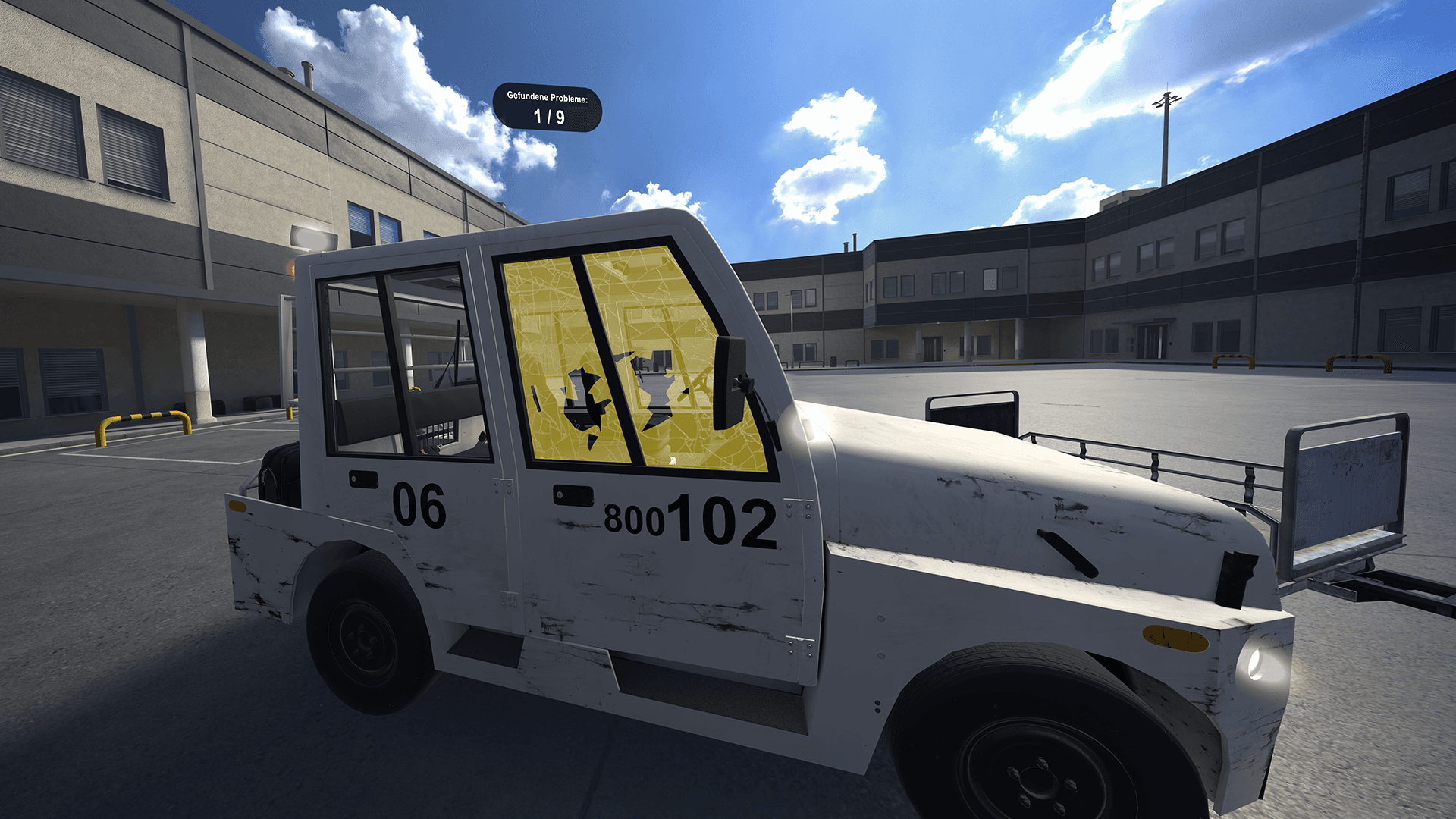
- After completing the full guided tour, the environment reloads with a tractor containing several planted faults, such as low fuel, a damaged light, or a cracked window.
- The trainee independently locates and confirms each fault by interacting with affected areas, with a counter tracking the progress.
- The session concludes after all defects are identified, reinforcing the principle that every tractor must pass a full walkaround before use.
Safety Scenarios & Learnings
Low fuel level
Demonstrates the risk of equipment stopping unexpectedly during towing; reinforces that all fluid and fuel levels must be checked to ensure readiness before operation.
Demonstrates the risk of equipment stopping unexpectedly during towing; reinforces that all fluid and fuel levels must be checked to ensure readiness before operation.
Underinflated or damaged tire
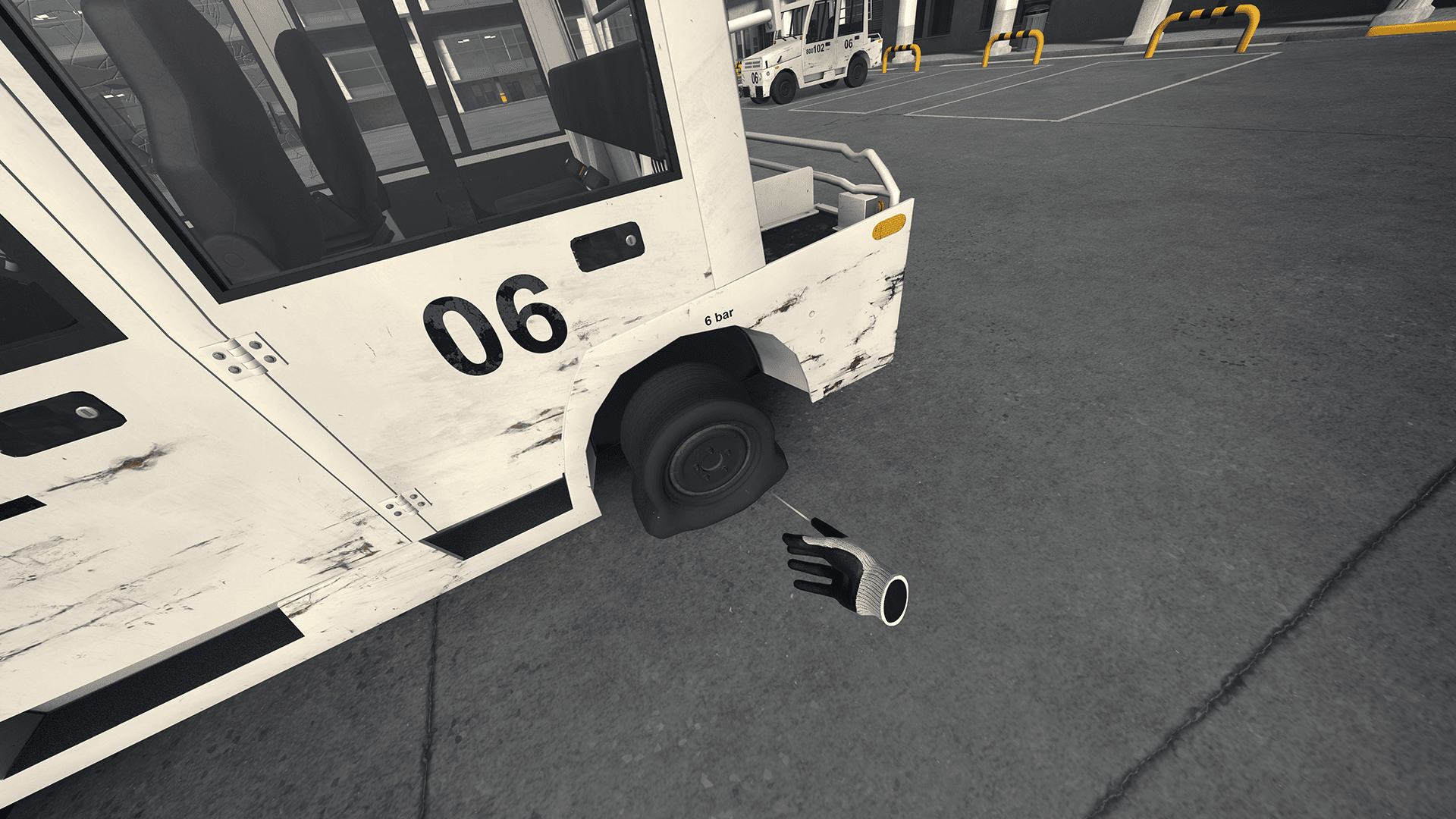
Leads to poor handling and potential blowouts; teaches that tires, rims, and the surrounding area must be inspected for damage, wear, and debris before use.
Leads to poor handling and potential blowouts; teaches that tires, rims, and the surrounding area must be inspected for damage, wear, and debris before use.
Damaged or non-functioning light
Reduces visibility to others and compromises apron safety; underlines the need to confirm lights, reflectors, and warning beacons are intact and working.
Reduces visibility to others and compromises apron safety; underlines the need to confirm lights, reflectors, and warning beacons are intact and working.
Cracked or broken window
Impairs visibility from the cabin and increases the risk of foreign object intrusion; emphasizes reporting structural or visibility defects immediately.
Impairs visibility from the cabin and increases the risk of foreign object intrusion; emphasizes reporting structural or visibility defects immediately.
Fluid leak under the chassis
Indicates possible hydraulic or engine oil loss; shows that leaks, stains, or drips found during inspection must be reported before operation.
Indicates possible hydraulic or engine oil loss; shows that leaks, stains, or drips found during inspection must be reported before operation.
Missing tow pin
Prevents coupling the carts, illustrating the necessity of confirming that the equipment is complete and correctly installed before attempting to connect any equipment.
Prevents coupling the carts, illustrating the necessity of confirming that the equipment is complete and correctly installed before attempting to connect any equipment.
Inactive or faulty dashboard indicator
Prevents early detection of system faults; stresses the importance of checking gauges, indicator lights, and instrument function during the cabin inspection.
Prevents early detection of system faults; stresses the importance of checking gauges, indicator lights, and instrument function during the cabin inspection.
Foreign object debris near wheels or underbody
Poses puncture and trip hazards; reinforces clearing the inspection zone and ensuring the tractor is surrounded by a safe, FOD-free area before start-up.
Poses puncture and trip hazards; reinforces clearing the inspection zone and ensuring the tractor is surrounded by a safe, FOD-free area before start-up.
Gallery