Draxon VR Training Syllabus
Basics
 Virtual Reality
Duration
5-8 Minutes
Training Type
Initial Training
IATA Standard
IATA AHM 1110, Edition 46 & IATA IGOM, Edition 14
Languages
English, German, Dutch, Spanish, French, Greek, Arabic, Cantonese Chinese, Turkish
Description
This introductory lesson presents the airport tractor as a key vehicle in ground handling operations. Trainees explore its main purposes, common configurations, and essential components to understand its role before progressing to operational lessons.
Description
This introductory lesson presents the airport tractor as a key vehicle in ground handling operations. Trainees explore its main purposes, common configurations, and essential components to understand its role before progressing to operational lessons.
Lesson Overview
- 1Introduction to the tractor’s role as a core ground support vehicle
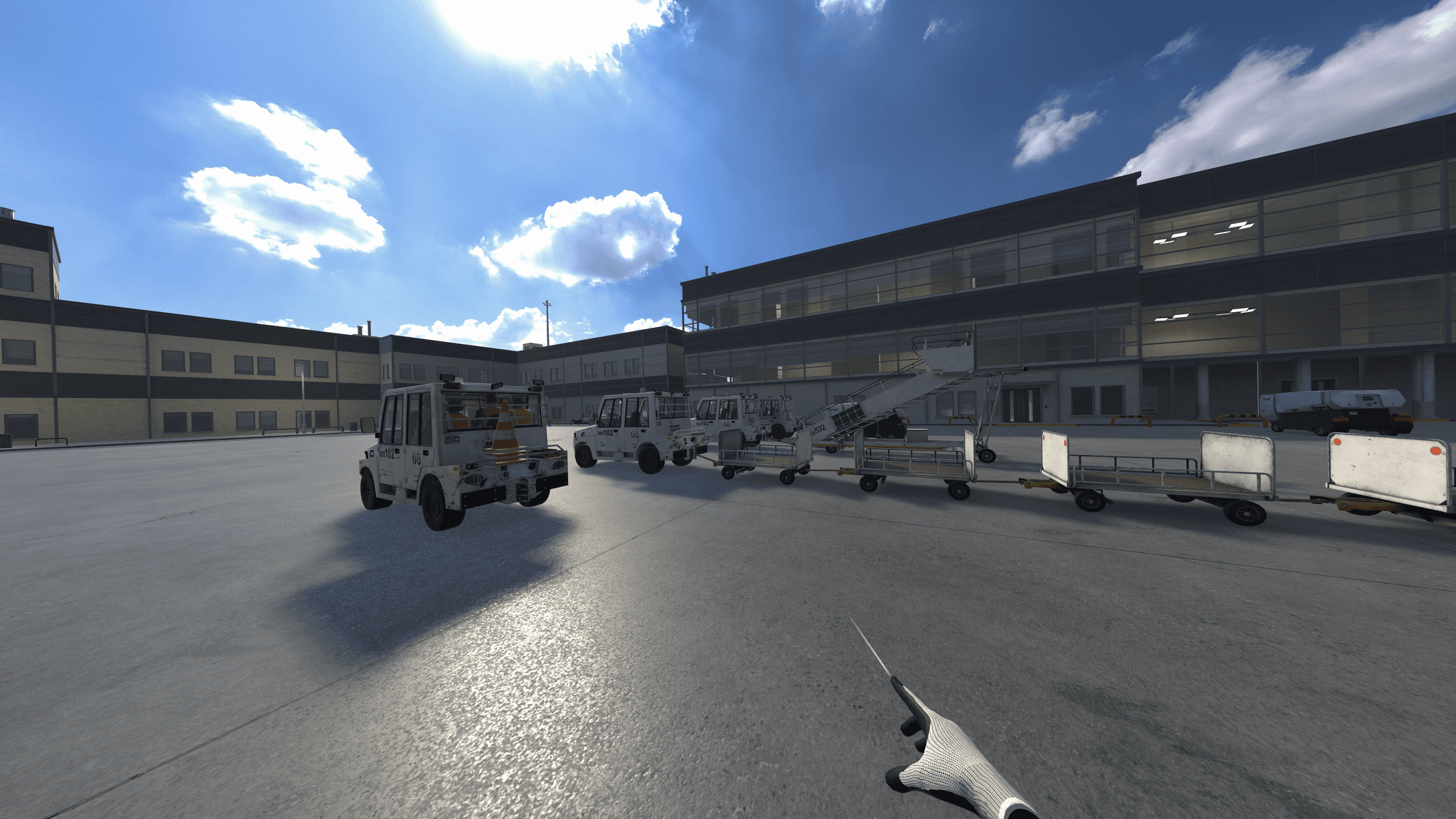
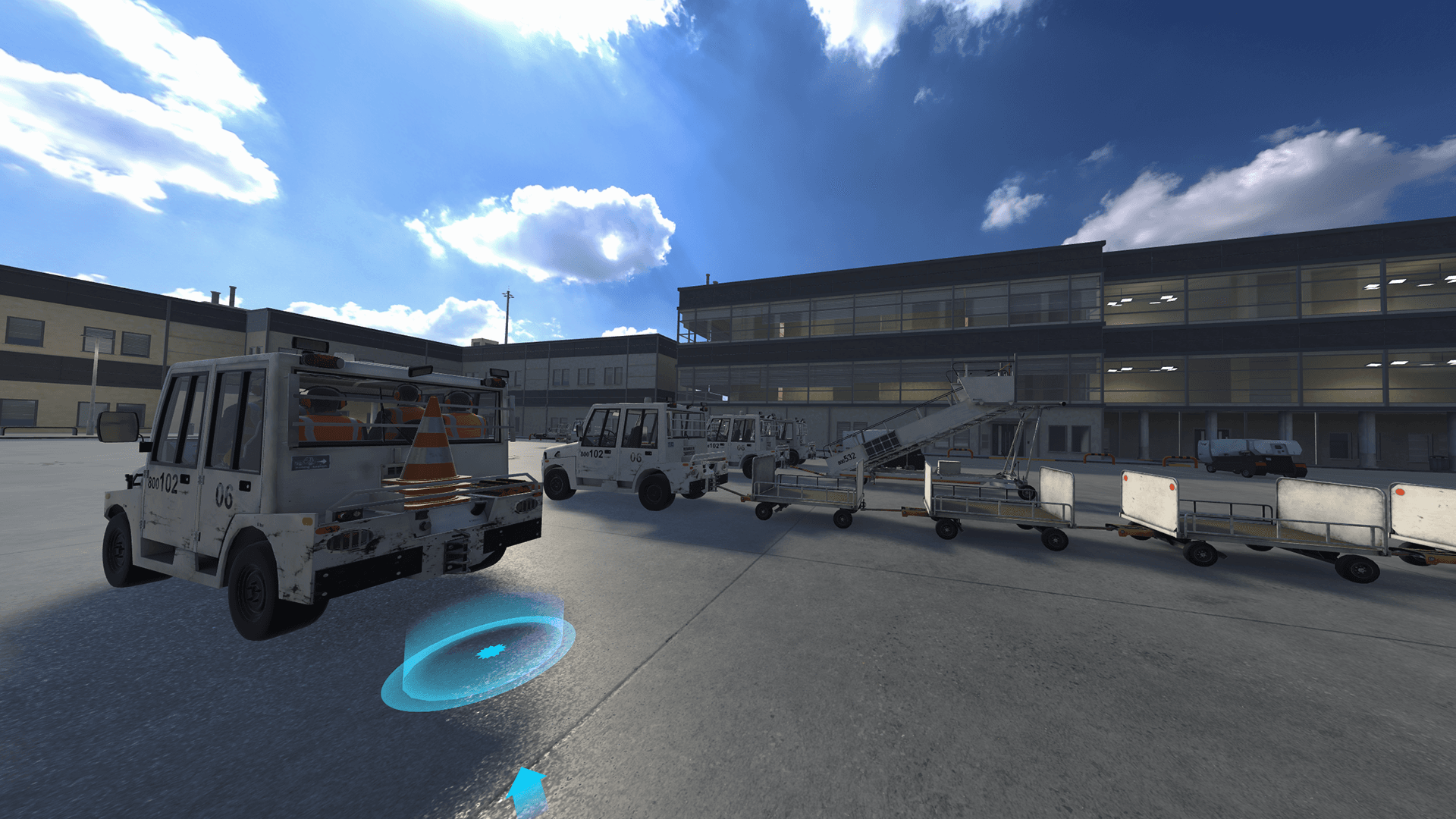
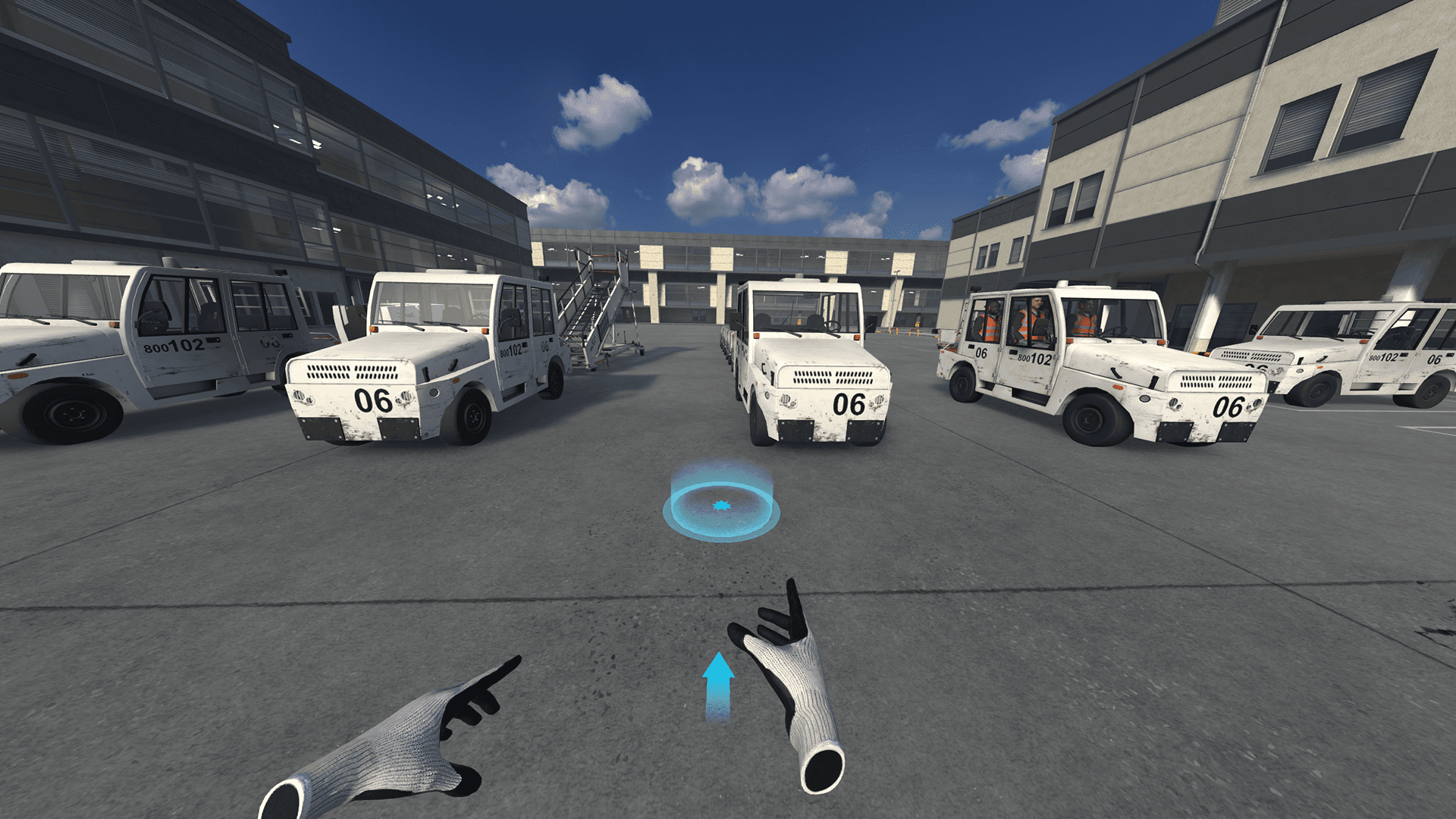
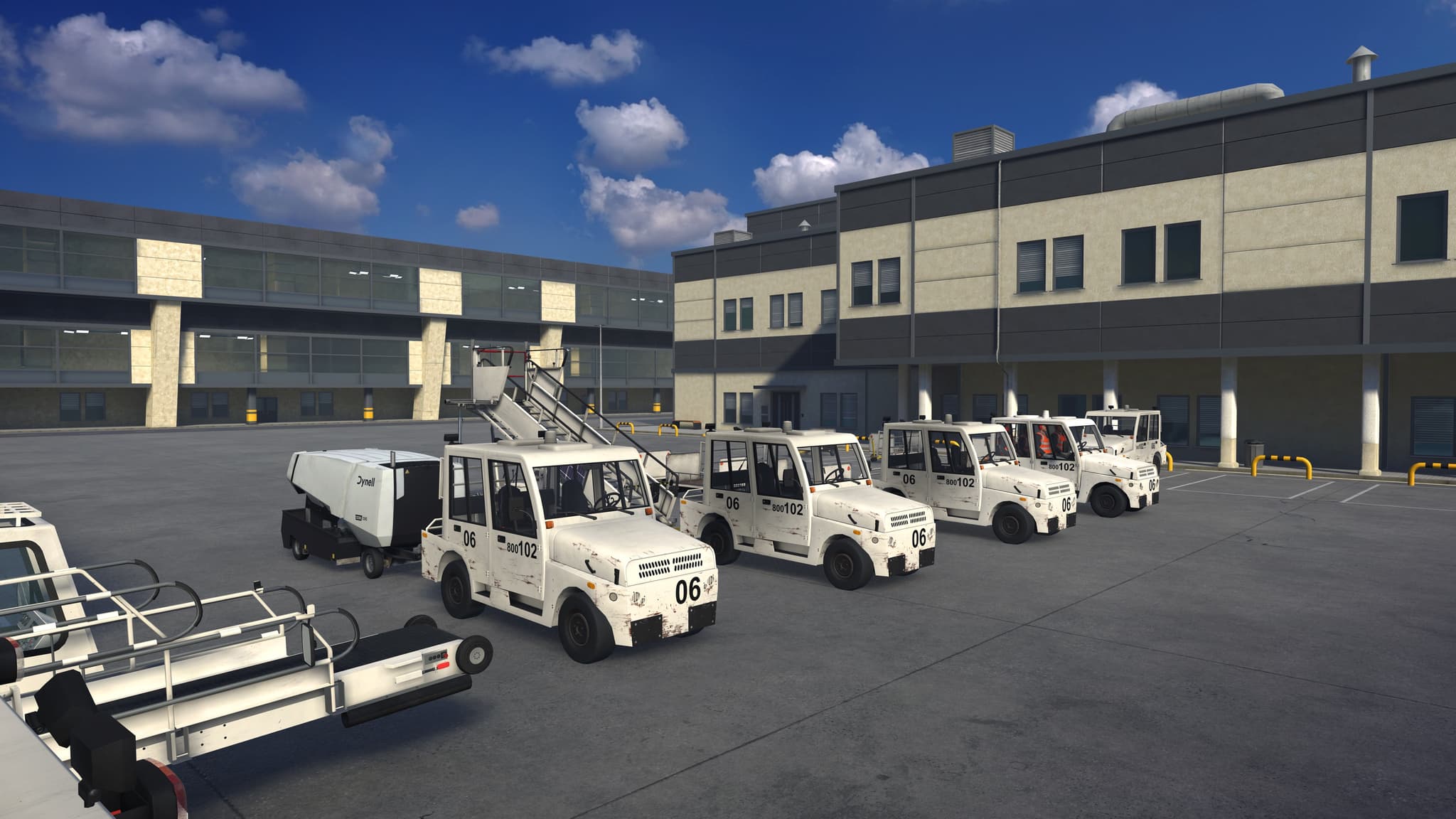
- 2Observation of four different tractor setups: GPU, towable stairs, baggage carts, and passenger transport
- 3Explanation of key exterior components and their basic functions
- 4Overview of the operator’s cabin and passenger area layout
Skills Acquired
- Identify the main elements of a standard airport tractor
- Recognize typical towing configurations and their operational use cases
- Understand the purpose of key external parts such as the tow hitch, fuel cap, and safety compartment
Lesson Procedure
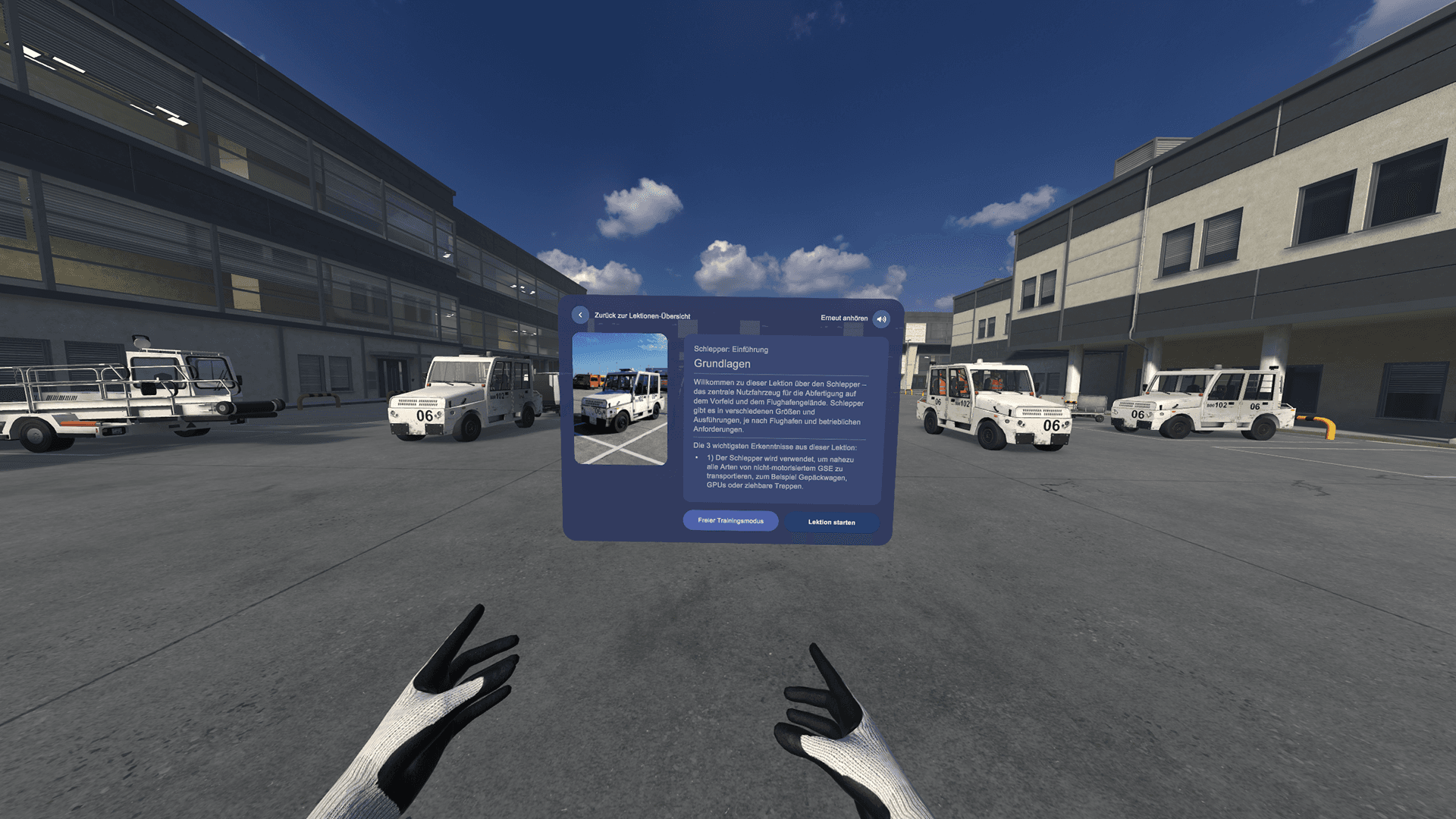
- The trainee begins in a parking area, facing a lineup of four tractors representing different use cases on the apron.
- A guided introduction explains that tractors transport non-motorized GSE such as baggage carts, GPUs, and towable stairs, and may also carry personnel.
- Each setup is briefly highlighted, showing how attachments change the tractor’s purpose while maintaining similar safety principles.
- The trainee then approaches a reference tractor to view its main features: tow hitch, rear safety compartment, fuel cap, inching system, and operator cabin.
- Visual highlights and short explanations describe the function of each feature and its importance for safe and efficient apron use.
- The lesson concludes with a summary reinforcing that understanding the tractor’s structure and versatility is the foundation for all future tractor operation training.
Gallery