Draxon VR Training Syllabus
Complete Pushback Process (Advanced)
 Virtual Reality
Description
This advanced lesson trains the complete headset communication and coordination protocol for an aircraft pushback. Trainees manage the complete pushback sequence, from establishing cockpit communication through to the final all-clear signal hand signal.The focus is on precise standard phraseology and continuous coordination between cockpit crew and pushback driver to ensure safe aircraft movement from gate to taxiway.
Description
This advanced lesson trains the complete headset communication and coordination protocol for an aircraft pushback. Trainees manage the complete pushback sequence, from establishing cockpit communication through to the final all-clear signal hand signal.The focus is on precise standard phraseology and continuous coordination between cockpit crew and pushback driver to ensure safe aircraft movement from gate to taxiway.
Lesson Overview
- 1Establish headset communication and execute a radio check with the cockpit
- 2Carry out pre-pushback safety checks and receive pushback clearance
- 3Signal the tractor driver to begin pushback and coordinate engine start clearance with the cockpit
- 4Signal pushback completion and disconnect all ground equipment
- 5Provide the final all-clear hand signal
Skills Acquired
- Execute the complete headset communication protocol for pushback with engine start, from initial radio check to final all-clear
- Apply standard phraseology and hand signals to coordinate between cockpit crew and pushback driver throughout all pushback phases
- Recognize the pre-pushback safety conditions required before authorizing aircraft movement
- Identify engine danger zones and understand the fatal consequences of entering them during active pushback
Lesson Procedure
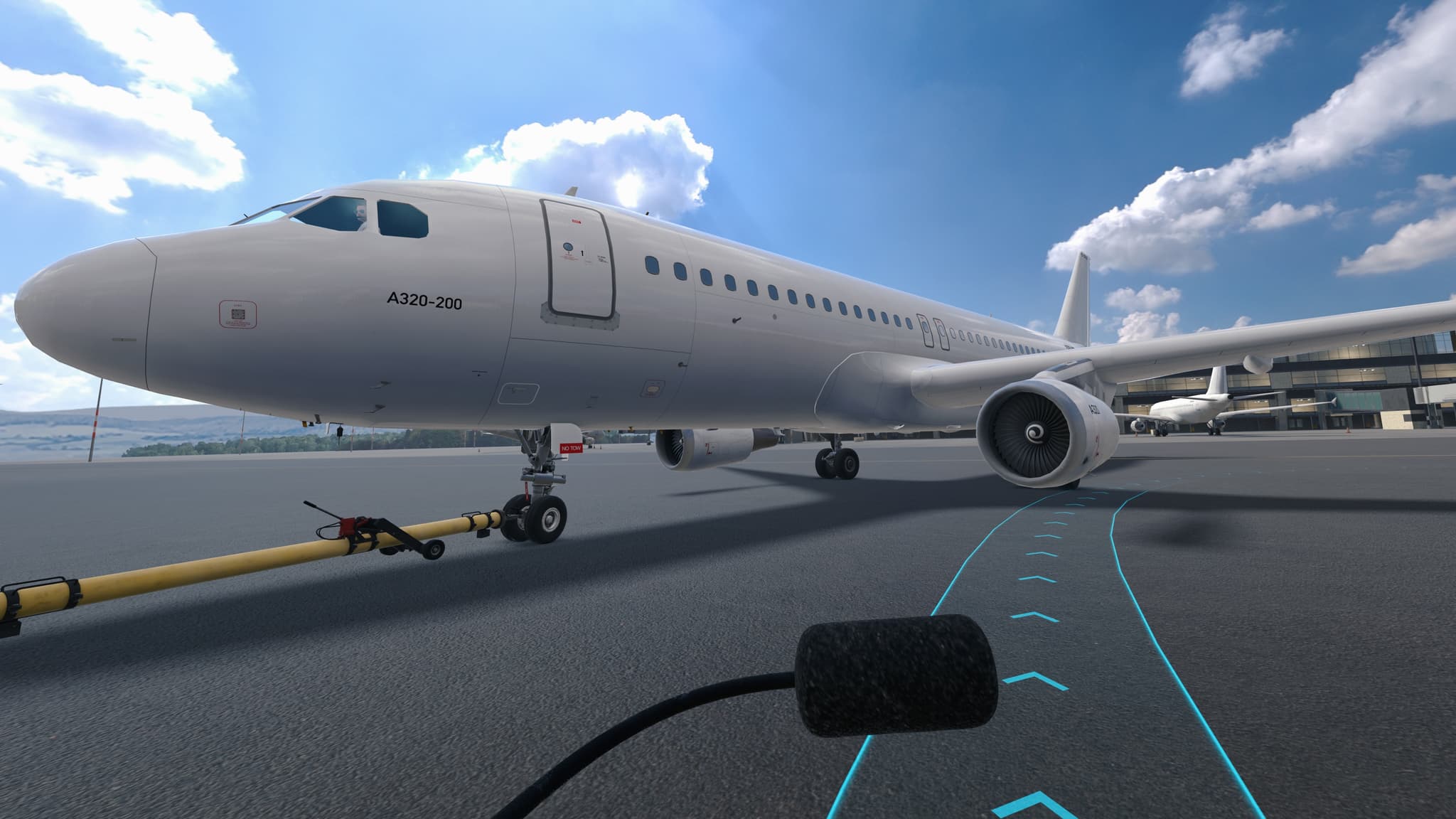
- The trainee is positioned at the gate in front of the aircraft which is ready for departure; the headset is already connected to the aircraft.
- The trainee starts communication, performs a radio check with the cockpit, and declares the pushback configuration.
- Then the pre-pushback checks are executed: parking brake set and steering bypass pin inserted are confirmed, pre-departure checks declared complete, and readiness for pushback communicated to the cockpit.
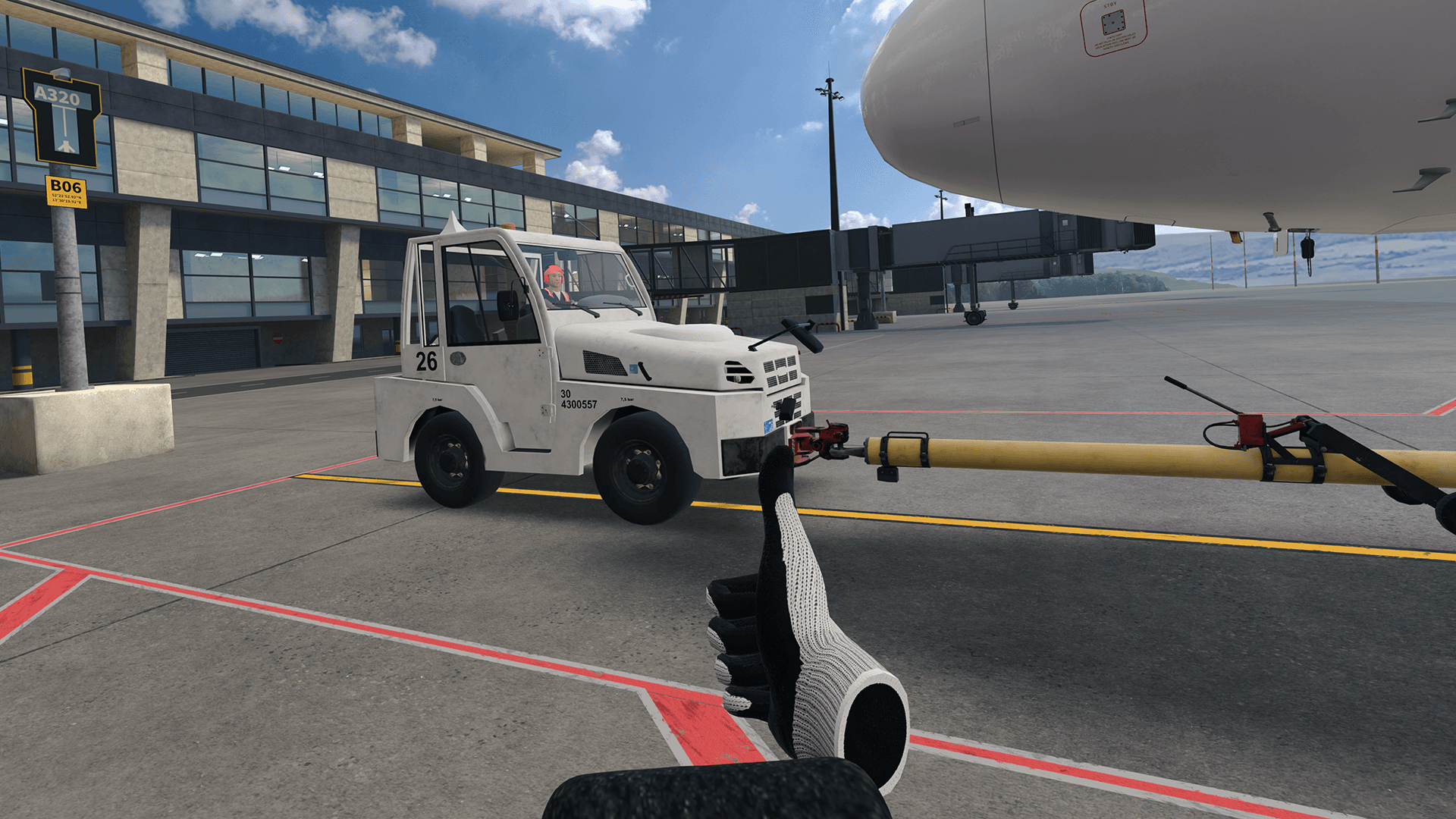
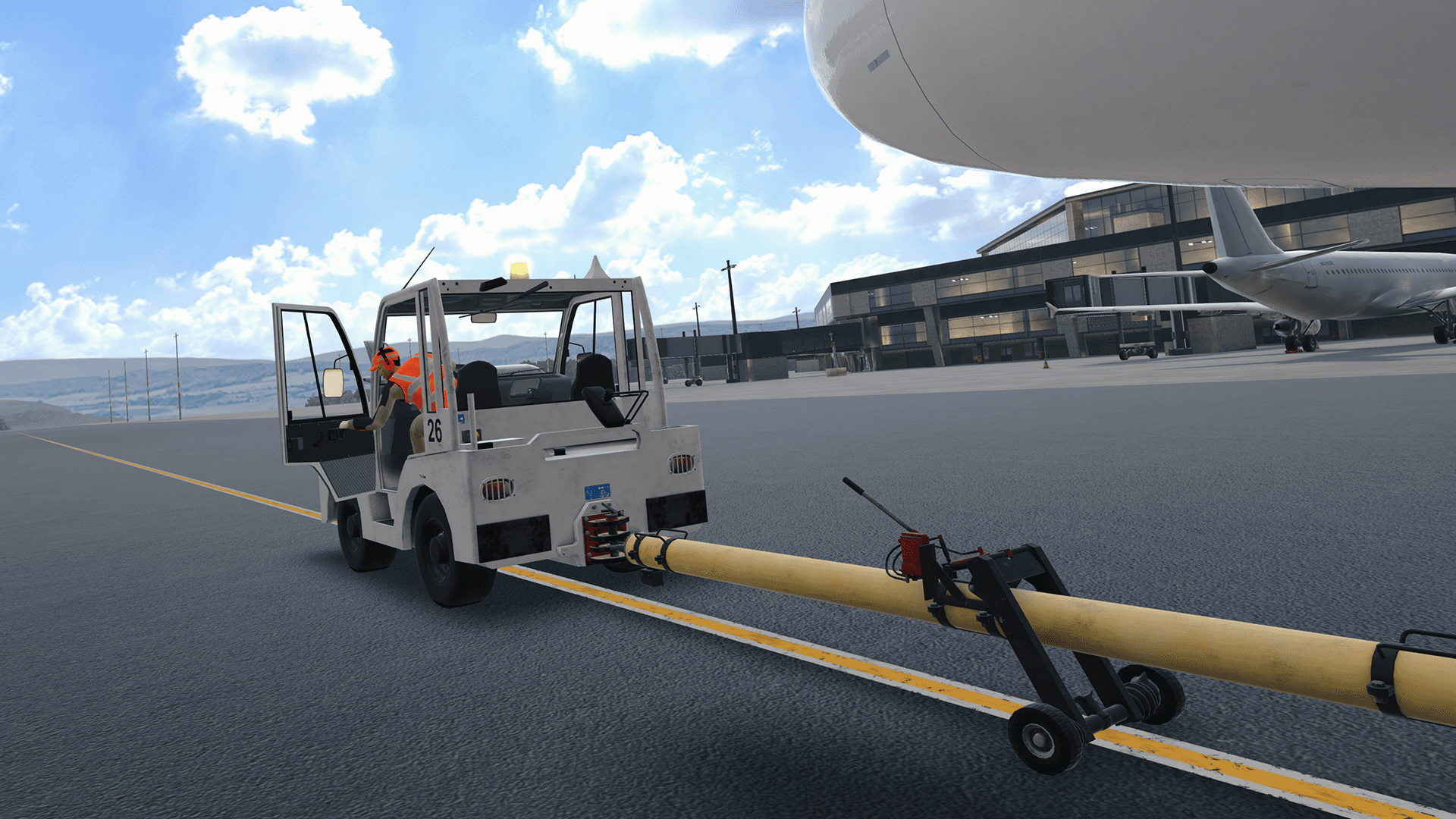
- After receiving clearance and brake release confirmation from the cockpit, the trainee signals brakes-off to the tractor and authorizes the start of the pushback.
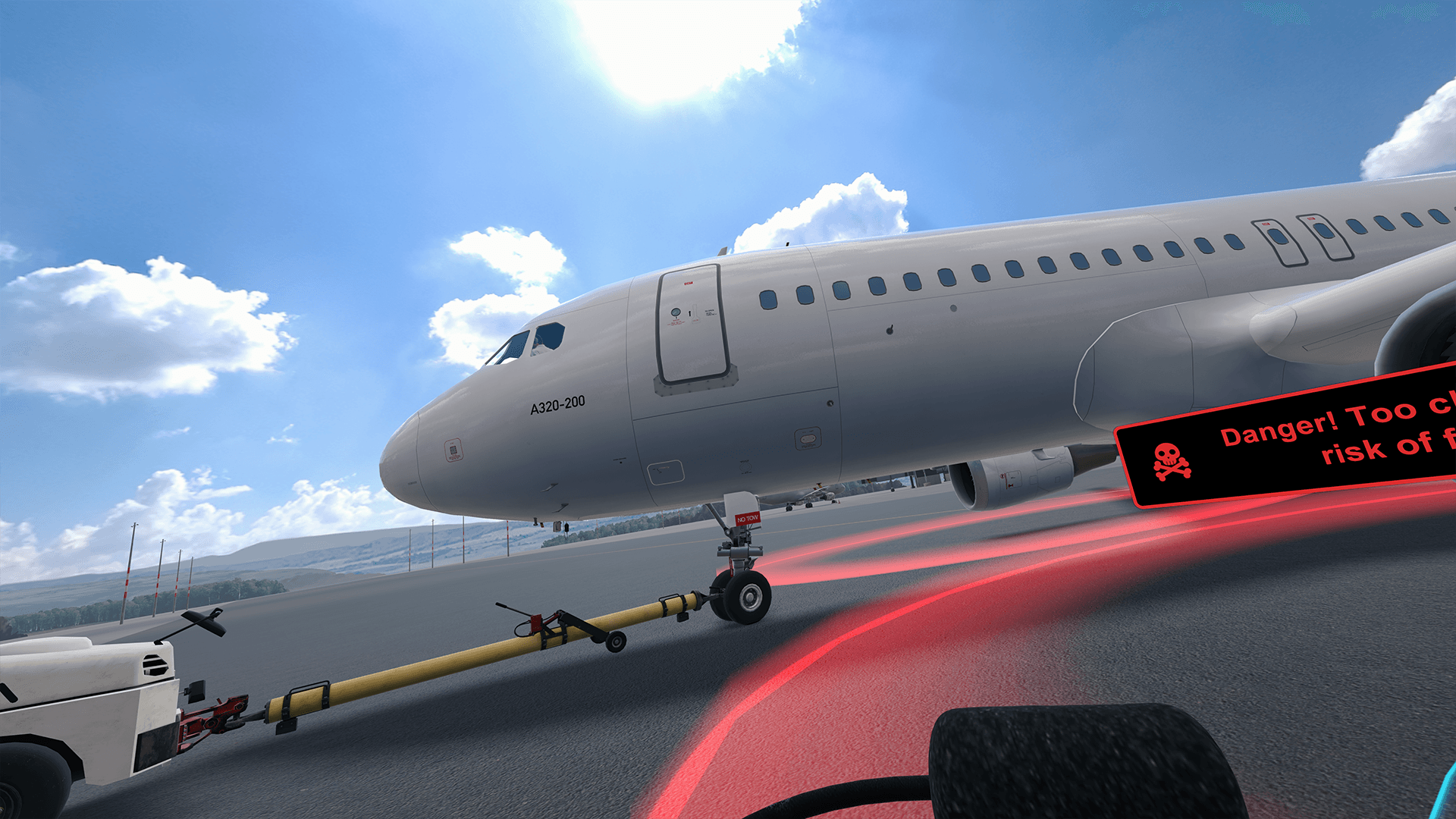
- Walking alongside the aircraft and tractor, the trainee checks if the area is clear and gives engine start clearance. The trainee continues walking, with constant attention to maintaining safe distance from the engines, the tractor and the aircraft.
- A simulation demonstrates the fatal consequences of entering the engine danger zone during pushback operations.
- Arriving at the final position, the trainee informs the cockpit about the start of the equipment disconnection process.
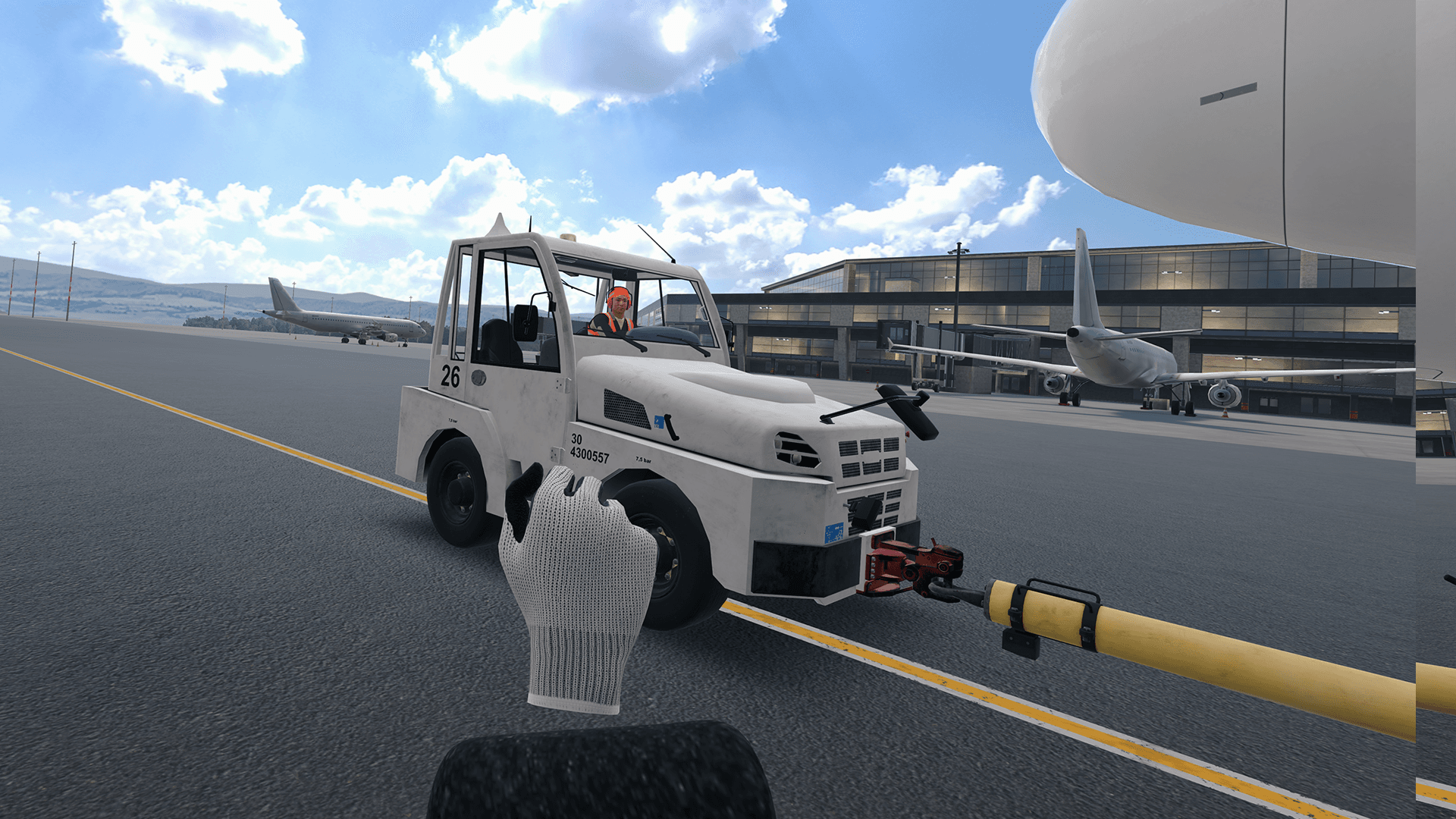
- The trainee disconnects th e towbar from the tractor's front coupling and authorizes the tractor driver to reverse.
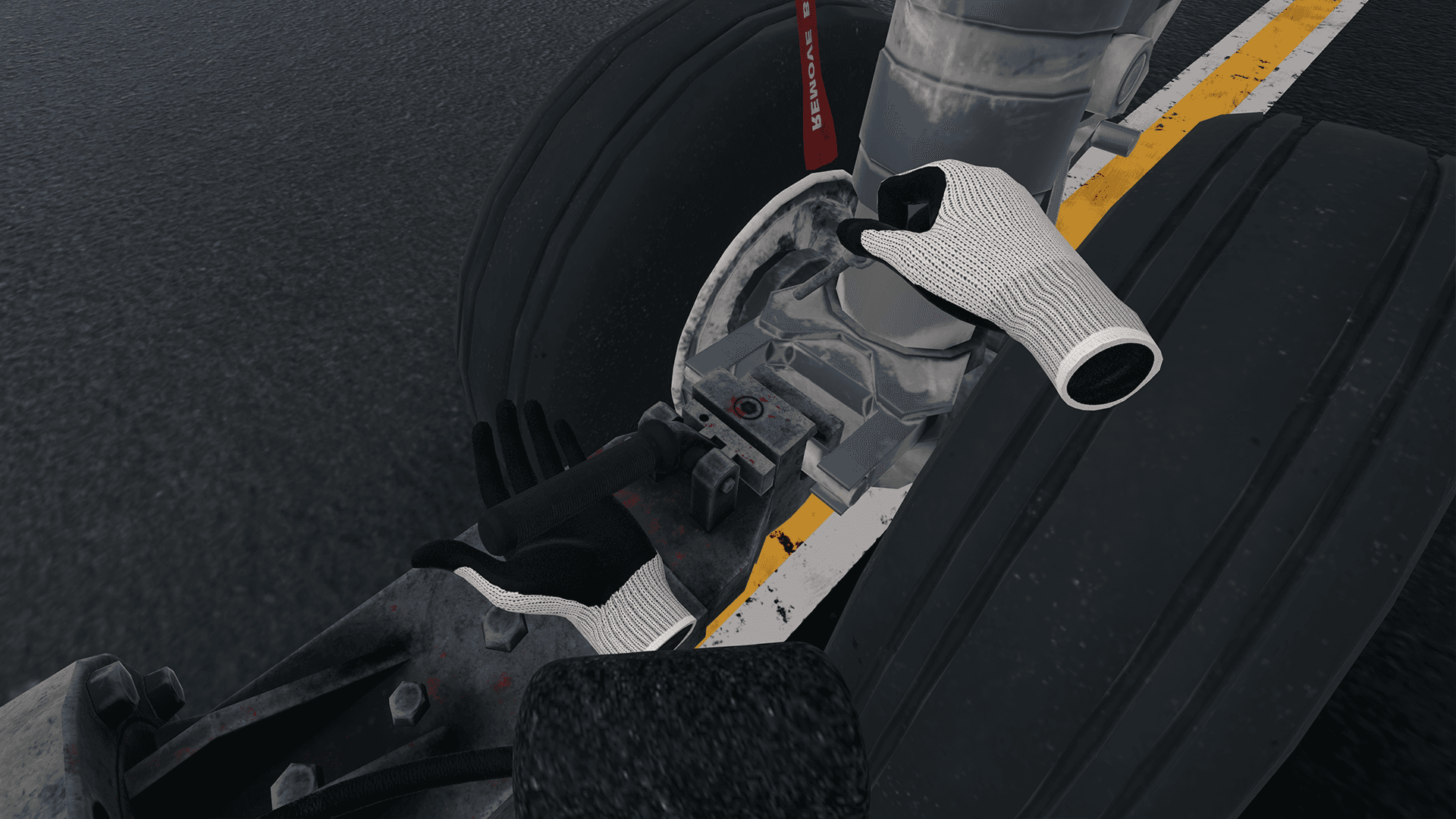
- While the driver repositions the tractor, the trainee unlocks the towbar at the nosegear. The pushback driver detaches the towbar from the aircraft, attaches it to the tractor's rear tow hitch, and drives to a safe position of the taxiway.
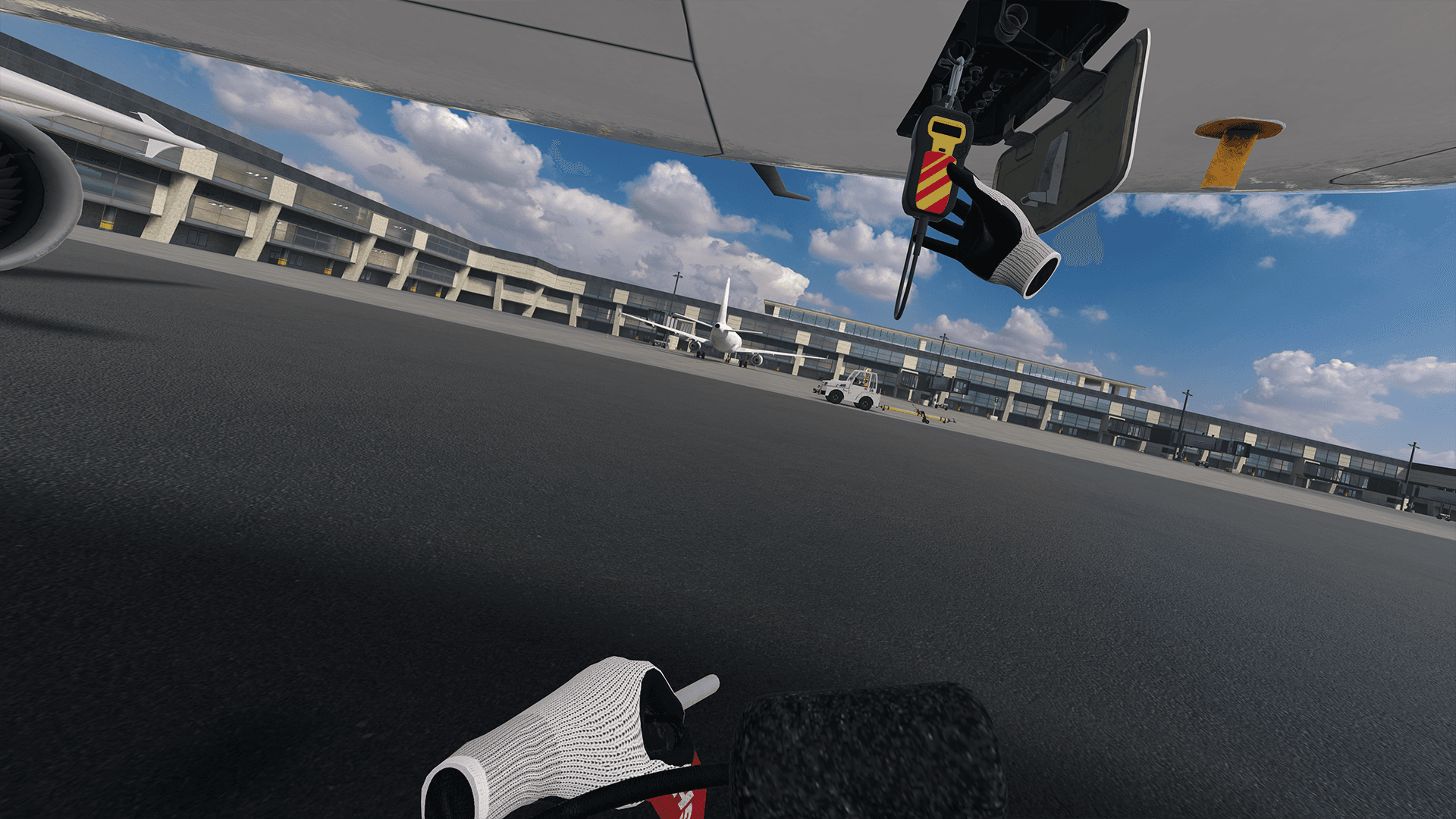
- The trainee removes the steering bypass pin from the nose gear, disconnects the headset, and closes the access panel.
- Moving to the left side of the aircraft, the trainee faces the cockpit and holds the steering bypass pin up high. Once the pilots confirms the signal, the final all-clear signal is given and the aircraft begins to taxi.
Communication Sequence
Cockpit | Headset Operator |
|---|---|
Ground from Cockpit. Radio check, how do you read? | |
Cockpit from Ground. Affirm, I read you loud and clear. How do you read? | |
Affirm, I read you loud and clear as well. | |
Expect 2-person pushback with towbar equipment. | |
Affirm, 2-person pushback with towbar equipment. | |
Confirm parking brake set. | |
Parking brake set. | |
Confirm steering bypass pin inserted. | |
Steering bypass pin inserted. | |
Pre-departure checks completed. | |
Ready for pushback. | |
Standby. | |
Pushback approved. | |
Confirm parking brake released. | |
Parking brake released. | |
Commencing pushback. | |
Clear to start engines. | |
Pushback complete. Set parking brake. | |
Engine start complete. Clear to disconnect. | |
Disconnecting. Wait for the hand signal on your left. | |
Holding position and standing by for hand signal on the left. |
Safety Scenarios & Learnings
Moving hand away during a hand signal
Error and retry; reinforces that hand signals must be held clearly visible until acknowledged by the colleague.
Error and retry; reinforces that hand signals must be held clearly visible until acknowledged by the colleague.
Incorrectly assessing area clearance for engine start
Correction; reinforces that engine start may only be authorized when the area around both engines is verified clear of people, equipment, and obstacles.
Correction; reinforces that engine start may only be authorized when the area around both engines is verified clear of people, equipment, and obstacles.
Entering the engine danger zone during pushback
Fatal accident simulation; demonstrates that entering the red zone around running engines can result in suction into turbine blades with fatal consequences.
Fatal accident simulation; demonstrates that entering the red zone around running engines can result in suction into turbine blades with fatal consequences.
Selecting non-standard phraseology
Correction; reinforces that standard aviation phraseology is required for safe coordination between all parties.
Correction; reinforces that standard aviation phraseology is required for safe coordination between all parties.